
Local Government
Regulation of Agritourism Among Zoning Text Amendments Considered by County Planning Commission
Concerns over how much government oversight is too much took center stage at the Warren County Planning Commission’s June 11 meeting, as members voted to forward a series of zoning text amendments to the Board of Supervisors — including one that would add regulatory language to agritourism operations.
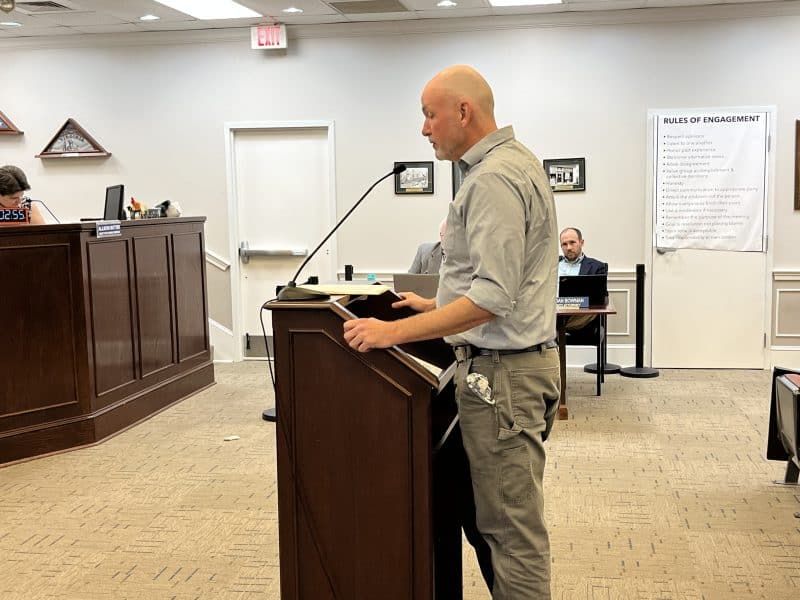
Edwin Wright shares his concerns about proposed agritourism regulations during the Warren County Planning Commission meeting on June 11.
“Don’t make it harder,” local resident Edwin Wright told the commission, cautioning against changes he believes could place additional burdens on farmers and agricultural entrepreneurs trying to welcome visitors to their properties.
Agritourism — broadly defined as commercial activities that invite the public onto working farms, such as pumpkin patches, hayrides, farm stays, or wine tastings — has been a growing part of Warren County’s rural economy. While support for agritourism was clear from all sides during the meeting, opinions diverged on how much regulation was appropriate.
The proposed amendments aim to clarify how and when a conditional use permit would be required for agritourism operations. Specifically, if the Zoning Administrator determines that a proposed activity poses a “substantial impact to the health, safety, and general welfare” of the public, the applicant would need to seek a permit.
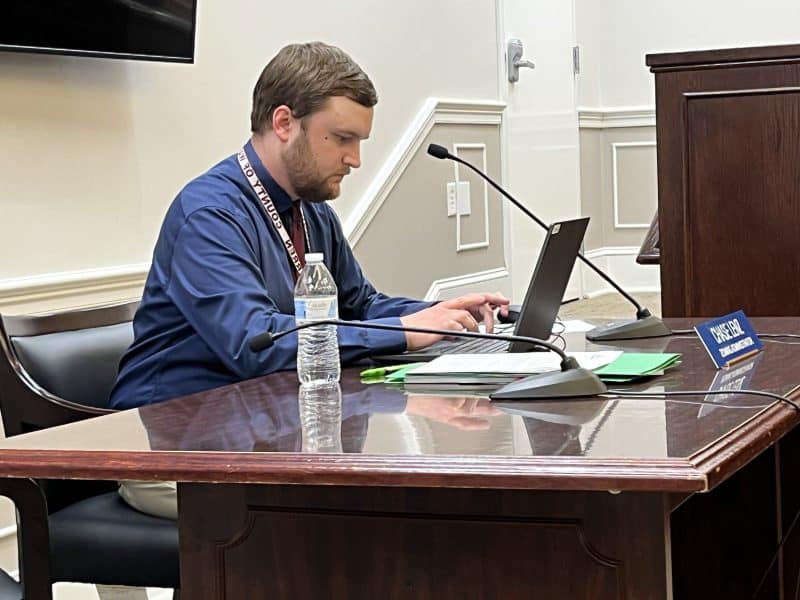
Zoning Administrator Chase Lenz discusses how proposed agritourism regulations would be evaluated during the June 11 Planning Commission meeting.
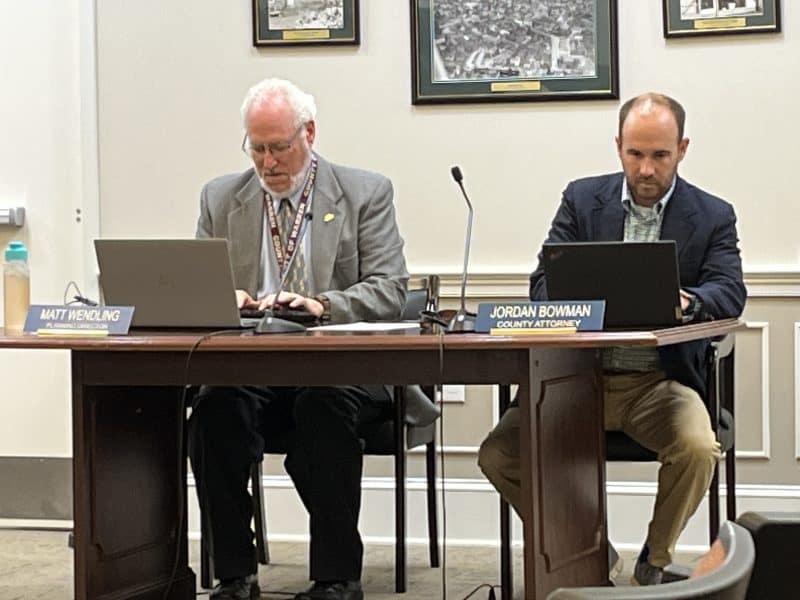
Warren County Planning Director Matt Wendling and County Attorney Jordan Bowman
Zoning Administrator Chase Lenz emphasized that such determinations won’t be made lightly or in isolation. “I will be relying heavily on the county attorney,” Lenz said, noting the legal nuances in defining what qualifies as a substantial impact. County Attorney Jordan Bowman added that applicants unhappy with zoning decisions would have the option to appeal to the Board of Zoning Appeals.
Though some residents worry that the added language might discourage small farms from expanding into tourism, commissioners framed the changes as safeguards — not barriers. Projects not flagged for health and safety concerns would still proceed by right without added oversight.
The agritourism amendment was one of four sets of zoning text changes reviewed and recommended for approval during the meeting. Another key amendment would require conditional use permits for new agricultural operations in areas that were once zoned agricultural but have since been rezoned as commercial or industrial. Existing operations in these zones would be allowed to continue without additional permits.
A third amendment aligns local policy with recent updates to state code by clarifying the zoning administrator’s role in approving plats. The fourth amendment aimed to streamline ordinance language, making regulations clearer and more consistent in one of the code’s more technical sections.
After voting unanimously to forward the amendments to the Board of Supervisors, the commission also voted to advertise items in the consent agenda, including updates related to accessory dwelling units (ADUs).
The meeting concluded with a brief discussion between commissioners and staff regarding future business items before adjourning for the evening.
Click here to watch the Warren County Planning Commission Meeting of June 11, 2025.

Schools Push for Budget Flexibility, Consistent Funding as Needs Grow

Skyline High Teams, Athletes Successful Seasons and Performances Acknowledged – Oh, and Those Roosters

School Board Seeks to Restore Meals Tax Funding for School Facilities

Wasting Drinking Water: 3 Habits to Eliminate From Your Daily Routine

Medicare Launches TEAM Program to Improve Recovery After Surgery

Izaak Walton League Promotes Conservation and Outdoor Programs at Community Forum

POLICE: 7 Day FRPD Arrest Report 3/16/2026

Blue Ridge Wildlife Center Patient of the Week: Great Horned Owl

Airline CEOs Warn of Travel Strain Amid DHS Funding Uncertainty

Robert B. Walters (1931 – 2026)

Lemmon & Hale Highlight Importance of Estate Planning for Families and Businesses

Hike Kidz Foundation Highlights Programs for Families in Need

Phoenix Project Offers Support and Resources for Victims of Abuse

Virginia Moves to Launch Legal Cannabis Marketplace After Years of Delay

As Spanberger Reviews State-Level ‘Momnibus’ Bills, Kaine and Booker Try Again on a Federal Package

Detox Diets: Don’t Overlook the Risks

How to Answer the Interview Question: “Where Do You See Yourself in Five Years?”

HARTS, DSS & House of Hope Highlight Services at Community Forum

Joyce Henry Sutherland (1942 – 2026)

Commentary: Building on What We Have – A Proposed Economic Development Agenda for Warren County

Jamie Christopher Tewalt (1971 – 2026)

George Jules Pouzenc III (1958 – 2026)

Samuels Public Library Prepares for Annual “Taste for Books” Fundraiser

Assistant Chief and Fire Marshal Gerry Maiatico Highlights Staffing Needs and Volunteer Opportunities
