
Local News
Wildlife Center at Boyce sets record-breaking year

BOYCE – The Blue Ridge Wildlife Center (BRWC) at Boyce is ending a record-breaking year during which – in September – it collected the first exotic Asian Longhorned tick found on any bird in North America.
First, setting new records during its 18th year, the center highlighted an 18-percent increase in wildlife patients – 2,135 animals, reptiles and birds.
An upsurge in education endeavors delivered more than 100 programs to 5,000 people in eight counties, thus stimulating interest in and learning about native wildlife, their habitat, and their important roles in nature. Also, the center’s training of future wildlife professionals at the only full service, wildlife teaching hospital in the Northern Virginia area was highlighted in an end-of-year letter to BRWC members.
The update on activities by the center, located at 106 Island Farm Lane, Boyce, Virginia (22620) – just off Route 50 – was accompanied by a funding appeal interesting in its specificity: “We cannot do this critical work without your support and participation,” wrote Lisa Goshen, Chair of the BRWC Board of Directors and Executive Director Hillary Russell Davidson, continuing, “You take the time to bring us an injured animal or reunite (for example) a baby owl with its parents: you donate your time, animal food, and cleaning supplies to help us care for those that don’t have a voice; BRWC is open 365 days a year because you care about our native wildlife.”

Onk the opossum – Courtesy Photo BRWC
It was in its fall newsletter that BRWC first reported not only a significant rise in West Nile virus, a mosquito-born disease that is of great concern locally, particularly to horse farm owners, but the above-mentioned capture of the first Asian Longhorned tick from a bird, in this case a red-tailed hawk from Page County. In her report, BRWC Veterinarian Jennifer Riley said the tick is suspected of being around on animals, including humans, since about 2010. That it has spread to birds was new to the Southeastern Cooperative Wildlife Disease Study and an evident cause for concern.
This month, the BRWC reported the number of wildlife with West Nile virus treated at the Boyce facility increased by 300 percent. Also, amphibian patients increased three-fold and aquatic turtle patients have increased by 350 percent in the past two years.
Davidson explains the mission of BRWC this way: “(It is) to care for native wildlife by integrating veterinary medicine, rehabilitation, education and research.”
In addition to being a hospital and a rehabilitation care facility for wildlife, BRWC also trains future wildlife professionals. As noted above, it is the only full service wildlife teaching hospital in the northern Virginia area, hosting many people with their eyes set on a career in wildlife-specific vocations. Additionally, BRWC’s education program for those interested in the wildlife and conservation fields worked with four licensed veterinarians, five veterinary students, and 22 interns during the past year.

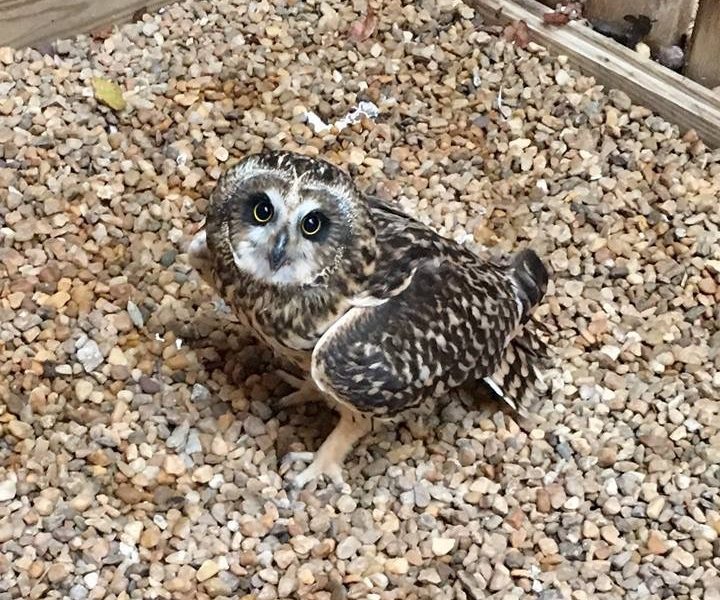
Seow the owl – Courtesy Photo BRWC


Your Age Shouldn’t Stop You From Changing Careers

World Cheese Day Celebrates One of the World’s Favorite Foods

Blue Ridge Wildlife Center Patient of the Week: Mourning Dove

POLICE: 7 Day FRPD Arrest Report 3/23/2026

Documentary Screening at Laurel Ridge Highlights Hidden Struggle of Student Hunger

US Senate Confirms Mullin as Next Homeland Security Boss

Dominion Produces First Power From Coastal Virginia Offshore Wind Project

Rebecca Joy Knight Pucher (1953 – 2026)

Clarence Patrick “Stinker” “Wooley” Deavers (1957 – 2026)

Four Weeks Before April 21 Referendum, Early Voting Shows Stronger Turnout in GOP-Leaning Areas

After Bills Passed, NoVa Lawmakers Urge SCC to Consider Burying Transmission Lines

Next Generation of Conservation Leaders Selected for Shenandoah Valley Fellowship

Using an Exfoliant to Care for Your Skin: Beneficial at Any Age

Airport Chaos: TSA Agents Skip Work, Security Lines Expand, Trump Sends in ICE to Assist

Spotlight on Beekeeping: The Sweet Work Behind Honey

Federal Guidelines Signal Comeback for Full-Fat Dairy

March’s ‘Third Thursday’ at Warren Heritage Society’s Ivy Lodge Continues Magical Mix of Cultural and Musical History

‘Slow Image’ Exhibition Encourages Viewers to Pause in a Fast-Moving World

Multi-day Trial Dates set in Llewellyn’ Financial Criminal Cases

A Living Legacy: Kilby Museum Connects Past Struggles to Present and Future Generations

Regional ‘Walk for Peace’ Rallies Locals to the Cause of Personal and World Peace

ODU Shooting Case Renews Debate Over Virginia’s Inactive Background Check Law

3 Good Reasons to Eat Meals as a Family

Institutional Investors Play Small but Visible Role in Housing Market
