
Local News
Blue Ridge Wildlife Center Patient of the Week: Mourning Dove
When “Helpful” Becomes Harmful:
Recently, we admitted this adult Mourning Dove after it became trapped in a squirrel-proof bird feeder. While these feeders are designed with good intentions, they can sometimes pose serious risks to wildlife.
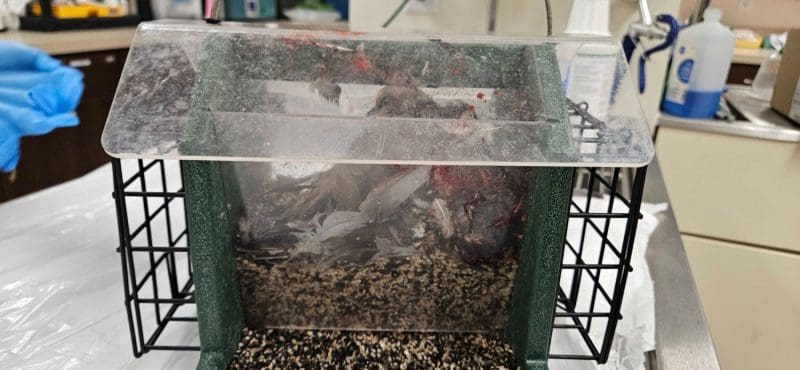
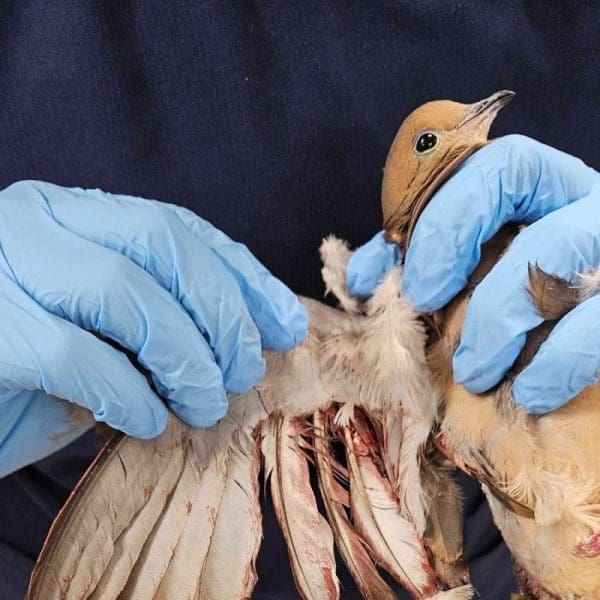
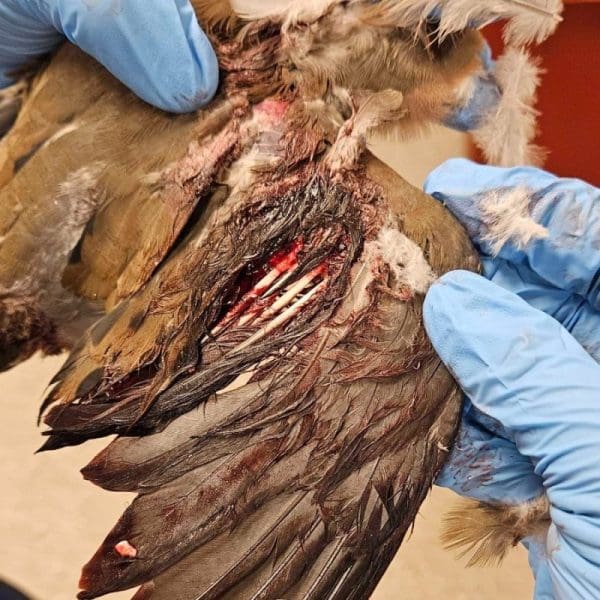
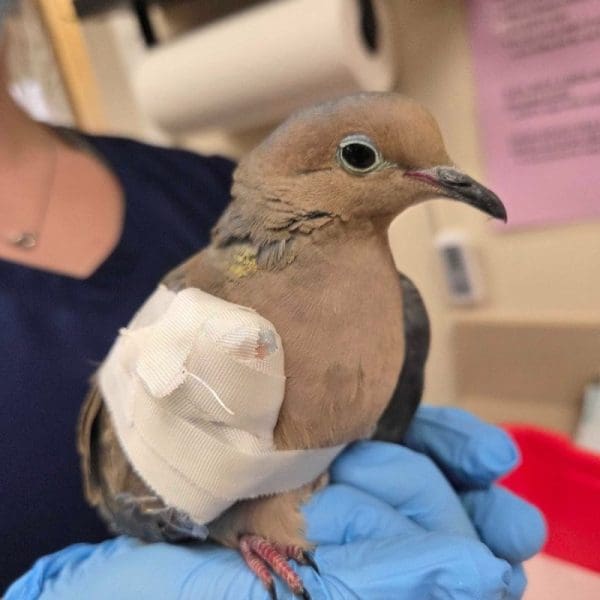
Thankfully, this patient’s injuries were treatable. The dove arrived with soft tissue trauma and skin tears, along with significant feather damage. While the wounds are healing well, the feather loss means this bird will need an extended stay with us. Until those feathers regrow properly, flight is not possible, and release is not safe.
This is the second patient we’ve seen in the past month with injuries caused by feeder entrapment.
Stories like this can be difficult because they come from a place of care. People put out feeders because they love birds and want to help. Unfortunately, many man-made feeding structures can create risks, including entanglement, injury, and the spread of disease.
The good news is there is a better way to support birds right in your own yard.
One of the most impactful ways to support birds is by creating native habitat.
Native plants are the foundation of a healthy ecosystem. They have evolved alongside local wildlife, which means they provide the right food, shelter, and seasonal resources that birds and other animals depend on to survive.
Unlike many ornamental plants, native species support a wide diversity of insects, and those insects are critical. In fact, most songbirds rely on insects to feed their young, even if the adults eat seeds.
When you plant native, you are not just feeding birds. You are rebuilding an entire food web.
This has real, measurable impacts. Native plant landscapes support significantly more insects than non-native yards, which means more food for birds, especially during nesting season. They also provide safer cover from predators, better nesting sites, and reduce the need for chemical pesticides that can harm wildlife.

And perhaps most importantly, native habitats work with nature instead of against it. They allow birds to forage the way they are meant to.
Mourning Doves search for seeds and grains on the ground. Eastern Phoebes catch insects mid-air. Eastern Bluebirds hunt beetles and caterpillars among plants. A yard filled with native plants supports all of these behaviors naturally, without the added risks that feeders can introduce.
We all love seeing birds up close. The best way to keep them safe is to create spaces where they can thrive on their own terms.
Small changes in our backyards can make a lasting difference for wildlife.
Looking for an easy way to help native wildlife? Become a monthly BRWC donor! For as little as $5/month, you can provide year-round, sustainable support that helps us fulfill our mission.




This Week’s Showtimes at Royal Cinemas as of October 22nd

Debbie’s Lighthouse Combats Food Insecurity While Helping Small Businesses Grow in Front Royal

Decision on ‘EagleView’ Contractual Oversight of Photographic Assessment Technology Delayed to November 17

Blue Ridge Wildlife Center Patient of the Week: Great Horned Owl

Dominion-NextEra Merger Hits Turbulence, Faces Opposition from Virginia Leaders, SCC Staff

Cheaper Manufactured Homes Could Be Having a Moment, If Only States Can Catch Up

POLICE: 7 Day FRPD Arrest Report 10/19/2026

Sight & Sound’s JOSHUA LIVE! Comes to Royal Cinemas — Limited Run, October 29 – November 4

You Are Not Wasting the AI’s Time

The ‘Beer Belly’ Isn’t Really About Beer

Virginia State Police Launch Two-Day Interstate 81 Safety Enforcement Campaign October 21–22

Everybody Is a Leader Somewhere

Warren County Wildcats Host Meridian in Girls Volleyball Match Tuesday Night – October 20

Closing Virginia’s Childcare Affordability Gap Could Cost Up To $4.5B a Year

New Coalition Aims to Keep Virginians Covered as Medicaid Rules Tighten

General Assembly Calls Off Oct. 26 Special Session to Elect Judges

Trump Order Sets Up New Women’s Health Research Initiative at NIH, White House Task Force

What Is Puberty?

First New Class of Pain Medicine in Decades Comes with A 14-Day Limit

Front Royal Man Charged with Two Counts of Forcible Sodomy Following RSW Regional Jail Investigation

James Edward “Jimmy” Mahoney (1953 – 2026)

Ask Stewart: Are There Any Scary Trees?

Janet Denny Casarotti (1933 – 2026)

Virginia Breeders Championship Series Opens at Shenandoah Downs with Impressive Performances
