
Interesting Things to Know
The Bill of Rights: Foundation of American Freedom
A Historic Milestone in American History.
On December 15, 1791, the United States of America achieved a monumental milestone in its history with the ratification of the Bill of Rights. These first ten amendments to the U.S. Constitution enshrined its citizens’ fundamental liberties and rights, laying the groundwork for a nation built on freedom and justice.
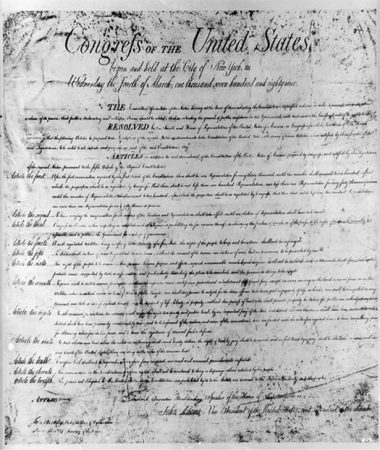
The Bill of Rights. The photograph shows a reproduction of the original Bill of Rights [between ca. 1920 and ca. 1930]. Prints & Photographs Division
The Bill of Rights was influenced by historical documents like the Magna Carta and the English Bill of Rights. Its closest predecessor, George Mason’s Virginia Declaration of Rights, was instrumental in shaping its tenets. Mason’s advocacy for individual liberties significantly impacted the amendments that formed the Bill of Rights.

James Madison: The Architect of the Amendments
James Madison, revered as the “Father of the Bill of Rights,” played a pivotal role in drafting and advocating for these essential amendments. His efforts in the First Federal Congress led to the proposal of seventeen amendments, which were eventually condensed to the twelve sent to the states. The first two proposals, concerning congressional representation and compensation, were initially not ratified. However, the latter would be resurrected over two centuries later as the 27th Amendment.
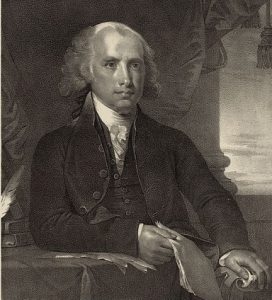
James Madison, Fourth President of the United States. Gilbert Stuart, artist; Pendleton’s Lithography, ca. 1828. Popular Graphic Arts. Prints & Photographs Division
The Ratification and Its Impact

By December 15, 1791, articles three through twelve were ratified by the required number of states, thus becoming known as the Bill of Rights. These amendments included crucial protections such as freedom of religion, speech, the press, and assembly, the right to bear arms, and protections in legal proceedings.
The Ongoing Journey of Interpretation
The interpretation and application of the Bill of Rights have evolved over time, often becoming the focal point of legal and societal debates. The U.S. Supreme Court plays a critical role in interpreting these rights, ensuring their relevance and application in a constantly changing society.
The Bill of Rights remains a cornerstone of American democracy, embodying the nation’s core values and ideals. Its ongoing interpretation and application continue to shape the landscape of American freedom and justice, proving its enduring significance in the nation’s journey.





Virginia Attorney General Creates Worker, Federal Accountability Units as Office Highlights Meta Settlement

VDOT: Warren County Traffic Alert for September 7 – 11, 2026

Twenty-Five Years Later, Remembering When We Stood Together

U.S. Adds 162,000 Jobs in August as Manufacturing and Construction Hiring Rises

Spanberger Taps Daniel Young to Lead Government Watchdog Office

Update: Cline Appears Without Democratic Opponent at Winchester Congressional Event

UVA Health Experts Urge Athletes to Recognize Concussion Warning Signs as Fall Sports Begin

Bumblebees Solve Puzzle Without Training, Study Finds

Business Growth Series: “What If” Thinking Is Costing You Money

Blue Ridge Area Food Bank Calls on Community to Take Action Against Hunger in September

Virginia State Police Seize Guns, Nearly $200,000 in Cash During Weekly Crime Operations

The Queen is Gone. There Will Never Be Another

WC Public Schools Gets Engineers Status Assessment on E. Wilson Morrison Physical Plant Issues

Virginia House Speaker Details ‘Concerns’ About NextEra-Dominion Merger in Letter to State Regulators

Consumer Sentiment Tumbles as Virginians Feel Pressure from Inflation, New Poll Finds

Engineers Find Façade Failure at E. Wilson Morrison, Main Structural System Shows No Visible Distress

Buy It in Virginia, Consume It in Virginia, and Leave It in Virginia: The Golden Rule for 2027

Dawson Sheen Academy Plans New Shenandoah Valley High School for 2027

Wittman Voted 60 Times to Undo the Affordable Care Act. Then He Backed Extending Its Subsidies

As Sports Betting Surges, Virginia Weighs How to Curb Gambling Harms

USPS Whistleblower Predicts ‘Catastrophic’ Effect on Elections Under Trump Vote-by-Mail Order

Teenage Gunman Dead After Opening Fire Inside Virginia Elementary School Wednesday Morning

Michael Lee “Mike” “Grandpa” Soyars (1970 – 2026)

Gilbert R. “Skip” Simmons Jr (1949 – 2026)
