
Local Government
Thresholds and Allowances: Three-Tiered System for Urban Agriculture Emerges at Town Planning Commission Meeting
In the wake of a case that was heard by the Board of Zoning Appeals, where, due to a misunderstanding or a lack of communication, a residentially zoned property established an urban agriculture use that the current planning and zoning staff perceived to exceed boundaries, the staff has undertaken an effort to bring clarity to the code. It is arguable that the former zoning administrator, who apparently greenlighted the use, was laboring under a code that could only be improved by providing clearer guidance. To say that the use must be incidental to the primary residential use raises questions about specifics that staff have been striving to answer. On April 15, at the Town Planning Commission’s monthly regular meeting, commissioners voted unanimously to recommend for approval an update of the ordinance with definitions and a three-tiered system that would regulate urban agriculture based on lot size.
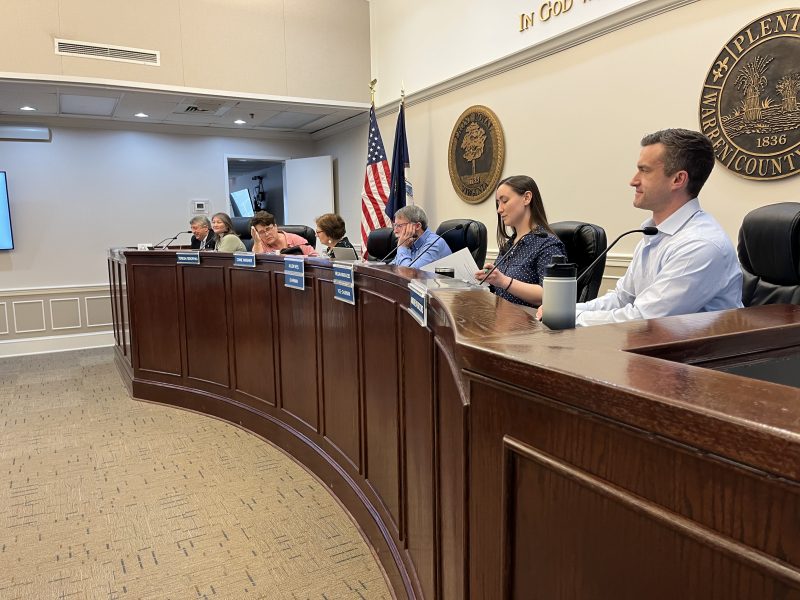
The Town Planning Commission meets for its monthly regular meeting on April 15. Royal Examiner Photo Credits: Brenden McHugh
A summary in the agenda packet captures the intent of staff’s undertaking as follows: “The Urban Agriculture Ordinance allows small-scale agricultural activities on residential lots, with tiered standards based on lot size. Large livestock, such as goats, cows, pigs, and sheep, are prohibited to protect neighbors, sanitation, and animal welfare. Bees are limited to Western honeybees and approved subspecies; importing or breeding Africanized or other exotic bees is unlawful. All urban agriculture uses require an annual zoning permit, a management plan addressing health, waste, and nuisance control, and compliance with performance standards. Commercial sales on-site are prohibited.”

Deputy Zoning Administrator John Ware presents several items to the commissioners for their consideration.

The takeaway is that any urban agriculture practice would now possibly be limited to bees, rabbits, and chickens, although the definition does mention aquaculture, among other things. There are currently standards for usages on sites less than one acre, but those occurring on sites greater than or equal to one acre but less than five, or greater than or equal to five acres do not have clearly defined standards. That is a significant place where misunderstandings and communication gaps can occur.
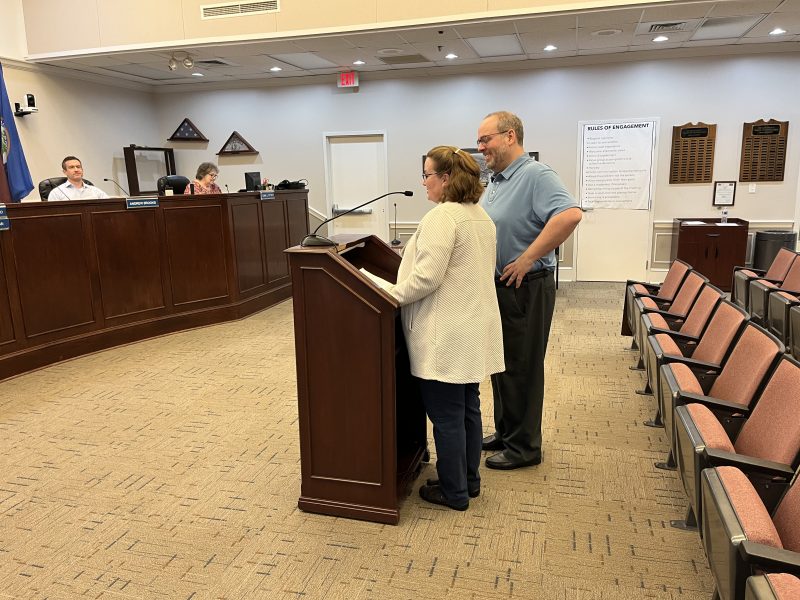
Melissa and Robert Mitchell speak in favor of their application for a short-term rental at the “Edge Hill” property they own.
As lot size increases, the new ordinance advances allowances for how large the operation can be. Under the largest lot sizes described by the third tier, it allows for one rooster at a certain ratio to the number of hens. For a down-in-the-weeds look at numbers and regulations, the summary table for the three-tiered system is available in the agenda packet for the commission’s April 15 meeting on the Town website. The packet exhibits the extensive research staff has done, including conversations with the Virginia Cooperative Extension.
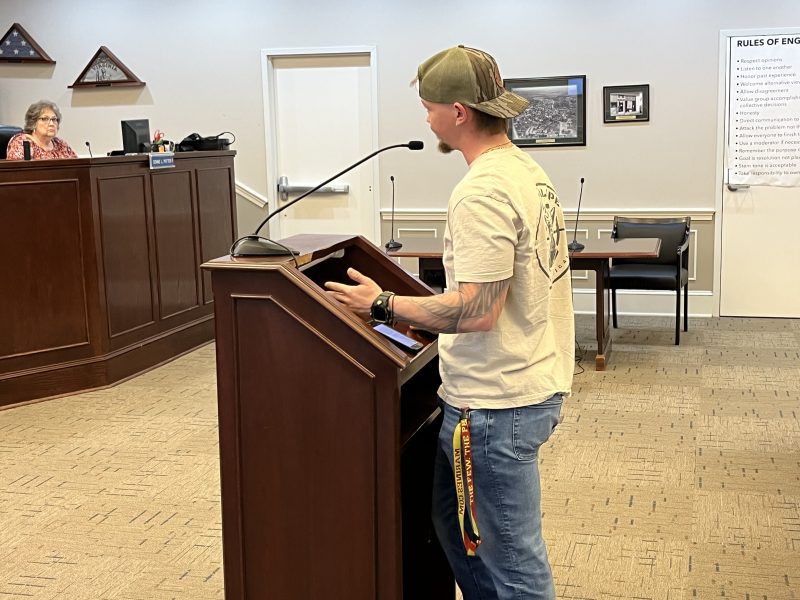
Applicant David Cressell, a local supplier of arms to law enforcement and law-abiding citizens, speaks in favor of an ordinance update to define and regulate firearms business concerns in the C-1 commercial district.

Also, the commission voted unanimously to recommend approval of a text amendment to regulate by-right and special-use firearms businesses in the C-1 commercial district, depending on size and description. Another unanimous vote to recommend approval was occasioned by an application for short-term rental of the “Edge Hill” residence, known in this community as a historical gem. Vice-Chairman Megan Marrazzo expressed her enthusiasm for what the owners are doing to preserve that gem.
Following the planning director’s report, in which Lauren Kopishke reminded the commissioners of an upcoming review of the subdivision ordinance, the meeting was adjourned.
Watch the Front Royal Planning Commission Meeting of April 15, 2026.



Why Wait Till November? Mid-Term Election Early Voting Processes in Place Now

US Senate Leaves Nation’s Capital in Advance of Midterms With Much Still Undone

Business Growth Series: If You Don’t Control Your Day, It Controls Your Business

The End of a 20-Year Monopoly on the Credit Score

Voltron and Immigration

States OK Solar Panels for Balconies. Safety Guidelines Haven’t Caught Up

Trump TV Ads Paid for with $20M in Homeland Security Funds, Dems Find

Blue Ridge Wildlife Center Patient of the Week: Gray Treefrog

Birthday Twins: See Which Famous Face Shares Your Big Day

Meet-and-Greet Set Sunday for Republican-Endorsed Front Royal Candidates

Barbara Ann Mathews Smelser (1943 – 2026)

Kathleen Frances Elar (1956 – 2026)

Happy Creek Crossing to Hold Vendor Interest Meeting Oct. 8 in Front Royal

If the Car Name Fits, Drive It

Front Royal Begins Smoke Testing Sewer System; Residents May See Smoke Around Homes

Trump Orders Federal Agencies to Replace ‘Artificial Intelligence’ With ‘Super Intelligence’

Town-Wide Weed Spraying Underway in Front Royal Through Oct. 6

Southbound I-81 Lane Closure Near Strasburg Expected to Cause Significant Weekend Delays

Virginia Democrats Warn More Healthcare Strains Loom After November Election

Legislation to Force Virginia Traffic Camera Fine Payments Will Make ‘Nightmarish’ Court Workloads

CDC’s Latest Youth Behavior Report Offers a Narrower Look at Teen Health

News Organizations Banned from White House Accuse Trump of First Amendment Violation

Virginia Education Board Approves New Rules for Local Student Assessments

FCC Halts Automatic Approval of Verizon Plan to End Legacy Landline Service in Virginia
