
Local News
Blue Ridge Wildlife Center Patient of the Week: Canada Goose
What can one sick Canada Goose tell us about the health of wildlife, domestic animals, and even people? Quite a lot.
This Canada Goose arrived at the Center from Spotsylvania County after being found lying on the ground, barely responding to people approaching.
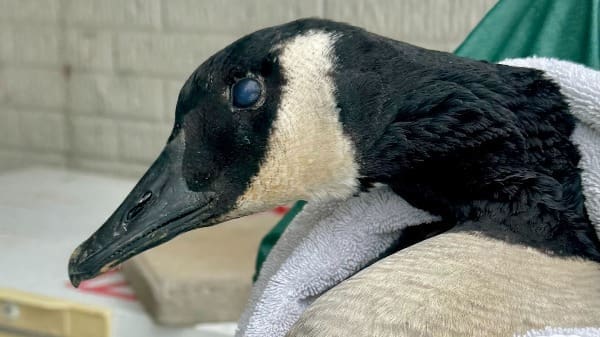
Our veterinary team immediately recognized several concerning symptoms: cloudy, swollen corneas, head tremors, and an inability to stand. These are classic warning signs of Highly Pathogenic Avian Influenza (HPAI), commonly known as bird flu.
Unfortunately, the severity of this goose’s neurological and visual impairments left no humane treatment options, and our team made the difficult decision to euthanize the bird.
Laboratory testing later confirmed what our veterinarians suspected: this was our first positive Highly Pathogenic Avian Influenza (HPAI) case of the season.
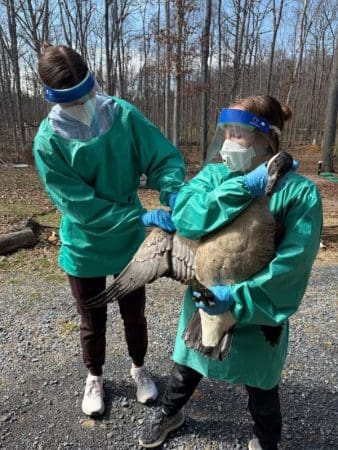
More commonly known as “Bird Flu”, HPAI has been circulating in North America since 2021, with devastating consequences for wildlife populations and domestic poultry.
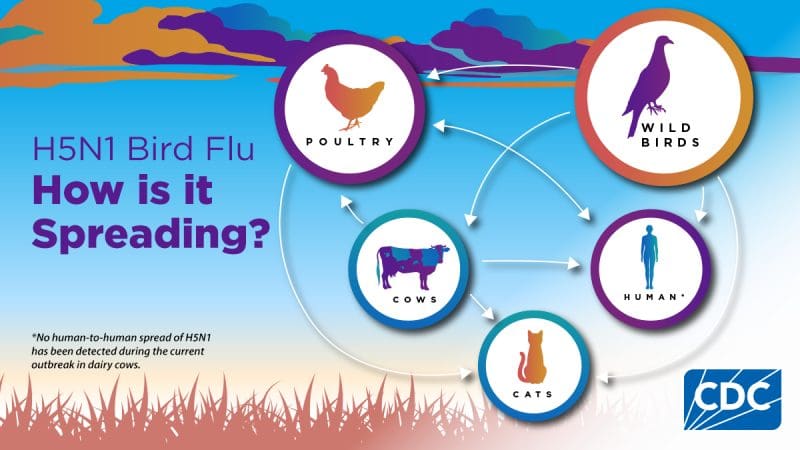
The virus has also crossed into mammals, including dairy cattle, seals, and other species. While the risk to the general public remains low, each new infection presents another opportunity for the virus to evolve.
So why should you care about a sick goose in Spotsylvania County?
Because diseases don’t recognize the boundaries between wildlife, domestic animals, and people.
At BRWC, our work doesn’t end with treating individual patients.
Through our active infectious disease surveillance, we investigate illnesses in wildlife, identify emerging threats, and collect valuable information that contributes to our understanding of diseases affecting animals and people.

This is One Health in action: recognizing that the health of wildlife, people, domestic animals, and our shared environment is interconnected.
This goose’s outcome was heartbreaking, but the information gained from its diagnosis matters. Understanding where diseases like HPAI are circulating, which species are affected, and how they are spreading is essential to protecting wildlife populations and informing broader public and animal health efforts.
Our patients have important stories to tell, and through One Health research, we’re working to ensure those stories contribute to something bigger.

This week, we’re continuing our Giving Tuesday campaign by highlighting One Health Research, one of the four pillars of BRWC’s mission.
When you make a donation, you’re helping us do more than care for the animals who arrive at our doors. You’re supporting critical research and disease surveillance that helps us understand emerging health threats, protect wildlife populations, and contribute to the health of domestic animals and people.
What we learn from the wildlife we care for today could help protect countless lives tomorrow. Please, help us make that possible!




Blue Ridge Wildlife Center Patient of the Week: Canada Goose

POLICE: 7 Day FRPD Arrest Report 11/9/2026

This Week’s Showtimes at Royal Cinemas as of November 12th

Town Council Arrives at Consensus on Joint Tourism Agreement with the County

From Steel to Sharp: Front Royal Craftsman Turns Handmade Knives Into Works of Art

Jest a Moment: Great Unheralded Moments in Food History

Virginia Elected a Woman Governor. The State Constitution Still Says ‘He’

JLARC: Data Center Tax Break Accounts for 60% of Virginia’s Incentive Spending

Commentary: The Blue Tsunami Has a Message for Virginia Democrats on Data Centers and Campaign Finance

Trump Open to Immigration Deal, Calls Crackdown ‘Too Tough,’ Despite Miller Promotion

That Flashing Orange Hand Doesn’t Mean Run: What Pedestrian Signals Really Mean

The Secret to Perfect Snickerdoodles?

Nationwide Emergency Alert Test Set for November 17: What to Expect on Your TV and Radio

Kathy McDonald Butler (1973 – 2026)

UVA Researchers Develop Powerful AI Tool to Help Unlock Causes of Disease and Speed New Treatments

Samuels Public Library Holiday Open House Brings Santa, Mini Alpaca, and New Youth Gift Market December 12

Would You Drive With Your Eyes Closed? Virginia DMV Launches Powerful New Distracted Driving Campaign

Mead Mile Takes a Turn Towards Youth-Oriented Community Nonprofit ‘Reaching Out Now’ for 2026 Event Fundraising

Virginia Could Lose Representation, Funding Under Proposed Census Rule Change, AG Jones, Housing Orgs Say

Virginia Localities Rethink Use of License Plate Readers Amid Privacy Concerns, Report States

Commentary: After the Blue Tsunami, Democrats in Virginia, Nationwide Should Avoid Misinterpreting Their Mandate

Cars Changing Lives Car Show Breaks Attendance Record as Organization Nears 100th Vehicle Giveaway

GOP Congress Faces Funding Deadline, Farm Bill, Lengthy To-Do List in Year-End Session

The Childhood Illness That Looks Like Slapped Cheeks: What Parents Should Know About Fifth Disease
