
Interesting Things to Know
The VDOT archaeologist who uncovered The Witch Bottle
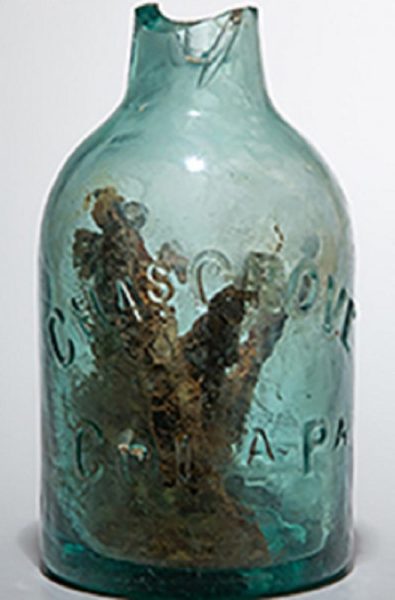
Possible witch bottle found under I-64 in Virginia. Photo courtesy of VDOT.
Prior to joining the Virginia Department of Transportation in March 2019, Chris Shephard, Richmond District archaeologist, made a “bewitching” discovery in an archaeological excavation of a Civil War fortification furing the Interstate 64 widening project.
His team from William & Mary uncovered the “witch bottle” that recently went viral online.
Witch bottles, folkloric artifacts, are collections of objects buried or hidden in houses to ward off evil spells or witchcraft.

This particular bottle was discovered in 2016 in the median of I-64 near Williamsburg.
Though damaged, the cask and contents were intact, having been preserved by the dirt dumped when I-64 was first constructed.
Shephard said the bottle may have been used to store nails to set up the Union camp at Redoubt 9. But a member of his crew, based on his own knowledge of folk traditions and witchcraft in colonial Pennsylvania, suggested it may be a witch bottle
“There is compelling evidence, as the bottle was found buried upright near a brick hearth with a nest of iron nails inside [similar to other bottles],” he said.

“There are ample written accounts of these practices in America and Europe and examples have been found archaeologically.
“On the other hand, all we have in this particular bottle is nails. If there was a cork on the bottle it disintegrated long ago in the acidic Tidewater soil, and any organic materials that may have been in the bottle are long gone.”
Still, he remains skeptical about the artifact’s purpose. A witch bottle is a deeply personal item, which is atypical in longer-term encampments.
“Soldiers likely spent most of their time in permanent accommodations in town, where they kept their personal effects,” Shephard said. “A rarely manned outpost that never saw action after it was taken by the Union seems an unlikely place to bury a witch bottle, but I can’t say what was in their heads.”

Though his team didn’t have time for further research, the item is still one of fascination and maybe revisited by other archaeologists.
“The great thing about archaeology is that in circumstances where the evidence points you in multiple different directions, it is okay to have multiple interpretations.”



From Wallpaper Cleaner to Toy Box Legend

Expert Tips for Loading a Moving Truck Properly

Intimacy Remains an Important Part of Life for Many Older Adults

Trump Proclaims Flag Day and National Flag Week Ahead of America’s 250th Anniversary

United States Army Marks 251 Years of Service

National Parks Shouldn’t Be Political Billboards

Ask the Expert: Should I Refinance to Pull Cash Out of My Home?

Market Value, Not Tax Assessment, Should Guide Home Listing Price

Natural Cemeteries Offer a Greener Way to Plan Final Resting Places

Ole Timer’s Antiques Celebrates 25 Years on Front Royal’s Main Street

Protecting the Valley: Lessons from Prince William County’s Data Center Boom

VDOT: Warren County Traffic Alert for June 15 – 19, 2026

Beth Macy Brings Congressional Campaign to Warren County Democratic Gathering

A Gardener’s Guide to Surviving Your Pets

Why ‘Tom Sawyer’ Still Matters 150 Years Later

Commentary: The Exemption Virginia Can’t Price and Won’t Stop

New House Budget Strips Environmental Standards for Data Centers, Creates Commission Instead

Spanberger Defends Wave of Vetoes as Frustrated Democrats Push Back

Front Royal’s Juneteenth Celebration Returns for Third Year of Music, Food, and Community

Diabetes Reversal Group Brings Health Awareness Campaign to Valley Baseball League

Elder Abuse Awareness Day Highlights Hidden Harm Facing Older Adults

Right Tools Can Make Hobby Farming Easier and Safer

In Albemarle County, Park’s Edge Residents Endure Stinking Floods, Rat Infestations, Fire Hazards

Frederick Nigel Lewis (1962 – 2026)
