
Local News
Blue Ridge Wildlife Center: a haven for injured wildlife – and education
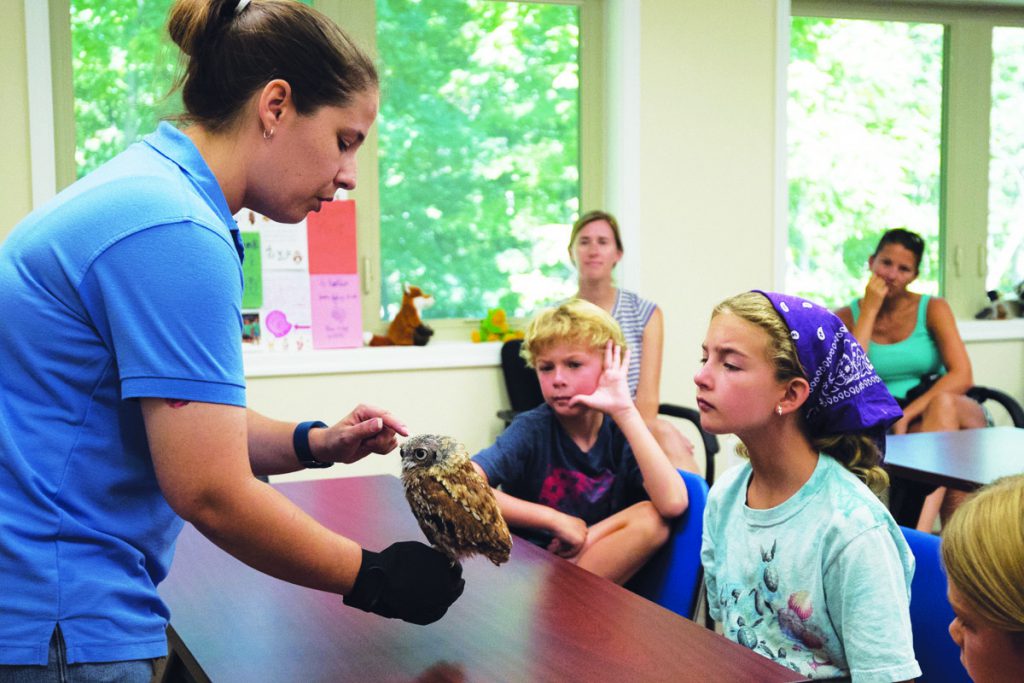
Heather Sparks shows an Eastern Screech Owl – ALL PHOTOS/COURTESY DARA BAILEY DESIGN
What struck me as I entered the relatively new habitat of the Blue Ridge Wildlife Center (BRWC) in Clarke County was the air of kindness that wafts through the quiet interior of the building which is a refuge for the injured and sick wild animals from our area of the Shenandoah Valley.
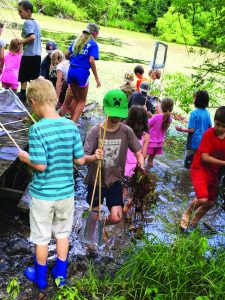
A scene from Summer Camp 2016
Hidden away on its leased 17 acres of grass and trees and immune to the traffic noise of nearby Route 50, this 21st century hospital for the creatures of the wild that make their homes among us, displays the essence of human kindness through its quietly efficient professional and volunteer staff, led now by a new executive director, and a veterinarian who arrived at the Center just one year ago.

A smiling Christopher Scott, the new executive who lives in Winchester, greeted me in the admissions area of the $1.5 million two-floor — ground and basement — building the day before the announcement of his appointment! Minutes later, through a glass partition, Dr. Jen Riley, DVM was pointed out to me. She was anesthetizing a hawk in a state-of-the-art operating theater.

Wildlife Center Executive Director Christopher Scott
Franny Crawford, director of development, was my knowledgeable guide. I was quickly introduced to certified wildlife rehabilitators Heather Sparks and Jennifer Herghoffer, then to Jessica Andersen who will obtain her certification this fall. And then to a plethora of interns and a bunch of permanent residents including Jefferson, a patrician bald eagle; Dopey, an eastern screech owl who won our staring contest; Ruffio, a baby grey squirrel who poked his nose out of his bed in welcome; Beeker, the striped skunk. Beeker was hunkered down in a cage with Andersen eating his lunch prepared in the center’s super-sized kitchen. “He really prefers stink bugs,” Jessica remarked, as she fondly stroked the animal’s head.

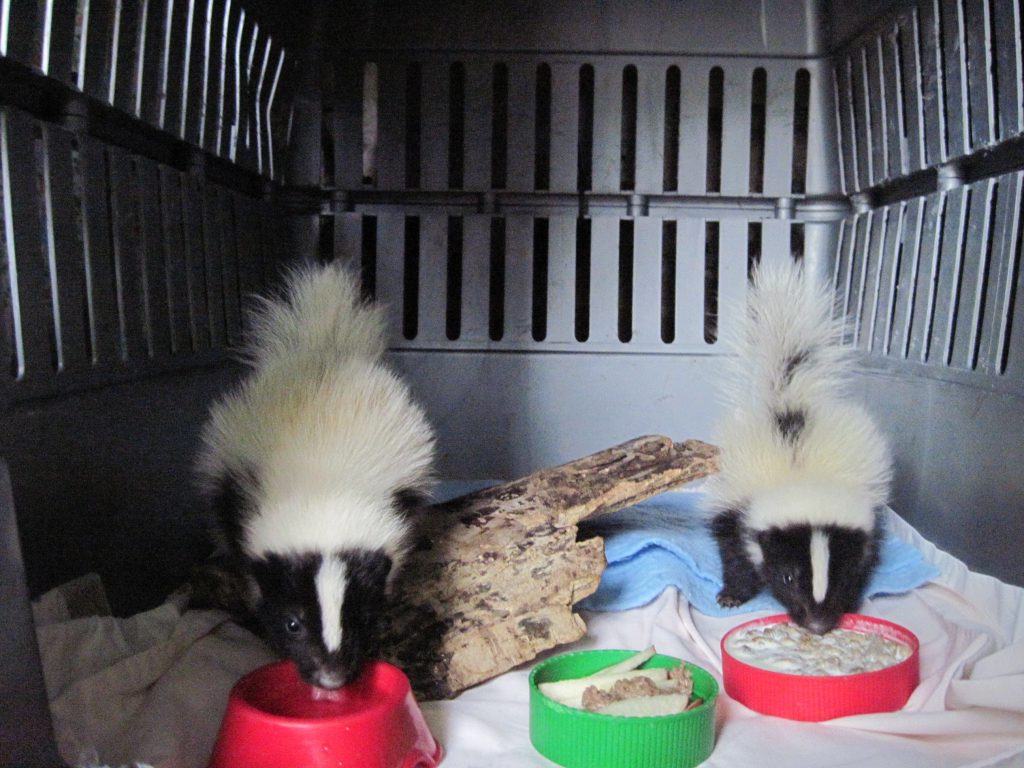
Above, baby squirrel feeding; below baby skunks doing the same.

These guys, and others including Slim, the black snake; Snow, an Arctic fox; Briar Rose, red tailed hawk; and the box turtle Quasimodo (not very communicative), are called the center’s “Wildlife Ambassadors,” the stars of education and program exhibits that Franny enjoys boosting. All have been treated for injuries but are those few that cannot again be out in the wild to fend for themselves.
Franny showed me a classroom where Berghoffer holds forth, usually during the “quiet” time – October through March – to school kids and university students. It also housed resident animals, like those in the outside cages, whose injuries were so grave that even after expert veterinary treatment they were not releasable.
Spring is when all hands are called on for their best efforts by veterinarian Riley. That’s when the unborns start to be born; when birds begin flying into cars; and the possums begin roaming the country roads and highways. One permanent resident is a peregrine falcon who collided with an airplane at Dulles.
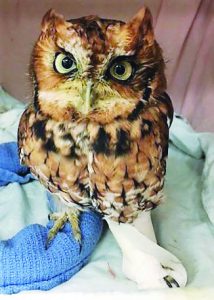
Eastern Screech Owl in rehabilitation

While more than a thousand birds, animals, and reptiles are brought to the center each year, it’s the birds and possums that lead the injured lists. They fight a losing battle against automobiles and trucks; while a high percentage of small wildlife deaths and injuries come from a losing battle with their natural predators, including in developed areas, domesticated cats, who as their owners know, never really lose their hunting instinct.
Linda Goshen, chair of the Blue Ridge Wildlife Center board of directors, who lives in nearby Millwood, wrote in the organization’s most recent newsletter, “The Ridgeline,” about the approaching spring and the second full year in the new shelter:
“What a difference our new facility makes to the work of the BRWC as it moves through its first spring season caring for our region’s injured and orphaned native wildlife!
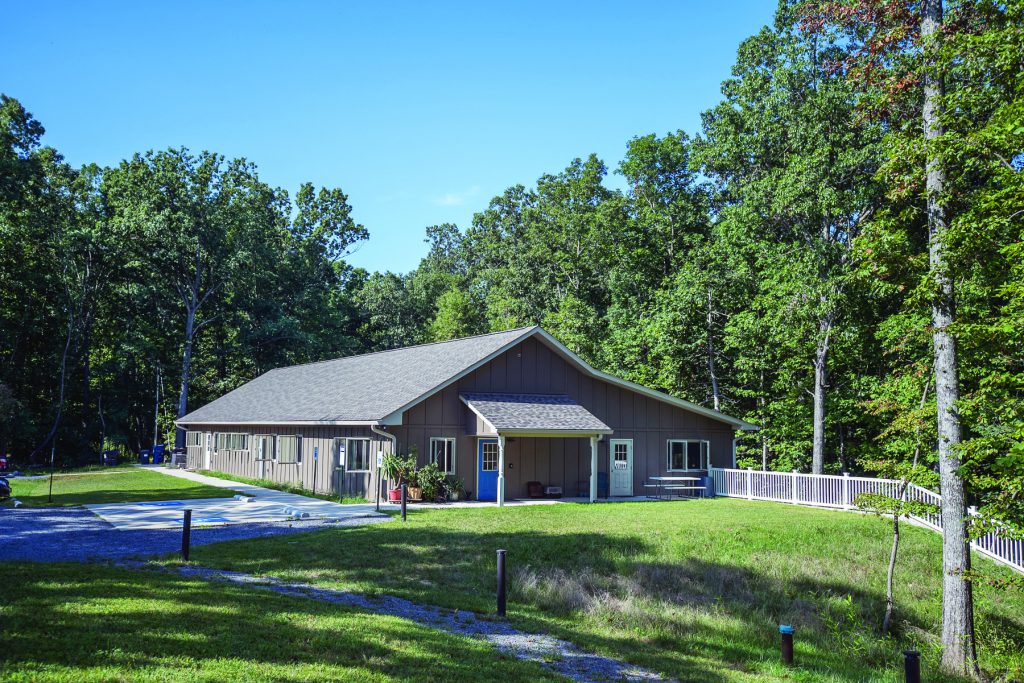
New Blue Ridge Wildlife Hospital and Rehabilitation facility

“The heightened activity that now fills our outdoor environment can bring humans and wildlife in closer contact. People are outside longer and wildlife parents are busy, often crossing roads, foraging to feed their young …” She drew attention to articles in the newsletter that would help us know what to do when we see, for example, an injured raptor, fox or racoon. For starters, call the BRWC hotline: (540) 837-9000. One of my neighbors should make a call to determine how to prevent possums making their homes beneath his Rockland house!
With all the wildlife babies pouring in at present, Goshen is publicizing an upcoming “”Baby Shower” at Long Branch Historic House and Farm in Millwood on Sunday, June 4, noon to – 3 p.m. For gift ideas (bird seed; dry cat and dog food; bleach are some suggestions) visit blueridgewildlifectr.org Take the kids and let them see the baby animals!
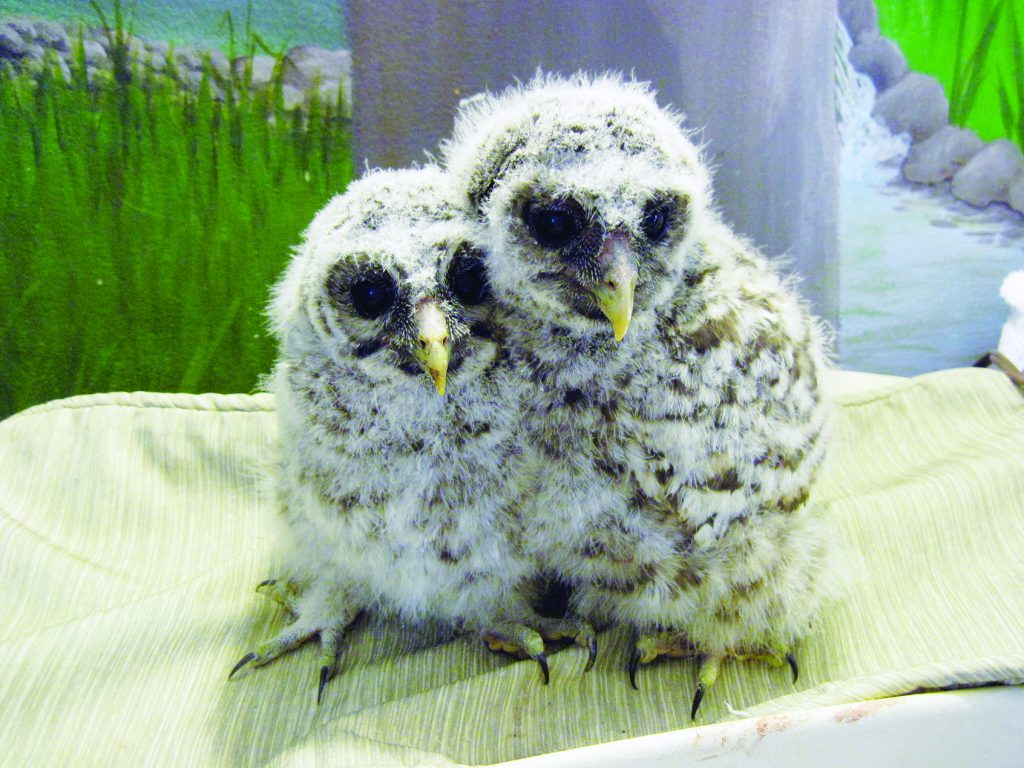
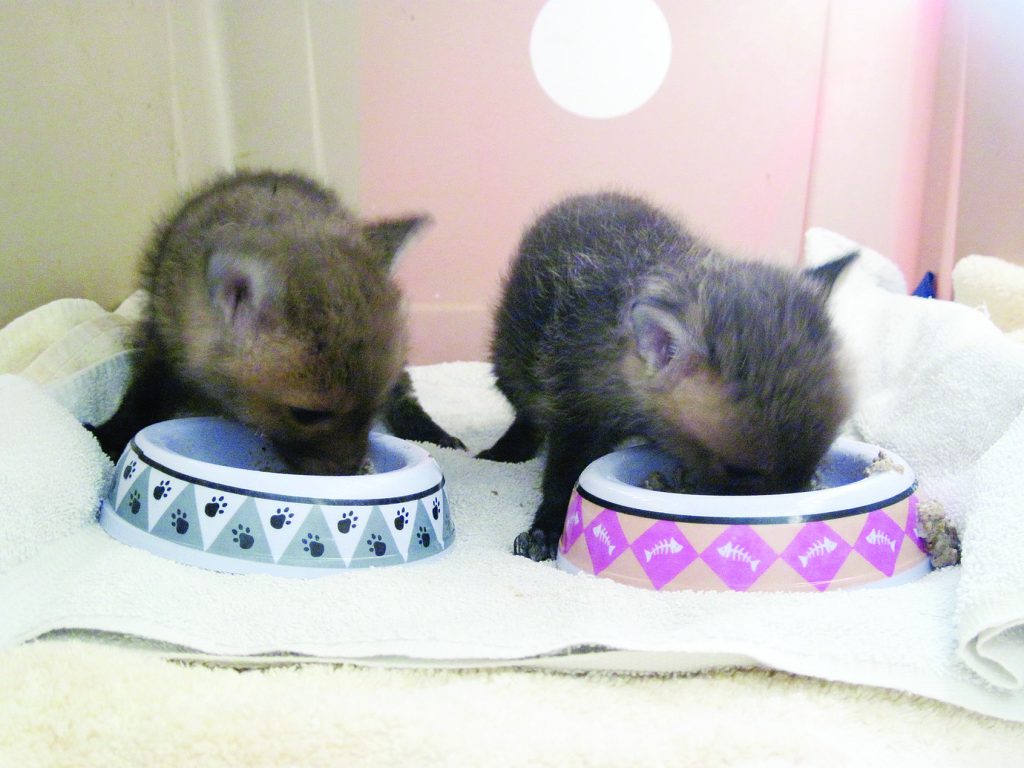
Baby Barn Owls and baby Red Foxes
The center is also embarked on a final major league push to raise the remaining $200,000 owing on the new building. I particularly noticed an impressive plaque bearing the names of major donors, and major, major, donors, on an interior wall.

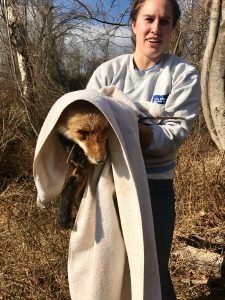
Jessica Andersen captures an injured Red Fox
Goshen, along with executive director Scott and 10 board members, oversees an annual operating budget of approximately $400,000. BRWC’s stated mission is to “insure the future of our region’s wildlife through rescue, rehabilitation, education and research.” A not-for-profit 501 (c) 3 organization that began in a small and old nearby house in 2001. The house served its purpose, but barely, for 15 years until sufficient funding came along to build the current hospital and hire the necessary staff. The board is a who’s who of committed members including Beatrice von Gontard of Warren County, vice chair; Hilary Davidson, secretary; Mike Morency, treasurer; Timothy Bates, Tricia Booker, Andy Ferrari, Susan Galbraith (hello, Susan!), Judy Landes, Russ McKelway, and Patricia Robinson.
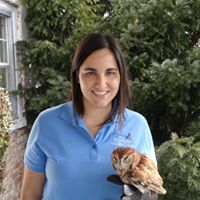
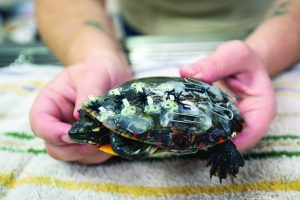
Dr. Jennifer Riley, DVM, with a resident screech owl of which the author observed, ‘We tried to out stare each other. – He won!’ Below, Dr. Jen’s handiwork – pulling a broken turtle shell back together
Dr. Riley heads up the “team” – the worker bees – which consists of the aforementioned Heather Sparks, Rescue and Rehabilitation Manager; Jennifer Burghoffer, education manager; Jessica Andersen, rescue and rehabilitation associate; and Franny Crawford, director of development.
In addition to caring for and treating the animals, BRWC offers speakers for outside groups; a summer intern program (14 college students have signed up this year to work alongside rehabbers and the veterinarian; summer camps for kids 7 through 14; a future veterinarian “extern” program for college students who want to take a semester studying native wildlife. Also on the drawing boards is a wildlife walk.
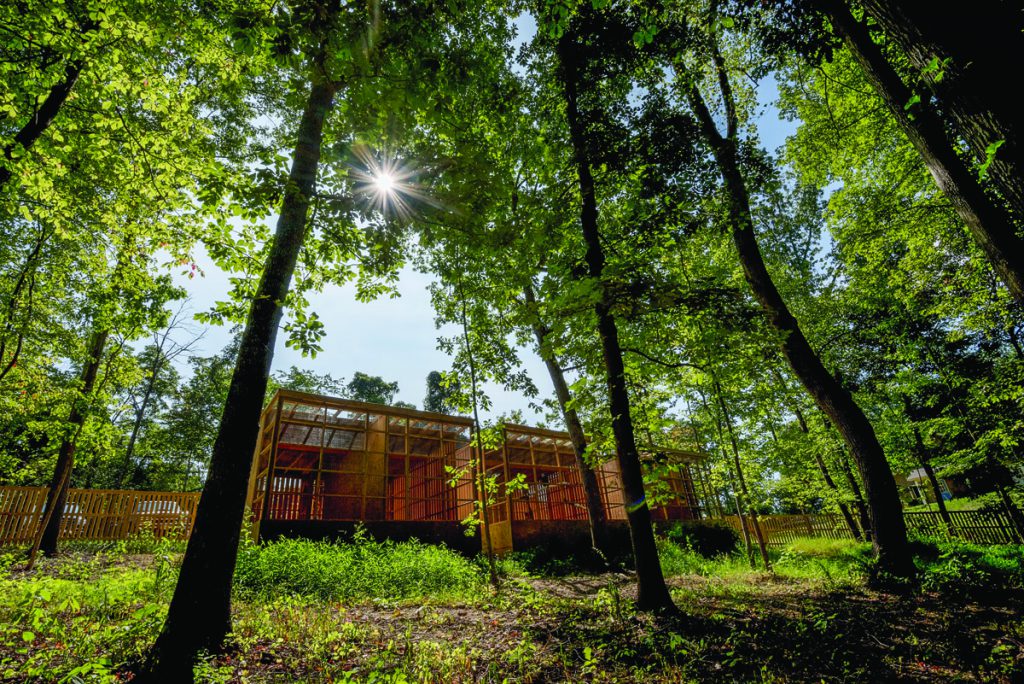
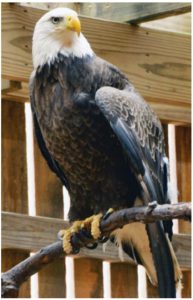
Raptor Hill, home to Jefferson the American Bald Eagle, Briar Rose, the Red Tailed Hawk, and Lucy the Red Shouldered Hawk; Jefferson and Lucy are pictured below.
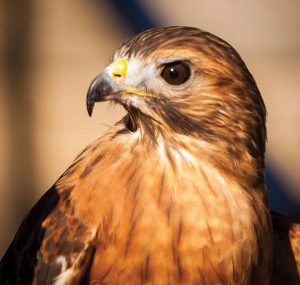
I was shown an “almost unique” circular flight cage that provides a “flight school” for raptors. Prior to release after successful veterinary treatment, the huge cage allows the big birds to fly in a safe enclosure prior to release with fully recovered flight muscles. Ultimately, this and other occupied cages will be surrounded by a viewing deck.
The BRWC receives no public money. It relies solely on foundation grants and individual gifts and revenue from two special events, the “Baby Shower” and a fall gala. The “Society of Wildlife Guardians” is a group of “leadership donors” who contribute $500 and up in operational support. “Wildlife Guardians” who contribute lesser amounts “are the backbone of the organization and contribute significant (money and goods) to the well being of the organization and support the BRWC’s educational programs,” Franny Crawford told me.
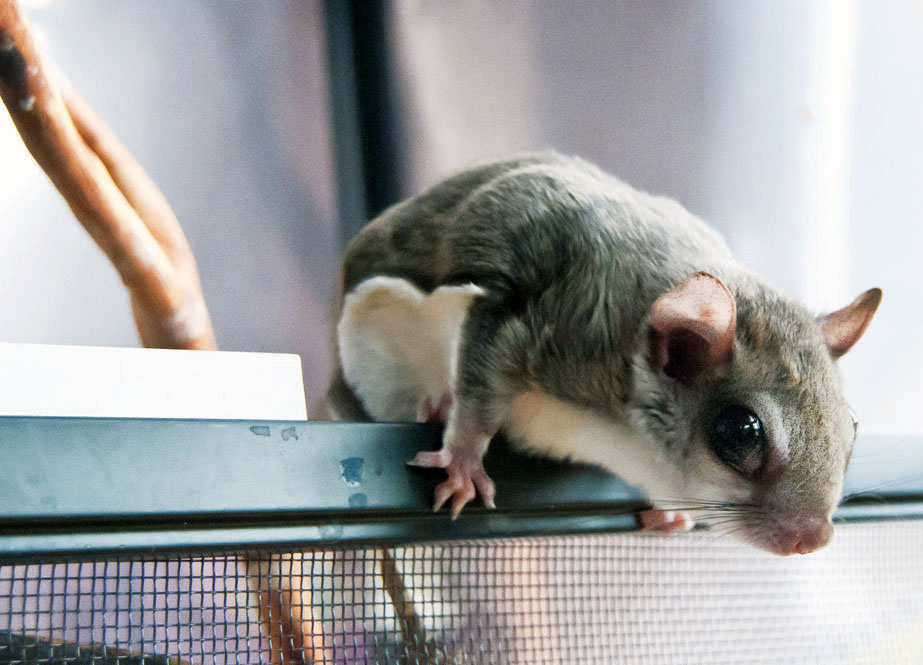
Rocket, the flying squirrel (he thinks he’s an eagle)




NAACP Warren-Page Branch Announces Fall Meetings and November Election

Cline Highlights Veterans Entrepreneurship Bill, Financial Privacy and Farm Trade

TGI Fridays Wins Sheriff’s Office Foundation’s First ‘Battle of the Bites’

Stone Branch Arts Center to Host Fall Open House on Aug. 22

Fairness and Accountability Should Apply to All

Family Stability is Education Policy

VDOT: Warren County Traffic Alert for August 17 – 21, 2026

Virginia State Police Report Nearly $1 Million in Drug Seizures During Weekly Crime Suppression Operations

Community Concerns Grow Over Proposed Strasburg Data Center Campus

Putting People Back at the Center of Community Leadership

Warren County Middle School FFA Earns National Three-Star Gold Rating for Second Straight Year

Every Drug Scourge Has Ended the Same Way. Will This One?

Virginia School Board to Appeal Federal Court Order to Remove Confederate School Names

Historic Travels: Pierre’s Hole, Idaho

Business Growth Series: Give More Value, Get More Customers

Lowdown from Loudoun: Virginia Official Shares Data Center Tips with Maryland Audience

The SCC Must Judge Dominion’s Future, Not the Governor’s Office

ORDER OF PUBLICATION: In the Circuit Court for Warren County, Virginia

When the Warehouse Robot Speaks Your Language

Butterflied Roast Chicken Delivers Crispy Skin and Juicy Meat

The Hidden Cost of Empty Storefronts

DOJ Targets 3 More States in Effort to Axe In-State Tuition for Immigrants

Program Connects Deployed Service Members with Foster Homes for Pets

Warren County Celebrates First Customer Connection Through All Points Broadband Expansion
