
Local News
Blue Ridge Wildlife Center Patient of the Week: American Barn Owl
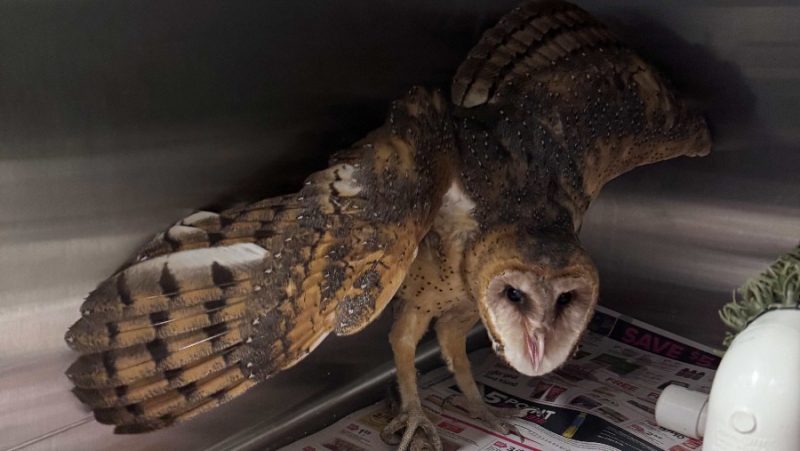
This young Barn Owl was brought to us after being found on the ground.
Fortunately, our examination revealed no injuries, and the owl was bright, alert, and perfectly healthy. It was simply a brancher, a young owl that has left the nest but is not yet a strong flyer.
We always appreciate finders who take the time to have young wildlife evaluated when they are unsure if something is wrong.
While many branchers and fledglings spend time on the ground or perched low as they develop their flight skills, it can be difficult to tell the difference between normal behavior and an injured bird.

A quick examination can provide peace of mind and ensure an animal receives treatment if needed.
Although branchers can make short flights, they are often easier to approach and contain than fully flighted adults.
Seeing a young owl on the ground can certainly be alarming, but in many cases, it is a completely normal part of the fledging process.
One of the most interesting behaviors this youngster displayed is called toe-dusting.

While it may look unusual or even neurological at first glance, this behavior is unique to Barn Owls and is actually a defensive display.

By rapidly moving its feet, spreading its wings, and fluffing up its feathers, the owl attempts to appear larger and more intimidating to potential predators.
The fact that this young owl instinctively knew how and when to perform this display was another reassuring sign that it was healthy and developing normally.
After receiving a clean bill of health and confirming that its parents and siblings were still at the original location, this young Barn Owl was successfully returned home to continue growing up in the wild.

Remember: Not every young bird found on the ground needs rescuing. If the bird appears bright, alert, and uninjured, and its parents are nearby, it may simply be going through the normal fledging process. When in doubt, contact a licensed wildlife rehabilitator before intervening.
Looking for an easy way to help native wildlife? Become a monthly BRWC donor! For as little as $5/month, you can provide year-round, sustainable support that helps us fulfill our mission.




Women in Agriculture Continue to Face Barriers as Their Role Grows

This Week’s Showtimes at Royal Cinemas as of October 1st

Surveillance, Outdoor Dining, and Other Community Concerns at Town Council Meeting

When Elected Officials Cross the Line

Trump Administration Revokes $810M Approved by Congress for Refugee Aid and More

The Signs Offer Quick Cash for Homes. But States Want More Oversight

This Drone Hunts Mosquitoes

William Morgan and the Anti-Mason Party

Luria and Kiggans Rematch in Virginia’s 2nd Congressional District Among Most-Watched Races In Nation

Youth Advocates Warn Higher Marijuana Fine Could Deepen Racial Disparities

Virginia DMV Wait Times Plummet to Record Lows After Major Reforms

Lorraine Kephart Dovell (1942 – 2026)

POLICE: 7 Day FRPD Arrest Report 9/28/2026

ORDER OF PUBLICATION: In the Circuit Court for Warren County, Virginia

The Silent Danger of Heating Season

Three Common Myths About STBBIs Explained

Standing Counts, but Walking Counts More

VDOT: Warren County Traffic Alert for September 28 – October 2, 2026

Virginia Health Committee Considers Mandating Licensed Nurses in Every School

After Obama-Era Chesapeake Bay Executive Order Rescinded, Environmental Groups Brace for Fallout

Federal Judge Strikes Down SNAP Deadline That Put Virginia at Risk of Added Costs

Children Activities by Samuels Public Library for the Month of October

$5,000 Match Challenge to Support Warren County Children on Give Like Dolly Day

October 23rd Set for Post-Discovery Motions Hearing in Bradley Treece Gunfire Incident With Neighbors
