
Local News
Blue Ridge Wildlife Center Patient of the Week: Canada Goose
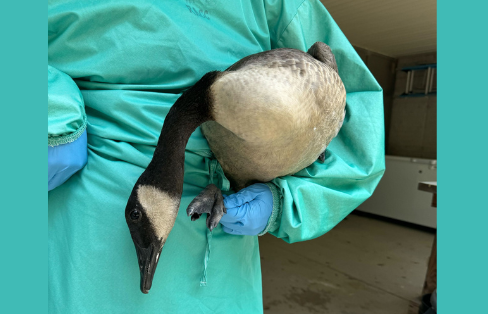
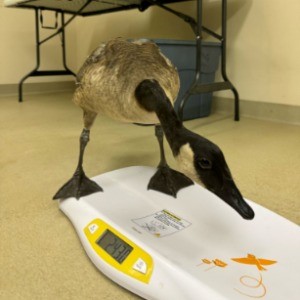
This adult Canada Goose is improving slowly after being found weak, uncoordinated, and unable to hold their head up.
All signs and diagnostics suggest that this bird is suffering from botulism, which commonly affects poultry and wild ducks, especially in late summer when we have hotter weather.
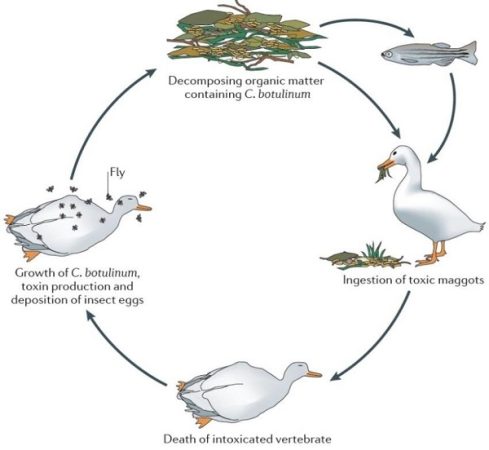
Botulism is caused by the toxins produced by Clostridium botulinum, a bacterial organism. The spores of this bacteria are highly resistant in the environment and they are common in waterways and soils. The toxin is often found in decaying carcasses or decaying plant matter.
Once ingested, the toxins interfere with signals of transmission in the nervous system. In birds, this causes progressive weakness and typically a drooped head, colloquially-referred to as “limberneck” and eventually results in death.
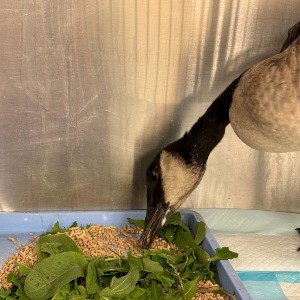
Once signs develop, treatment is largely supportive care including fluid therapy, tube feeding, and physical therapy.
Once victims die of this toxin, their bodies stay in the environment and can contribute to the continued cycle. Vultures can eat the carcasses of botulism victims without becoming infected themselves, which eliminates it from the environment. Making vultures the superheroes of controlling disease spread!
This disease also has zoonotic potential and has been known to affect humans and domestic animals. That’s why we always wear full personal protective equipment (PPE) whenever handling waterfowl and other species that are higher risk for disease spread.
This goose has a guarded prognosis for now, but we will do everything we can to give them the best chance possible!
Looking for an easy way to help native wildlife? Become a monthly BRWC donor! For as little as $5/month, you can provide year-round, sustainable support that helps us fulfill our mission.

Business Growth Series: Why Good Businesses Still Struggle to Grow

Brownies with Mini Chocolate Easter Eggs

Shenandoah Downs Opens 11th Season April 11 with Tribute to Roger Hammer

We Don’t Know Everything About DNA

How PAAS Came to Dominate the Easter Egg Dye Tradition

Spanberger Signs Bipartisan School-Safety, Student Support Bills Into Law

Melanie J. Pomeroy (1958 – 2026)

David Benjamin Heller (1990 – 2026)

1776 Wasn’t Just About Independence

Three-Tiered System for Urban Agriculture Based on Lot Size Takes Shape at Town Planning Commission Work Session

Child Abuse Awareness Month Brings Focus to Reporting, Prevention in Warren County

National Dental Hygienists Week: Is Your Oral Care Routine Optimal?

The Coin That Traveled Through Time and Space

One “What If?” Question Is Changing the Future of Farming

AA Speaker to Explain Recovery Program at United Methodist Men’s Dinner
Jeannette M. Hyland (1944 – 2026)

Allen William Derflinger II (1959 – 2026)

Warehouse Clerk: A High-Demand Job—Even With Robots

FDA Cracking Down on Compounded GLP-1 Drugs

“Christmas in April” or Overspending? Budget Draws Criticism

Court Ruling Voids Prince William Data Center Rezoning, Raising Stakes for Local Debate

Spanberger Signs First Bills Targeting Healthcare, Housing and Energy Costs

Blue Ridge Singers Spring Concerts to Showcase Powerful Blend of Voices and Brass
What Counts as “Good Policy” Depends on Who’s in Power
