
Local News
Blue Ridge Wildlife Center Patient of the Week: Eastern Gray Squirrel
Our first baby squirrels of 2022!
These four babies were found with another sibling after the tree they were living in was cut down. When this occurs, if the babies are not bleeding and have no obvious trauma, renesting should be attempted right away (see below for renesting instructions).
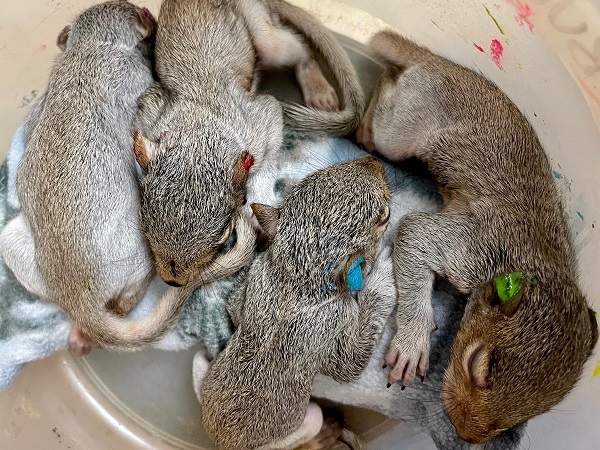
Photos / Blue Ridge Wildlife Center
Unfortunately, well-meaning finders brought these babies inside and began feeding them. After one sibling passed away, they reached out and brought the remaining babies to the Center for care.
On intake, all of the babies were cold, thin, and suffering from diarrhea and pneumonia. These are all issues we see commonly when babies are fed puppy/kitten formula by well-meaning but untrained individuals. The diet itself is not appropriate for baby squirrels and, especially if fed to cold babies, can cause severe gastrointestinal issues. Babies aspirate quite easily, and aspiration is the top cause of pneumonia in human-raised squirrel infants.
Given their condition on admission, these babies have a guarded prognosis, but we are doing our best to treat their conditions and raise them together.
If you find an infant squirrel on the ground without any obvious injuries, attempting to reunite them with their mother is the best option.
Please do not take these babies inside, handle them, or offer food/water! Not only is this illegal, it is also dangerous for you and the squirrel.
Use this flow chart to help you determine the best course of action. If you have questions, or if the baby has been injured or handled by a cat or dog, please call BRWC or your closest rehabilitator right away!
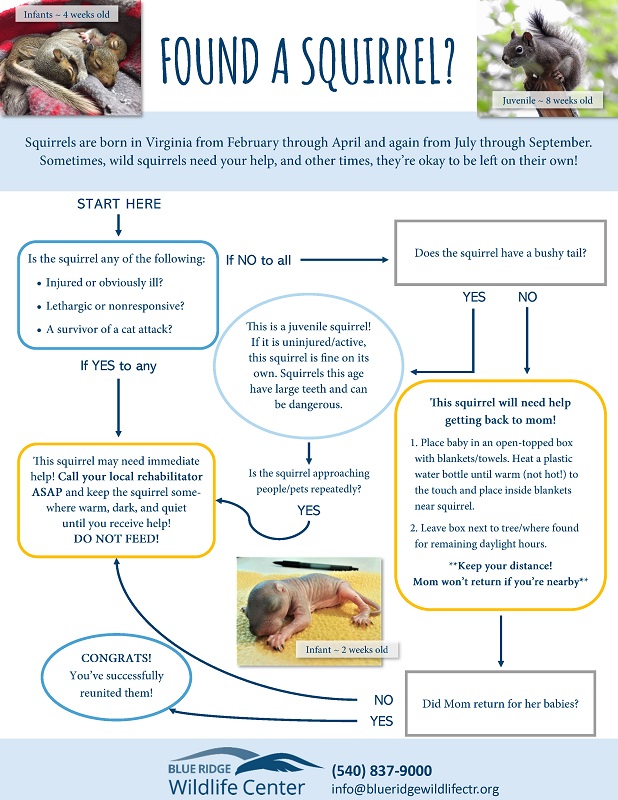
Squirrels are excellent mothers – way better than any human could be. Please let them do their job!
Looking for an easy way to help native wildlife? Become a monthly BRWC donor! For as little as $5/month, you can provide year-round, sustainable support that helps us fulfill our mission.

Spanberger Signs Bipartisan School-Safety, Student Support Bills Into Law

Melanie J. Pomeroy (1958 – 2026)

David Benjamin Heller (1990 – 2026)

1776 Wasn’t Just About Independence

Three-Tiered System for Urban Agriculture Based on Lot Size Takes Shape at Town Planning Commission Work Session

Child Abuse Awareness Month Brings Focus to Reporting, Prevention in Warren County

National Dental Hygienists Week: Is Your Oral Care Routine Optimal?

The Coin That Traveled Through Time and Space

One “What If?” Question Is Changing the Future of Farming

AA Speaker to Explain Recovery Program at United Methodist Men’s Dinner
Jeannette M. Hyland (1944 – 2026)

Allen William Derflinger II (1959 – 2026)

Warehouse Clerk: A High-Demand Job—Even With Robots

FDA Cracking Down on Compounded GLP-1 Drugs

“Christmas in April” or Overspending? Budget Draws Criticism

Court Ruling Voids Prince William Data Center Rezoning, Raising Stakes for Local Debate

Spanberger Signs First Bills Targeting Healthcare, Housing and Energy Costs

Blue Ridge Singers Spring Concerts to Showcase Powerful Blend of Voices and Brass
What Counts as “Good Policy” Depends on Who’s in Power

Planned Parenthood Presses Virginia to Restore State Funding for Contraception Program

Weapon Offenses Rise on Virginia University Campuses

Trump Steps In to Pay TSA Workers as Congress Remains Stalled

Escaping the ‘Captivity of Activity’ by Making Time to Rest

Why Wearing a Bike Helmet Matters
