
Local Government
Definition and Prohibition of Data Centers Recommended Unanimously at Special Town Planning Commission Meeting
There was a sense of fatigue in the audience at a Town Hall special meeting of the Town Planning Commission on July 29. The point has been made so many times. How long will it be necessary to make it again?
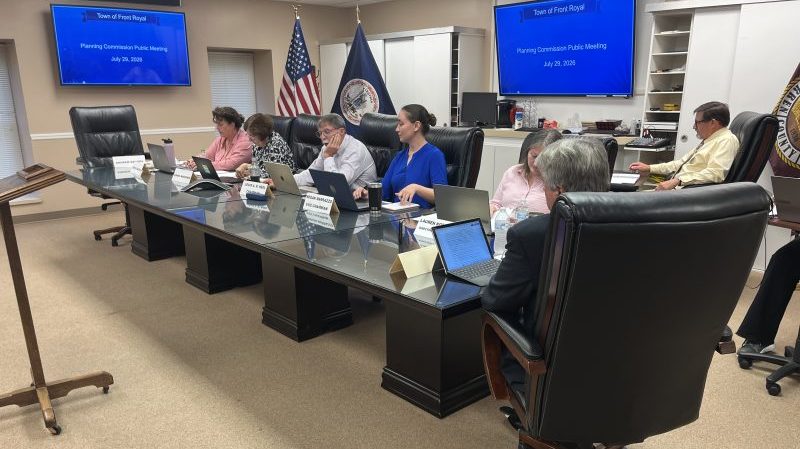
The Town Planning Commission met for a special meeting on July 29. Royal Examiner Photo Credits: Brenden McHugh
In reiterating the ways that data centers are not a good fit for Front Royal, the handful of speakers that night seemed to be crossing a finish line, exhausted but encouraged. The seeming impossibility of the task that the Town Council set for the commissioners, as speaker Kevin Cuddeback pointed out, is not enviable. But somehow, despite that rampant expectation, the commissioners have succeeded in defining “data center” and devising language for a prohibition in Front Royal.
One cannot prohibit what has not been defined. That seems to be at least one of the takeaways from a solid year of developments in the conversation the Town government has been conducting in public meetings about data centers. That conversation has evolved across dramatic differences in approach, at one time imagining that the issue could be solved by allowing data centers with restrictive ordinances under a special-use permitting process. The fruit of that effort on the commission’s part was redirected on June 22 of this year by the council when it mandated a different approach.

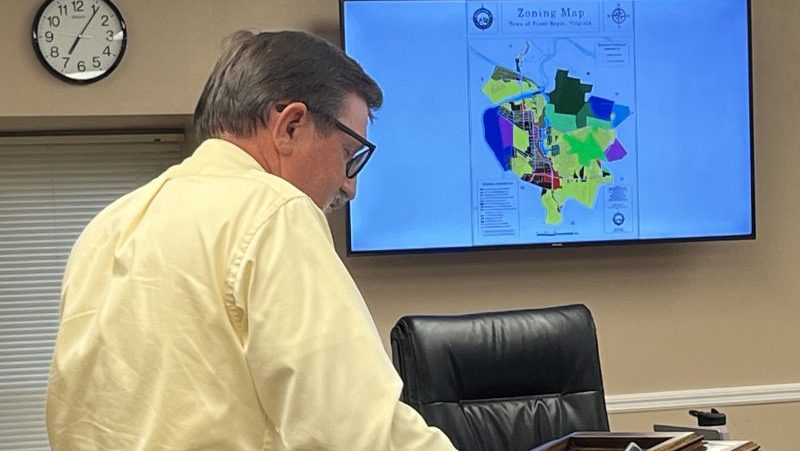
Deputy Zoning Administrator John Ware presented the evening’s business to the commissioners.
Before the commissioners on Wednesday night was a muscular definition of “data center”, using graphic energy thresholds accompanied by descriptions of infrastructure and a floor space consideration, indicating the point where a trafficker of digital data and information has become so intensive that it should not be accommodated by the community. Thus, a data center would, in this matrix, be characterized as user-intensive, while a technology business, offering various types of design, telecommunications, and other concrete services, could operate without tripping the wires that indicate such a level of use.
The intensity of use may be exempted in cases where the user is providing tangible goods. Also, cases such as hospitals or offices, where the use is clearly ancillary, will not be considered data centers. In making these provisions, the commissioners have prevented critical community services from being swept up into the definition. The prohibition, as indicated by the proposed ordinance, will, in the likelihood that it is adopted by the council, ban data centers as defined from operating in Front Royal’s zones for industrial as well as mixed campus development, these being where a data center would appear.
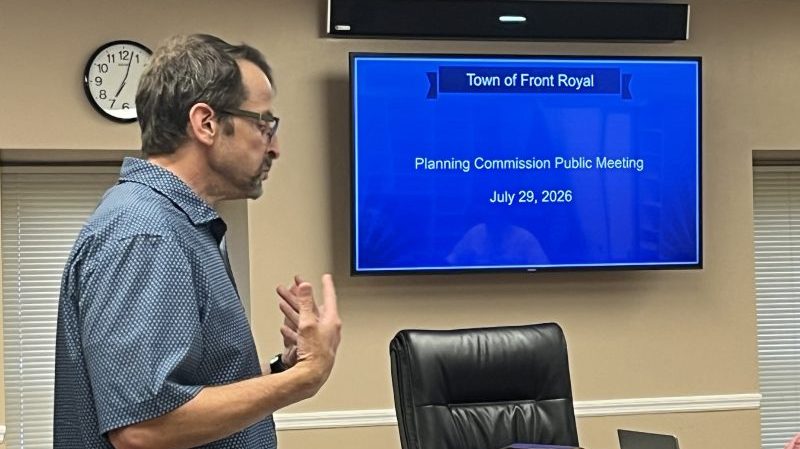
(Above and below) Two out of a handful of speakers addressed the commissioners in Town Hall’s relatively confined space as compared to the government center.

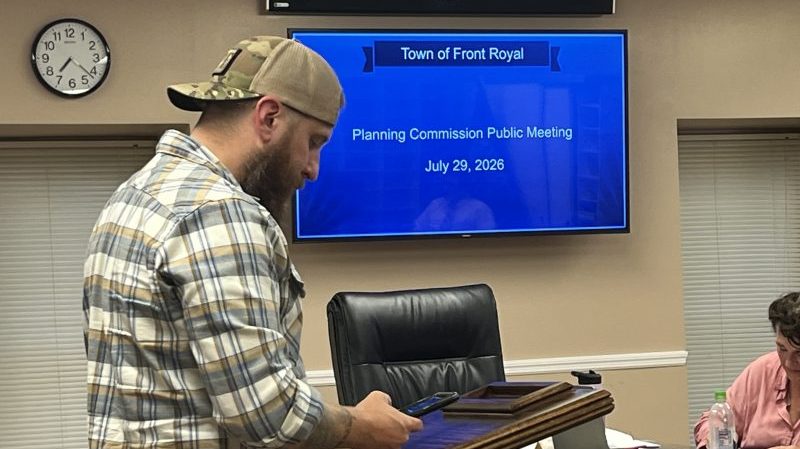
“We have a right to be rural,” speaker Melanie Salins declared, capturing the overall sentiment of most of the citizens who spoke. The commissioners’ response was characterized by a desire to honor that popular wish. While several maintained that the performance standards could have worked well, they nevertheless voted unanimously to recommend approval of the definition and the prohibition to the council.
In her memo, included in the agenda packet for this meeting, Planning Director and Zoning Administrator Lauren Kopishke expressed that she perceives the council’s decision of June 22 as a significant departure from policy, for instance, what is articulated in the comprehensive plan. She recommends accepting the definitions without recommending prohibition. The restrictions under an SUP process would, in her mind, give the Town government the optimal control it needs.
In Chairman Allen Neel’s mind, the evening was a success for community engagement in local government. Neel has been the driving force at every crucial point over the past year, tirelessly researching and leveraging his engineering expertise to deliver the optimal product to the council, in accordance with its specifications. He is currently a candidate for the Town Council.




Barbara Ann Mathews Smelser (1943 – 2026)

Kathleen Frances Elar (1956 – 2026)

Happy Creek Crossing to Hold Vendor Interest Meeting Oct. 8 in Front Royal

If the Car Name Fits, Drive It

Front Royal Begins Smoke Testing Sewer System; Residents May See Smoke Around Homes

Trump Orders Federal Agencies to Replace ‘Artificial Intelligence’ With ‘Super Intelligence’

Town-Wide Weed Spraying Underway in Front Royal Through Oct. 6

Southbound I-81 Lane Closure Near Strasburg Expected to Cause Significant Weekend Delays

Virginia Democrats Warn More Healthcare Strains Loom After November Election

Legislation to Force Virginia Traffic Camera Fine Payments Will Make ‘Nightmarish’ Court Workloads

CDC’s Latest Youth Behavior Report Offers a Narrower Look at Teen Health

News Organizations Banned from White House Accuse Trump of First Amendment Violation

Virginia Education Board Approves New Rules for Local Student Assessments

FCC Halts Automatic Approval of Verizon Plan to End Legacy Landline Service in Virginia

Women in Agriculture Continue to Face Barriers as Their Role Grows

This Week’s Showtimes at Royal Cinemas as of October 1st

Surveillance, Outdoor Dining, and Other Community Concerns at Town Council Meeting

When Elected Officials Cross the Line

Trump Administration Revokes $810M Approved by Congress for Refugee Aid and More

The Signs Offer Quick Cash for Homes. But States Want More Oversight

This Drone Hunts Mosquitoes

William Morgan and the Anti-Mason Party

Luria and Kiggans Rematch in Virginia’s 2nd Congressional District Among Most-Watched Races In Nation

Youth Advocates Warn Higher Marijuana Fine Could Deepen Racial Disparities
