
State News
Feds Respond to Virginia Lawmakers’ Privacy Concerns About Airports’ Facial Recognition Screening
Identification screening technology that launched during the pandemic to reduce airport check-in times has helped improve security and travelers’ experiences, but carries a privacy concern stemming from the capture and storage of passengers’ photos.
Virginia lawmakers, privacy advocates and others have questioned how images of citizens are used and stored, and how peoples’ rights are being protected.
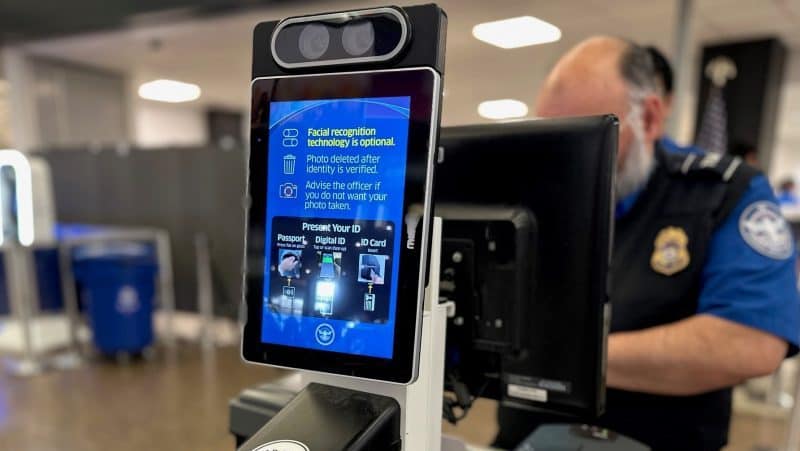
A Credential Authentication Technology unit. (Photo courtesy of the Transportation Security Administration)
The Transportation Security Administration said in a Thursday announcement that the images captured on the airport screening technology known as Credential Authentication Technology (CAT-2) “are never stored” or “used for any other purpose than immediate identification.”

House Communication, Technology and Innovation Committee Chair Cliff Hayes, D-Chesapeake, said tools like CAT-2 are helpful, but safeguards are important to protect civil liberties and privacy as the technology advances.
“Travelers deserve both speed and security when it comes to travel, but it’s not at the expense of their privacy,” Hayes told the Mercury.
CAT-2 was first tested at Ronald Reagan Washington Airport in August 2020. Since then, TSA said it has been using the cameras carefully in conjunction with the research from the National Institute of Standards and Technology standards.
The administration said CAT-2 allows TSA officers to scan a traveler’s photo identification card and capture a real-time photo of them, too. Once the images of the traveler are confirmed, that person is able to proceed for further screening. CAT-2 also includes a plexiglass shield to minimize contact between TSA officers and travelers, and uses a secure Internet connection allowing the units to verify that an individual is ticketed for air travel, eliminating the need to show a boarding pass.

Passengers who do not wish to participate in the facial matching process can opt out in favor of an alternative identity verification process, TSA said. The CAT-2 screens are being updated with language that notifies travelers they may decline having their photo taken.
Hayes said after the technology was piloted in Virginia, he visited multiple airports including Dulles and Norfolk International, and declined to use the technology.
To TSA’s credit, Hayes said, he had no problem being screened. Officers identified him manually using his identification card and boarding pass.
Hayes said he hopes the procedures and policy governing the photos will be codified to ensure travelers’ privacy remains a priority and that their photos won’t be stored or used beyond screenings.

“What’s to prevent that from changing and then all of a sudden, a different administration or depending who’s overseeing it, they could change that policy,” Hayes said. “It needs to be codified, I believe, and absent the lack of any federal law, I think the states need to begin to address that, just as we did with the Consumer Data Protection Act.”
The Act provides residents certain rights that shield personal data collection by businesses.
by Nathaniel Cline, Virginia Mercury
Virginia Mercury is part of States Newsroom, a nonprofit news network supported by grants and a coalition of donors as a 501c(3) public charity. Virginia Mercury maintains editorial independence. Contact Editor Samantha Willis for questions: info@virginiamercury.com.





The Window Topper We Tore Out Is Back

County Elected Officials Seek Path Forward Economically with the Town’s Decision Makers – NOT Behind Citizens Backs

For the Cats’ Sake Fall Market Returns to Front Royal Oct. 3

Leilani Ann “Lonnie” Monahan (1938 – 2026)

Billie Ruth Bowen (1925 – 2026)

Seven Rural Community Colleges Receive $5.93 Million for Healthcare Training

Opioid Authority Awards $12.3 Million for Prevention, Treatment and Recovery in Virginia

Virginia School Board Settles With Parents, Reverses Policy That Blocked LGBTQ+ Student Club

Virginia’s Federal Lawmakers Lock In On Regulating Data Centers

New Guidance Limits Voting Disqualifications to Murder, Manslaughter Convictions

Shenandoah Medical Associates Welcomes New Patients, Continues Longtime Front Royal Care

In Defense of Liberal Art

Prostate Cancer Awareness Month Puts Focus on Risk, Symptoms and Early Detection

A Smarter Way to Screen for Prostate Cancer

Boots and Bourbon Promises a Kick-Up-Your-Heels Night for Education

Blue Ridge Wildlife Center Patient of the Week: Virginia Opossum(s)

This Week’s Showtimes at Royal Cinemas as of September 18th

POLICE: 7 Day FRPD Arrest Report 9/14/2026

Selah Theatre Project Opens New Winchester Home With ‘Clue’

Shenandoah Downs Opens Seven-Week Fall Harness Racing Meet Saturday – Sept 19

Divorce Becomes Next Battleground as Virginia, Other States Debate Family Values

US Supreme Court Blocks Trump Rule Limiting Mail Voting, Sides with Dem States

Edward Ripley “Teddy” Saunders IV (1980 – 2026)

Three Business Tasks That Still Need a Human Touch
