
Meet the Candidates
L. Allen Neel Says Smart Growth and Town-County Cooperation Are Key to Front Royal’s Future
Front Royal Town Council candidate L. Allen Neel says Front Royal’s future will depend on smart growth, strong infrastructure planning, a healthy business base, responsible tourism, and closer cooperation with Warren County.
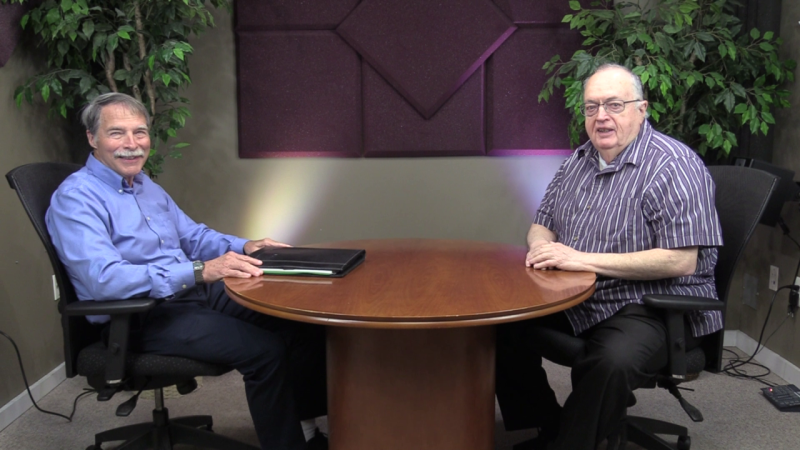
L. Allen Neel speaks with Royal Examiner publisher Mike McCool in the studio about his campaign for Front Royal Town Council.
Neel said his decision to run grew out of his service on the Front Royal Planning Commission, where he gained a closer look at how local government works and where he believes his experience could help.
A veteran and systems aerospace engineer, Neel said he would bring a problem-solving approach to the council, along with his current experience as planning commission chair.

“I think that my background is a mix that’s missing,” he said.
Neel described that background as a systems-based approach to local government. Rather than treating housing, infrastructure, taxes, utilities, jobs, and tourism as separate issues, he said Front Royal needs to consider how each affects the others.
“That’s a discipline and a mindset of looking at everything as a whole,” Neel said. “It’s a holistic picture of each of the pieces that have to do with infrastructure, personnel, jobs, which industry, what kind of industry, and how each of those things interacts.”
For Neel, growth is not something to avoid, but it is also not something to approve without careful planning. He said growth must be managed as a system that remains in balance.

Single-family homes, he said, are important because they create stable neighborhoods, support local businesses, and provide the workforce that attracts employers. But residential growth also brings costs, including roads, water, sewer, public safety, and other services.
Before new homes are occupied, Neel said, the town may already need infrastructure investments and plans for ongoing costs. Developers often contribute through proffers and construction, but those contributions may not cover the full cost or line up with when the town needs the improvements.
“We need better models,” Neel said, adding that he has been working on a model to better understand the cost of growth and proffers. “It surprised me how little both town and county have the ability to look at proffers and what the actual cost is. It’s all fragmented.”
He said some developments may already be allowed under existing zoning, limiting what officials can do. But when future rezonings are requested, Neel said the town must take a harder look at infrastructure, long-term costs, and whether the project fits Front Royal’s needs.

“We need to think through this infrastructure before we approve these subdivisions,” Neel said. “We need to take a hard look at those proffers and what we’re actually getting.”
Water is one example. Neel said the town is not “imminently running out of water,” but future growth will require planning, investment, and possibly additional sources.
“If we can’t support the water, we can’t build,” he said.
Neel said residential growth works best when paired with strong commercial activity and tourism revenue. Homes create demand, but businesses and tourism help generate revenue that can reduce pressure on homeowners.

“They come, they spend their money, and we do the best job we can to show them a good time,” Neel said of visitors. “They leave their money behind.”
He also wants Front Royal to take small and mid-sized production and manufacturing opportunities more seriously. With the town’s location near Washington, D.C., regional aerospace activity, and local medical facilities, Neel said Front Royal should explore employers that could bring both jobs and a tax base.
Neal said town-county cooperation is also essential. All town residents are county residents, and county residents depend on Front Royal for shopping, services, entertainment, jobs, and infrastructure. He said the two governments must work more closely on housing, economic development, tourism, roads, utilities, agriculture, and revenue.
“We are so interdependent, whether we ignore each other or cooperate,” Neel said. “It is imperative that we get that relationship better and work in each other’s interest.”

That cooperation, he said, should include a shared regional identity and a coordinated strategy for job growth, housing, infrastructure, tourism, and responsible development. Neel said rural residents and the agricultural community also benefit when Front Royal and Warren County align their planning efforts.
He pointed to the Shenandoah River, Shenandoah National Park, local trails, agriculture, and Front Royal’s small-town quality of life as strengths that can support responsible tourism and agritourism while protecting the community’s character.
Neel said good government does not come from saying everything is broken or pretending everything is fine. Instead, he said it requires detailed work, public accountability, and long-term thinking.
“No one can say that I don’t come prepared,” Neel said. “I’m a deep dive and an analyst.”
For Neel, the challenge ahead is not a lack of opportunity. It is whether Front Royal and Warren County have the desire, execution, and coordination to make the most of what they already have.
More information on L. Allen Neel for Front Royal Town Council, follow his Facebook page.
Town Talk, sponsored by National Media Services, Inc., is a Royal Examiner series that introduces you to local entrepreneurs, business owners, nonprofit leaders, and public officials who help shape Warren County. Conversations cover a wide range of topics about our community and the people making a difference.




ORDER OF PUBLICATION: In the Circuit Court for Warren County, Virginia

The Silent Danger of Heating Season

Three Common Myths About STBBIs Explained

Standing Counts, but Walking Counts More

VDOT: Warren County Traffic Alert for September 28 – October 2, 2026

Virginia Health Committee Considers Mandating Licensed Nurses in Every School

After Obama-Era Chesapeake Bay Executive Order Rescinded, Environmental Groups Brace for Fallout

Federal Judge Strikes Down SNAP Deadline That Put Virginia at Risk of Added Costs

Children Activities by Samuels Public Library for the Month of October

$5,000 Match Challenge to Support Warren County Children on Give Like Dolly Day

October 23rd Set for Post-Discovery Motions Hearing in Bradley Treece Gunfire Incident With Neighbors

Virginia State Police Seize More Than $1 Million in Drugs During Weeklong Operations

Jolissa Steele Shifflett Mathews (1944 – 2026)

False Birth Control Claims are Proliferating, Survey Says

Business Growth Series: Your Work Environment Is Affecting Your Growth

Frog Hunting Offers Virginians a Different Kind of Outdoor Adventure

How the Tech Bros Shop for a House

County Supervisors Fill Vacant Planning Commission Seat, Look to Future on Processes and Capital Improvements

America 250: ‘I Only Regret That I Have but One Life to Lose for My Country’

Building Gas Plants More Important Than Dominion Sale, Data Center Politics

Home Inspectors Help Buyers and Sellers Understand a Property’s Condition

Bowling Together: Why Work Is More Than a Paycheck

This Week’s Showtimes at Royal Cinemas as of September 24th

POLICE: 7 Day FRPD Arrest Report 9/21/2026
