
Real Estate
How to think about color like an interior designer
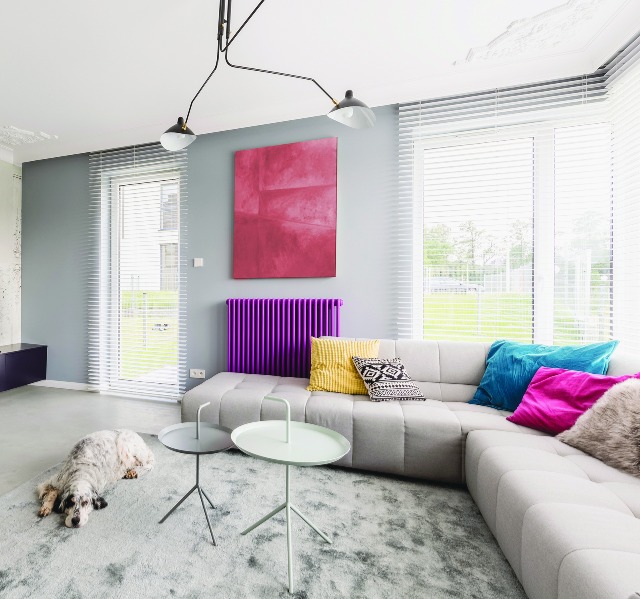
Did you know that design professionals use the color wheel when deciding how to decorate a space? Here are some color theory basics to help you think like a designer when adding color to your home.
 The color wheel
The standard color wheel contains 12 colors: three primary colors, three secondary colors and six tertiary colors. Primary colors (red, yellow and blue) combine to form secondary colors (orange, violet and green). Tertiary colors are derived from combinations of primary and secondary colors.
Variations on these base colors are created by using different shades, tints and tones. Tinting means adding white to make a color lighter while shading involves adding black to make it darker. Tone refers to mixing a color with a combination of white and black.
How designers use the color wheel when decorating
Designers use these principles to figure out different ways to use color in a space. Here are three common color schemes.
• Monochromatic: based on one color in various shades, tones and tints.
• Complementary: complementary colors (orange and blue, red and green, yellow and purple) are directly across from each other on the color wheel. In a complementary scheme, one color serves as the dominant hue and the other as an accent.
• Analogous: based on three colors found next to each other on the color wheel. It’s more subtle than using complementary colors but more colorful than a monochromatic interior.
Designers also consider color temperature. In general, warm colors, which contain more red and yellow, are thought of as more vibrant and cozy while cool colors, which have more blue and violet in them, are seen as calm and relaxing.

We Don’t Know Everything About DNA

How PAAS Came to Dominate the Easter Egg Dye Tradition

Spanberger Signs Bipartisan School-Safety, Student Support Bills Into Law

Melanie J. Pomeroy (1958 – 2026)

David Benjamin Heller (1990 – 2026)

1776 Wasn’t Just About Independence

Three-Tiered System for Urban Agriculture Based on Lot Size Takes Shape at Town Planning Commission Work Session

Child Abuse Awareness Month Brings Focus to Reporting, Prevention in Warren County

National Dental Hygienists Week: Is Your Oral Care Routine Optimal?

The Coin That Traveled Through Time and Space

One “What If?” Question Is Changing the Future of Farming

AA Speaker to Explain Recovery Program at United Methodist Men’s Dinner
Jeannette M. Hyland (1944 – 2026)

Allen William Derflinger II (1959 – 2026)

Warehouse Clerk: A High-Demand Job—Even With Robots

FDA Cracking Down on Compounded GLP-1 Drugs

“Christmas in April” or Overspending? Budget Draws Criticism

Court Ruling Voids Prince William Data Center Rezoning, Raising Stakes for Local Debate

Spanberger Signs First Bills Targeting Healthcare, Housing and Energy Costs

Blue Ridge Singers Spring Concerts to Showcase Powerful Blend of Voices and Brass
What Counts as “Good Policy” Depends on Who’s in Power

Planned Parenthood Presses Virginia to Restore State Funding for Contraception Program

Weapon Offenses Rise on Virginia University Campuses

Trump Steps In to Pay TSA Workers as Congress Remains Stalled
