
Opinion
The statistics are frightening: ‘Defensive walking’ includes factors you might not have thought of…
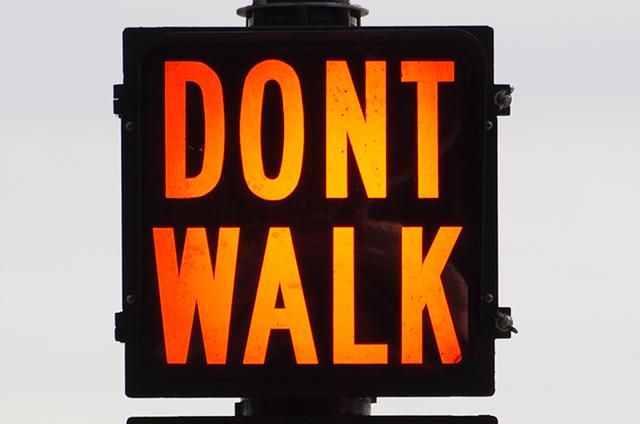 Since you’re all grown up, you may think you know everything about how to cross a street.
Most of us think that way, but every two hours in the U.S., a pedestrian is killed by a motor vehicle. The National Highway Traffic Safety Administration says that in 2012, there were 4,700 pedestrian fatalities and 76,000 injuries.
Driver distraction, speeding, failure to yield, as well as alcohol, weather and darkness are driver distractions. But pedestrians are often at fault too, such as when they don’t cross where and when they are supposed to and when they are not paying attention.
Mobile devices are among the leading distractions for both drivers and walkers. A study in Public Health Reports shows a 50 percent spike in pedestrian deaths between 2005 and 2010 due to drivers using devices. A study reported in Accident Analysis and Prevention shows pedestrian injuries related to cell phone use more than doubled in this period. People who are talking texting, listening to music or adjusting their phones aren’t paying attention to their surroundings.
The CDC says most pedestrian deaths occur at non-intersections, and at night. Notably, one third of those killed meet the legal limit for drunk driving. Never walk drunk unless you are escorted by a sober companion.
* In addition to crossing only at intersections, never cross in the middle of a block or from between parked cars.
* Look in all directions before crossing and continue to scan until you reach the other side. Never blindly follow others who are crossing.
* Watch for turning vehicles and cyclists even if there is a “no turn on red” signal, say experts at UC Berkeley.
* If your view is blocked, wait until you can see what’s coming.
* As you cross, make eye contact with drivers to be sure they see you.
* Keep your ears tuned to the traffic sounds around you, not to the music on your device.
* Watch for driveways and entrances to parking garages. Also be alert when walking in parking lots, where cars are backing up and turning.
* Wear light colored clothing in areas where streets are not well lighted.

This Week’s Showtimes at Royal Cinemas as of July 24th

Marcelene Fay “Marci” Pinion (1958 – 2026)

Buford “Bo” Lynn Kibler (1942 – 2026)

A Path to Fiscal Responsibility and Public Wellness

Moving Data Center Regulations and Permitting Forward a Dominant Topic of Conversation for County’s Elected Officials

Screen Rules That Actually Work

Blue Ridge Wildlife Center Patient of the Week: American Barn Owl

After Taking Off in Charlottesville, Feds Plan National Electric Aircraft Charging Network Rollout

POLICE: 7 Day FRPD Arrest Report 7/20/2026

FDA: Taylor Farms iceberg lettuce sample produced a false positive for cyclospora

Data Centers Want to Build Their Own Gas Turbines. Would That Skirt State Renewable Energy Laws?

Legal Notice: Virginia Alcoholic Beverage Control (ABC) Authority

Removing a Senator
The Dillon Rule Doesn’t Say What Mr. Cuddeback Implies

Test Your Balance Before the Job Tests It for You
Legal Notice: Virginia Alcoholic Beverage Control (ABC) Authority

Late On Rent? New Virginia Law Gives Tenants More Time and Protection From Eviction

Virginia Schools Gain Spending Flexibility Under Federal Program

Three Useful Car Gadgets for a Better Summer Road Trip

When He Retires, Who Runs the Kitchen?

State of the Assistants: The Second Great Voice-Assistant War

Front Royal Family Practice Files $5-Million Civil Claim Against Valley Health and Warren Memorial Hospital

Virginia Violent Crime Fell Nearly 6% in 2025, State Police Report Shows

Virginia State Police Seize More Than $3.3 Million in Drugs During Weekly Operations
