
Local News
The Request for Money from Nigeria: At Fire Department Luncheon, Senior Citizens Learn to Recognize AI Fakes
Once upon a time, a handshake and a person’s word meant something. Now, with the technological capacity to clone someone’s voice, used by scammers to elicit money, senior citizens who remember a much simpler time represent one of the most vulnerable demographics when it comes to AI fakes. On June 2, multiple organizations, as well as Town and County departments, came together to host a luncheon at the Fire and Rescue building on Commerce Avenue for senior citizens interested in learning how to protect themselves and others.
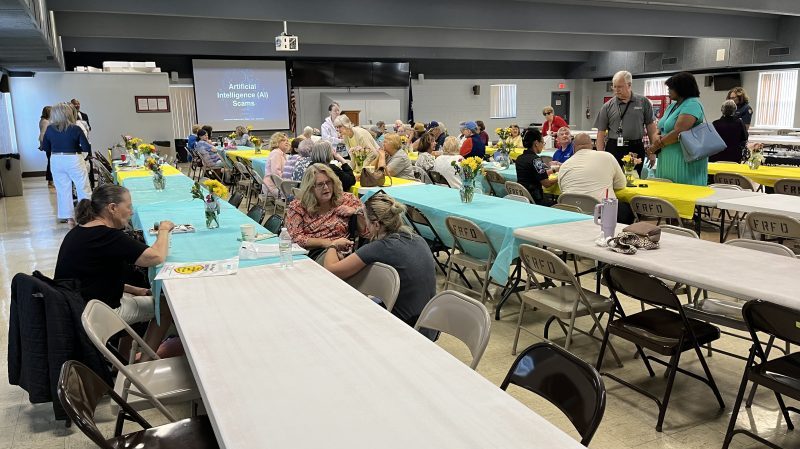
Comprised mostly of seniors, a crowd gathered at the Fire and Rescue Department on Commerce Avenue for a presentation, aimed at seniors, on recognizing artificial intelligence scams. Royal Examiner Photo Credits: Brenden McHugh
Keynote speaker Shawn Smith of Senior Medicare Patrol held a captive audience as he detailed not only the legitimate uses of artificial intelligence but the ways in which it can go deeply wrong. Without GPS, many would be lost. Without Google AI, research would be harder. Think of spell check and you have AI in one of its most rudimentary forms. The list goes on. But on the darker side, AI can be used to commit fraud, impersonate identities, and create situations that exploit the unsuspecting by inspiring fear, generating a sense of urgency, and isolating the victim.
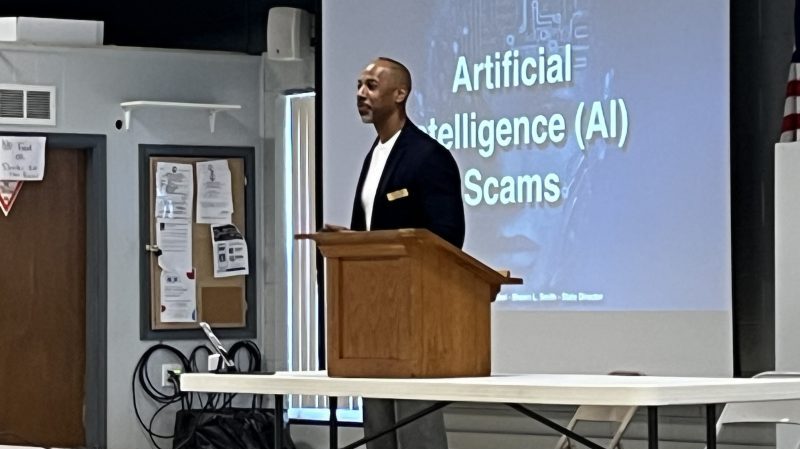
Shawn Smith, a state director with Senior Medicare Patrol, holds a captive audience as he talks about various ways in which AI can be used maliciously.

Fakes range from voice mimicry to video avatars that mirror the movements and expressions of the person who is operating the fake. To capture a voice, all the scammer needs is a ten second recording of the authentic individual, and those ten seconds can be pieced together from multiple conversations in which that individual may have uttered words like “yes”, the one the scammer wants to hear most. It is not uncommon then for the scammer to contact an elderly person pretending to be a family member whose voice has been captured.
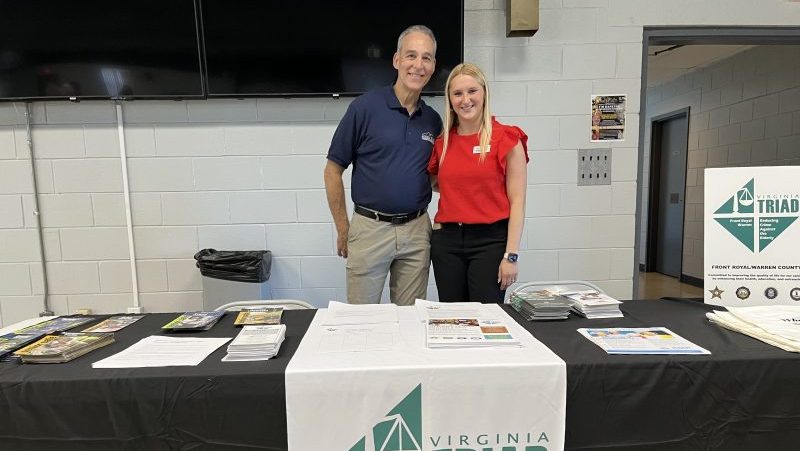
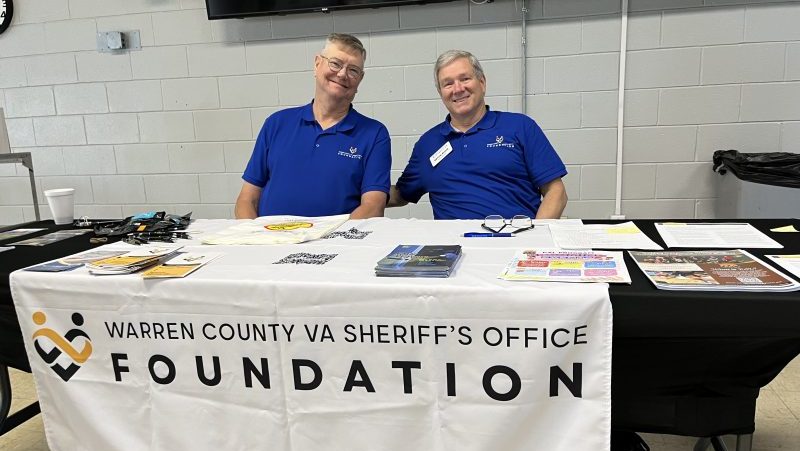
(Above and below) Virginia Triad teams up with the Warren County Sheriff’s Office Foundation to organize an awareness event for seniors.
Verify the source, Smith urged his audience. The request for money should be a red flag. If the number is unrecognized, let it go to voice mail. Then directly call the family member who is apparently trying to make contact. Of course, scammers can spoof numbers, so it is important to verify no matter what. Smith demonstrated how easy it is to create a fake, showing video segments of news anchors who have been faked. He indicated the international dimension of the problem, explaining that in many countries, scammers have protection from the police who receive kickbacks from the money schemes. Where human trafficking overlaps with AI scamming is indeed a dark intersection.
Whether requesting money, breaking promises, or pushing a romantic relationship in which they do both, these virtual con-artists seem to be capable of anything. The elderly gathered that day enjoyed a meal from TGI Fridays after the presentation, no doubt feeling a great measure of security in the community that surrounded them.





Three Common Myths About STBBIs Explained

Standing Counts, but Walking Counts More

VDOT: Warren County Traffic Alert for September 28 – October 2, 2026

Virginia Health Committee Considers Mandating Licensed Nurses in Every School

After Obama-Era Chesapeake Bay Executive Order Rescinded, Environmental Groups Brace for Fallout

Federal Judge Strikes Down SNAP Deadline That Put Virginia at Risk of Added Costs

Children Activities by Samuels Public Library for the Month of October

$5,000 Match Challenge to Support Warren County Children on Give Like Dolly Day

October 23rd Set for Post-Discovery Motions Hearing in Bradley Treece Gunfire Incident With Neighbors

Virginia State Police Seize More Than $1 Million in Drugs During Weeklong Operations

Jolissa Steele Shifflett Mathews (1944 – 2026)

False Birth Control Claims are Proliferating, Survey Says

Business Growth Series: Your Work Environment Is Affecting Your Growth

Frog Hunting Offers Virginians a Different Kind of Outdoor Adventure

How the Tech Bros Shop for a House

County Supervisors Fill Vacant Planning Commission Seat, Look to Future on Processes and Capital Improvements

America 250: ‘I Only Regret That I Have but One Life to Lose for My Country’

Building Gas Plants More Important Than Dominion Sale, Data Center Politics

Home Inspectors Help Buyers and Sellers Understand a Property’s Condition

Bowling Together: Why Work Is More Than a Paycheck

This Week’s Showtimes at Royal Cinemas as of September 24th

POLICE: 7 Day FRPD Arrest Report 9/21/2026

Blue Ridge Wildlife Center Patient of the Week: Eastern Cottontail

UVA Health Review Examines Real-World Results of Incisionless Liver Tumor Treatment
