
Interesting Things to Know
The Wright Brothers’ Historic Flight: Breaking Boundaries in Aviation
The Dawn of Modern Aviation.
December 17, 1903, marked a pivotal moment in human history as Wilbur and Orville Wright achieved the first successful flight of a heavier-than-air machine, revolutionizing transportation and opening new horizons in aviation.
From Bicycle Shop to Kitty Hawk
The Wright brothers, owners of a bicycle shop in Dayton, Ohio, meticulously built their 1903 glider, laying the groundwork for their historical achievement. Their dedication and ingenuity culminated in their groundbreaking experiment at Kill Devil Hills, North Carolina.
The Momentous Flights
On that historic morning, Orville Wright piloted the first flight, covering 120 feet in 12 seconds. The day’s fourth and final flight, with Wilbur at the helm, saw the aircraft travel 852 feet and remain airborne for 59 seconds. These flights demonstrated sustained, controlled flight and marked a monumental breakthrough in aviation.
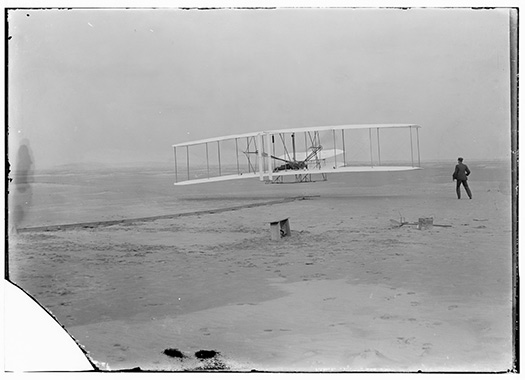
[First Flight, 120 feet in 12 seconds, 10:35 am; Kitty Hawk, North Carolina]. Orville Wright & John T. Daniels, photographers, December 17, 1903. Wright Brothers Negatives. Prints & Photographs Division
The Wright brothers’ journey to this achievement was fueled by unwavering belief and rigorous research. Their correspondence with engineer Octave Chanute and others in the field reflected their relentless pursuit of flight. Wilbur’s letter to Chanute in 1900 expressed his conviction that “flight is possible to man,” a belief that drove their pioneering experiments.
Recognition and Legacy
Following their success, the Wright brothers’ innovation caught the attention of the U.S. Army. In 1908, they signed a contract to develop the Military Flyer, successfully tested in 1909. This collaboration underscored the significant potential of their invention for both civilian and military applications.
The Wright brothers’ maiden flight on December 17, 1903, stands as a testament to human ingenuity and perseverance. Their achievement not only marked the birth of modern aviation but also symbolized the boundless possibilities of human endeavor.

40 Winners Named in Front Royal’s 6th Annual Pot o’ Gold Hunt

French Earl Tolliver, Jr. (1960 – 2026)

5 Tips to Prevent Sports Injuries

Standardbred Owners Ainspan, McDonald Each Score Thoroughbred Wins at Colonial Downs’ Virginia Derby Meet

Most Dangerous Cycling Scenarios Involving Cars

VDOT: Warren County Traffic Alert for March 23 – 27, 2026

Virginia State Police Seize $22.4 Million in Drugs, Recover Firearms in Weeklong Operation

Virginia Home Sales Rise in February as Inventory Grows, Spring Outlook Uncertain

Bing Crosby Stadium Hosts Warren County–Skyline Baseball Battle Tonight

Warren Supervisors Address Audit Contract, Permits, and Property Sale at March 17 Meeting

Here’s How Virginia Lawmakers Suggest the Next State Budget Handle Federal Health Care Funding Fallout

Spring Essentials Checklist: Prepare Your Home for Summer

Virginia Joins National Push for Refunds After US Supreme Court Voids Trump Tariffs

Four Reasons to Consider Hiring a Professional Cleaning Company

Ask the Expert : We Are Applying for a Mortgage Soon. What Kind of Documents Will We Need?

Charles Michael “Rusty” “Chuck” Fischbein (1944 – 2026)

Jerrold E. “Jerry” Groves (1931 – 2026)

Town Planning Commission Moves Forward with Industrial Zoning, Holds Preliminary Discussion of Urban Agriculture

Schools Push for Budget Flexibility, Consistent Funding as Needs Grow

Skyline High Teams, Athletes Successful Seasons and Performances Acknowledged – Oh, and Those Roosters

School Board Seeks to Restore Meals Tax Funding for School Facilities

Wasting Drinking Water: 3 Habits to Eliminate From Your Daily Routine

Medicare Launches TEAM Program to Improve Recovery After Surgery

Izaak Walton League Promotes Conservation and Outdoor Programs at Community Forum
