
Local Government
Town and County moving cautiously toward animal cruelty code
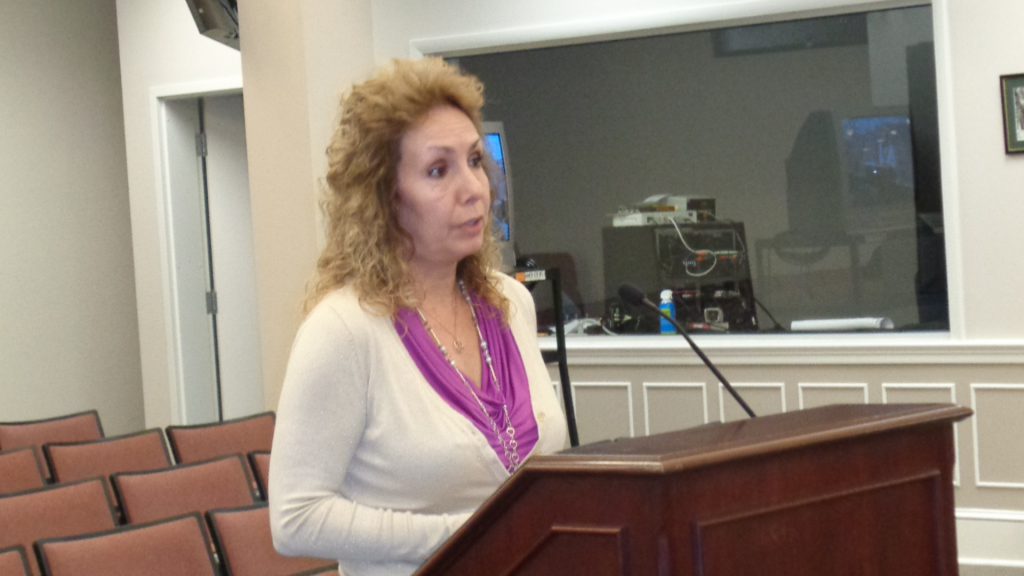
Carol Vorous, with a little help from fellow animal lover Malcolm Barr Sr., began lob-bying the town and county governments to add some teeth (GRRR) to animal cruelty codes in February. Royal Examiner File Photos
The game of ordinance volleyball between the Town and County concerning the creation of an enforceable animal cruelty code continued at an August 1 work session of the Warren County Board of Supervisors. The Town of Front Royal will discuss the matter once again on Monday, August 7. Local animal rights activist Carol Vorous brought the issue to local government in February, with an assist from our own Malcolm Barr Sr., a former president of the Humane Society of Warren County.
While the County has taken the lead (no pun intended) on establishing the new tethering and cruelty ordinance because animal control is enforced through the Sheriff’s Office, it has been pointed out during discussion that it is crucial both the Town and County pass an identical ordinance so that animal control officers can enforce the new code on both sides of the town-county boundary.
However, perceived vagaries in State codes, as well as the fact there are different breeds of dogs (with differing tolerances of weather extremes) have stalled the process. But some hope was offered during the County work session discussion the first day of August, 13 days after the initiative was discussed at the Town-County Liaison Committee Meeting.
In the August 1 staff summary it was noted that County Animal Control “has recommended the adoption of a tethering ordinance … to prevent cruelty to animals.” At the February 7 work session discussion, County Animal Control Officer Junior Darr agreed with Vorous that in the vacuum of a local code to put some additional teeth (pun intended) into the State Code there was a minimum of effective enforcement Animal Control was able to exert currently.
Asked by Fork District Supervisor Archie Fox how many animal cruelty cases were currently prosecuted, Darr replied, “Not that many.”
Fox later asked Darr what the legal standard was for a charge of animal cruelty. The deputy replied that the animal had to be “in distress” – a standard the deputy noted was both vague and subjective.

Last winter, Animal Control Officer Junior Darr agreed with Vorous that the current reliance solely on the state code was inadequate to provide adequate protections for canine pets.
As for the notion that physical differences in breeds was a roadblock to establishing standards, Vorous told the board at the outset of the discussion last winter, “I can’t accept that there is no way to dictate standards of treatment for animals that are essentially being treated as lawn ornaments. I really don’t understand why some people have dogs.”
How extensive is the problem?” Fox asked her.
“Quite a bit more than I was aware of,” Vorous responded.
During that initial discussion during some patches of particularly cold and windy weather, Vorous observed of the plight of some community dogs, “Dogs suffer from the same ailments as humans do as they get older. They get arthritis, have joint and other problems. I have found some older dogs, obviously emaciated living in plastic dog houses on concrete, with no bedding.”
Vorous also pointed to crumbling, old wooden doghouses and old, damaged camper tops set over concrete so that dogs cannot even burrow into the ground for warmth.
At that July 20 liaison meeting, Front Royal Mayor Hollis Tharpe commented that if a little “common sense” was applied to State guidelines, terms such as “adequate shelter” and “cruelty” might become more solidly definable and enforceable.
Vorous has constantly questioned the State Code wording of “adequate shelter” which she says has been utilized as a loophole by owners due to its vagary. During the liaison discussion, Mayor Tharpe noted that even some landlords apply an inadequate standard to the definition of “adequate shelter” for humans – “they think a roof over your head is adequate.”
As Vorous pointed out in February, THAT doesn’t work for dogs either.
The most recent draft of a code developed by County Attorney Dan Whitten maintains violation of the proposed statute as a Class 3 misdemeanor with a fine of up to $500.
It was also commented that “ongoing violations” could result in seizure of the abused animal from the owner. Six specific conditions of treatment were cited in the staff summary of the most recent draft ordinance for tethered dogs:
- they cannot be four months old or younger;
- they cannot be a female in heat (estrus);
- the temperature cannot be less than 32 degrees Fahrenheit or above 90 degrees Fahrenheit UNLESS the dog also has adequate shelter (hopefully with the common sense referred to by the mayor applied);
- the tether cannot weigh more than one-tenth the body weight of the dog;
- the tether cannot be used for more than one dog at a time;
- the dog cannot be tethered for more four hours per day on a fixed tether or 12 hours a day on a cable run.
However, some specific language from the draft raised alarm bells when we ran it by Vorous and Barr, including a requirement that a tether must be “at least three times the length of the dog from nose to base of tail” – “That doesn’t give either of my dogs much room to maneuver,” Barr said of his Pug and Husky.
And so the community plods onward toward a workable, enforceable standard of treatment for its canine population. As noted in this month’s discussion, once a final draft is approved by both the Town and County, it will be crucial that all WCSO Animal Control officers are put on the same, common-sense page as to what is “adequate” and when an animal is “in distress” – and that the commonwealth attorney’s office and hopefully the court system ALL get on that page so that those who would offer us their unrequited love given the chance, get some of that love back from this community as a whole.

A German Shepherd Rescue dog at a past Memorial ‘Dog Day’ event in Front Royal.

Virginia Home Sales Rise in February as Inventory Grows, Spring Outlook Uncertain

Bing Crosby Stadium Hosts Warren County–Skyline Baseball Battle Tonight

Warren Supervisors Address Audit Contract, Permits, and Property Sale at March 17 Meeting

Here’s How Virginia Lawmakers Suggest the Next State Budget Handle Federal Health Care Funding Fallout

Spring Essentials Checklist: Prepare Your Home for Summer

Virginia Joins National Push for Refunds After US Supreme Court Voids Trump Tariffs

Four Reasons to Consider Hiring a Professional Cleaning Company

Ask the Expert : We Are Applying for a Mortgage Soon. What Kind of Documents Will We Need?

Charles Michael “Rusty” “Chuck” Fischbein (1944 – 2026)

Jerrold E. “Jerry” Groves (1931 – 2026)

Town Planning Commission Moves Forward with Industrial Zoning, Holds Preliminary Discussion of Urban Agriculture

Schools Push for Budget Flexibility, Consistent Funding as Needs Grow

Skyline High Teams, Athletes Successful Seasons and Performances Acknowledged – Oh, and Those Roosters

School Board Seeks to Restore Meals Tax Funding for School Facilities

Wasting Drinking Water: 3 Habits to Eliminate From Your Daily Routine

Medicare Launches TEAM Program to Improve Recovery After Surgery

Izaak Walton League Promotes Conservation and Outdoor Programs at Community Forum

POLICE: 7 Day FRPD Arrest Report 3/16/2026

Blue Ridge Wildlife Center Patient of the Week: Great Horned Owl

Airline CEOs Warn of Travel Strain Amid DHS Funding Uncertainty
Robert B. Walters (1931 – 2026)

Lemmon & Hale Highlight Importance of Estate Planning for Families and Businesses

Hike Kidz Foundation Highlights Programs for Families in Need

Phoenix Project Offers Support and Resources for Victims of Abuse
