
Local Government
Town Planning Commission Moves Forward with Industrial Zoning, Holds Preliminary Discussion of Urban Agriculture
The March 18 work session and regular meeting of the Town Planning Commission began with a simple question: Is prohibition the best route? The topic concerned industrial zoning, specifically in the I-1 designation, where commissioners are striving to be comprehensive without being too restrictive. A list of prohibited uses, argued Planning Director Lauren Kopishke, may not be the most effective way to govern growth in the industrial zone. Her reasons included advances in technology, where the features that may once have necessitated a ban on a particular use in a specific area will be rendered neutral by a new way of doing things.
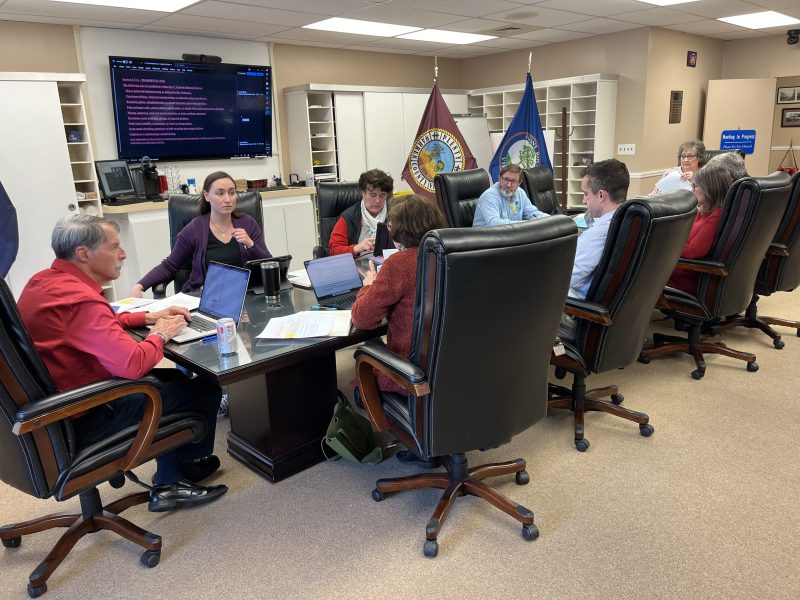
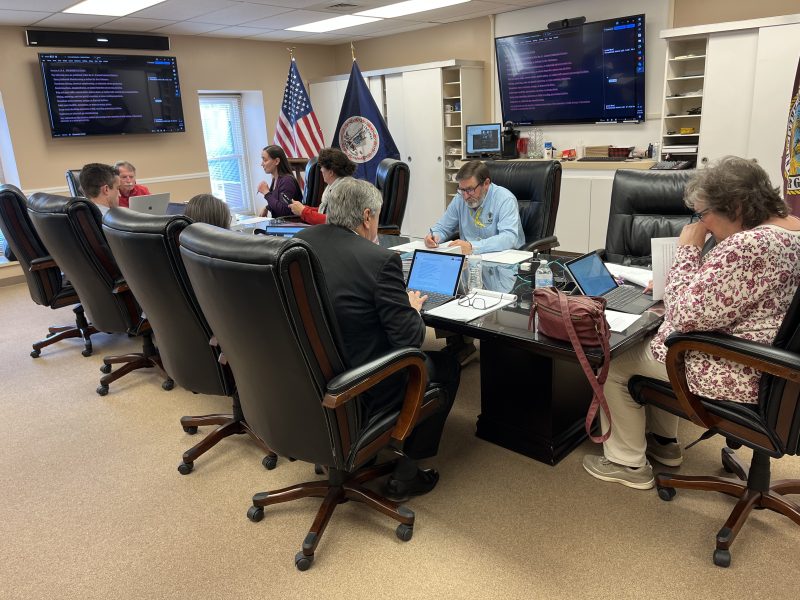
Above and below: the Town Planning Commission meets for a combined work session with a regular meeting on March 18. Royal Examiner Photo Credits: Brenden McHugh
A list of prohibitions could potentially communicate: “We don’t want you here.” Off-putting to enterprises that could bring the Town revenue, the prohibition list is a solution to a problem that could be better solved through other avenues. Why not tighten up the statement of intent? Or include within the definitions of light, medium, and heavy industrial manufacturing language that guides future development? One would want to use caution when taking a picture of a moment in time and preserving it as a kind of Polaris for every future situation, where direction and methodology have changed, rendering that photo, at least in part, obsolete.
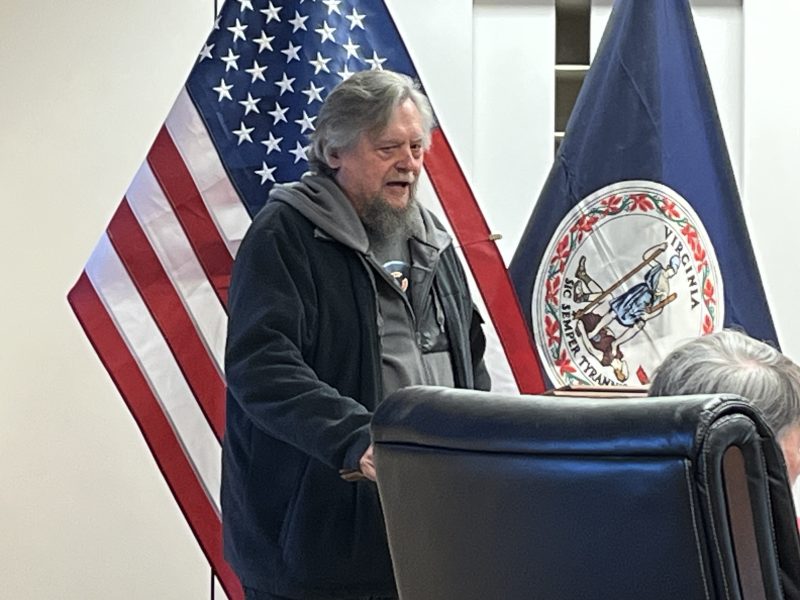
Front Royal resident Ted Kaine gives input about urban agriculture to the commissioners during public comments.
In the absence of a prohibition list, the burden is on the applicant to prove that a use not listed in the zoning ordinance as permitted is still in keeping with the statement of intent for the relevant zone, with every relevant aspect upheld. Of course, data centers seem to be the drain down which every conversation about zoning ultimately goes; in this case, staff has historically recommended that the commission and the council refrain from recommending against or prohibiting data centers as a use and instead, buttress performance standards to regulate them. Given that, Kopishke argued that prohibiting other uses would be inconsistent.
The commissioners agreed to remove the proposed list of prohibitions from the draft, at least for the time being, as the discussion is evolving. There was also a consensus that the definitions of light, medium, and heavy are good as they stand. At one point, Chairman Allen Neel briefly presented an updated model for capping short-term rentals, using a metric that caps STRs at 3% of total residential units in any given residential zoning designation, with a 2.5% benchmark to trigger an early review, taking into consideration concerns like saturation. The transaction of the regular meeting was brief, since there were no public hearings.
“It’s an administrative nightmare,” said Town Attorney George Sonnett, affirming Kopishke in her explanation of why the Town needs to revise its urban agriculture code. Staff is attempting to enforce the spirit of the law that urban agriculture should always be incidental to primary residential use. But the code they are equipped with is, in many cases, convoluted. The commission anticipates that the rewrite will be a sizable, long-term undertaking. “It will go back and forth so many times that we will wish we had ADUs before us,” Vice-Chairman Megan Marrazzo said humorously, referring to the auxiliary dwelling unit ordinance that the Town Council sent back to the Planning Commission several times.
Having passed a consent agenda authorizing advertisement of public hearings for April’s regular meeting and having made significant headway on multiple aspects of rewriting the ordinance, the final installment of the evening’s several meetings was adjourned.
Watch the March 18, 2026, Front Royal Planning Commission Meeting.

Charles Michael “Rusty” “Chuck” Fischbein (1944 – 2026)

Jerrold E. “Jerry” Groves (1931 – 2026)

Town Planning Commission Moves Forward with Industrial Zoning, Holds Preliminary Discussion of Urban Agriculture

Schools Push for Budget Flexibility, Consistent Funding as Needs Grow

Skyline High Teams, Athletes Successful Seasons and Performances Acknowledged – Oh, and Those Roosters

School Board Seeks to Restore Meals Tax Funding for School Facilities

Wasting Drinking Water: 3 Habits to Eliminate From Your Daily Routine

Medicare Launches TEAM Program to Improve Recovery After Surgery

Izaak Walton League Promotes Conservation and Outdoor Programs at Community Forum

POLICE: 7 Day FRPD Arrest Report 3/16/2026

Blue Ridge Wildlife Center Patient of the Week: Great Horned Owl

Airline CEOs Warn of Travel Strain Amid DHS Funding Uncertainty
Robert B. Walters (1931 – 2026)

Lemmon & Hale Highlight Importance of Estate Planning for Families and Businesses

Hike Kidz Foundation Highlights Programs for Families in Need

Phoenix Project Offers Support and Resources for Victims of Abuse

Virginia Moves to Launch Legal Cannabis Marketplace After Years of Delay

As Spanberger Reviews State-Level ‘Momnibus’ Bills, Kaine and Booker Try Again on a Federal Package

Detox Diets: Don’t Overlook the Risks

How to Answer the Interview Question: “Where Do You See Yourself in Five Years?”

HARTS, DSS & House of Hope Highlight Services at Community Forum

Joyce Henry Sutherland (1942 – 2026)

Commentary: Building on What We Have – A Proposed Economic Development Agenda for Warren County

Jamie Christopher Tewalt (1971 – 2026)
