
State News
UVA Study Shows How Housing Affordability Policy, Civic Engagement and Voter Turnout Connect
A University of Virginia professor’s research aims to illuminate how federal policy that supports affordable homeownership intersects with civic engagement via the ballot box, as housing affordability and access remain top concerns for voters in Virginia and across America.
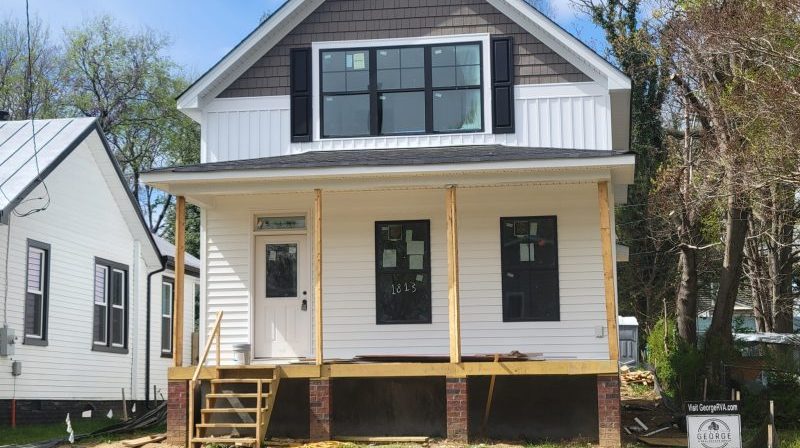
A new house under construction in Richmond, Virginia in 2026. (Photo by Charlotte Rene Woods/Virginia Mercury)
A new study titled “Mortgage Refinancing and Political Participation” explored how remedies in the aftermath of 2008’s recession correlate to surges in people heading to the polls.
A joint analysis by UVA professor W. Ben McCartney, along with co-authors from the University of Southern California, University of Oregon, and the Federal Reserve Bank of Dallas, found that homeowners who refinanced their mortgages during the recession were more likely to vote in the 2012 presidential election than otherwise similar homeowners who didn’t.

In the fallout of a banking and housing crisis that erupted in 2008, many American homeowners struggled financially. One remedy was a government program called the Home Affordable Refinance Program, or HARP, which allowed certain borrowers to get new deals with lower interest rates on their mortgages.
By linking mortgage data with voter records for millions of Americans, McCartney and co-authors tracked who showed up to vote in 2012.
He said a key takeaway from his analysis was that voter motivation spanned party affiliations or lack thereof.
“The effect was especially strong among independent and unaffiliated voters,” he added.

“That matters because this is not a case of a policy clearly helping one party and hurting the other,” he said. “The main effect is simply greater engagement. When people receive meaningful financial relief, they become more likely to participate in the political process.”
Enhanced financial security not only eases stress, McCartney argued, but can help free up peoples’ time. A voter who can feel positive effects of public policy may also become more motivated to vote.
“Policies that relieve financial distress may not only improve household finances,” he said. “They may also change whether people feel able and willing to engage with democracy.”
In the 18 years since the Great Recession, housing affordability and supply issues have surged nationwide.

A 2021 state report found that Virginia had a housing shortage of at least 200,000 affordable rental units and that fewer Virginians could afford to purchase a home.
State lawmakers have since passed a series of laws aimed at addressing supply and affordability for renters and homeowners. Congress also recently passed an overwhelmingly bipartisan housing package to tackle matters at the federal level. The federal legislation entailed numerous proposals that were first introduced or piloted in states like Virginia.
Though McCartney’s recent study was retrospective and more narrowly focused on mortgages post-recession, he believes that in the current sense, whether people still find housing costs a motivation to vote or not “could go either way.”
Some people will see it as a reason to vote, while others may feel like the government failed them and “become disenchanted with politics altogether,” he added.

Economic analysts and media companies are conducting surveys about how much housing may factor into this fall’s congressional midterm elections.
A recent CNBC poll found that young voters — between 18 and 34 years old — view housing affordability as a top issue.
Candidates across the political spectrum are talking about housing affordability on campaign trails this summer, too.
McCartney is continuing work exploring housing policies’ effects on political engagement through his role at UVa’s Household and Urban Finance Lab.

His team will soon study how Opportunity Zones may or may not shape the political behavior of people living in those communities. These zones provide federal incentives to invest in distressed areas.
They’ll also research how locked-in mortgage rates from 2020 and 2021 influence engagement.
Following the early stages of the COVID-19 pandemic, homebuyers were able to secure very low interest rates on mortgages. While it was a boon for some homebuyers, it could also mean families feel compelled to stay in a home or community they may have outgrown personally or professionally.
“They are essentially golden-handcuffed to their current homes. That may create frustration, especially for people whose homes no longer fit their families or jobs. But it could also make them more invested in local politics,” he said.
“Someone who originally expected to move may instead realize that they are likely to remain in the same community for a long time and become more involved in what happens there.”
by Charlotte Rene Woods, Virginia Mercury
Virginia Mercury is part of States Newsroom, a nonprofit news network supported by grants and a coalition of donors as a 501c(3) public charity. Virginia Mercury maintains editorial independence. Contact Editor Samantha Willis for questions: info@virginiamercury.com.




William Morgan and the Anti-Mason Party

Luria and Kiggans Rematch in Virginia’s 2nd Congressional District Among Most-Watched Races In Nation

Youth Advocates Warn Higher Marijuana Fine Could Deepen Racial Disparities

Virginia DMV Wait Times Plummet to Record Lows After Major Reforms

Lorraine Kephart Dovell (1942 – 2026)

ORDER OF PUBLICATION: In the Circuit Court for Warren County, Virginia

The Silent Danger of Heating Season

Three Common Myths About STBBIs Explained

Standing Counts, but Walking Counts More

VDOT: Warren County Traffic Alert for September 28 – October 2, 2026

Virginia Health Committee Considers Mandating Licensed Nurses in Every School

After Obama-Era Chesapeake Bay Executive Order Rescinded, Environmental Groups Brace for Fallout

Federal Judge Strikes Down SNAP Deadline That Put Virginia at Risk of Added Costs

Children Activities by Samuels Public Library for the Month of October

$5,000 Match Challenge to Support Warren County Children on Give Like Dolly Day

October 23rd Set for Post-Discovery Motions Hearing in Bradley Treece Gunfire Incident With Neighbors

Virginia State Police Seize More Than $1 Million in Drugs During Weeklong Operations

Jolissa Steele Shifflett Mathews (1944 – 2026)

False Birth Control Claims are Proliferating, Survey Says

Business Growth Series: Your Work Environment Is Affecting Your Growth

Frog Hunting Offers Virginians a Different Kind of Outdoor Adventure

How the Tech Bros Shop for a House

County Supervisors Fill Vacant Planning Commission Seat, Look to Future on Processes and Capital Improvements

America 250: ‘I Only Regret That I Have but One Life to Lose for My Country’
