
State News
Virginia House Democrats Make Energy Efficiency a Key Priority for Legislative Session
Voters spoke loud and clear in this fall’s General Election: the cost of living is the most important issue for Virginians right now. That includes utility bills that continue to rise year after year. Lawmakers are debating how to bring those bills down in the midst of the unprecedented demand for power and climate change impacts.
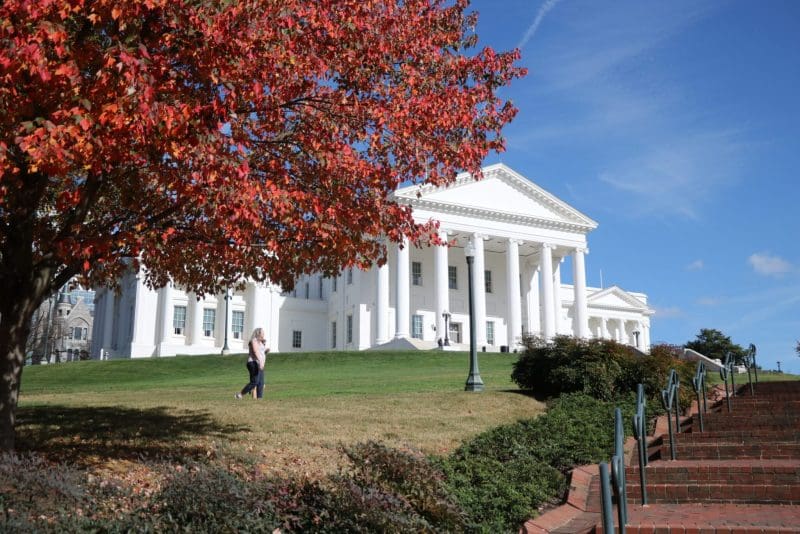
Virginia State Capitol. (Photo by Charlotte Rene Woods/Virginia Mercury)
“Our agenda is focused on lowering costs, lifting wages, expanding opportunity,” said House Speaker Don Scott, D-Portsmouth.
In recent days, House Democrats released some of their priority bills – two of which zoom in on energy efficiency in homes. Here’s a look at what these measures would accomplish.
House Bill 3: Establishing an Income-Qualified Energy Efficiency and Weatherization Task Force
The major utilities in the state, namely Dominion Energy and Appalachian Power Company, already have weatherization and efficiency programs that customers can opt into. They also have upgrades and improvement programs for low-income households. However, Democrats want a task force to take a closer look at any barriers that may be keeping low-income customers from utilizing these programs.
The legislation establishes a group of at least 12 citizen members and representatives from the Department of Energy, Social Services, the Attorney General’s Office, and a staff member from the Commission on Utility Regulation.
The task force will be expected to create a report by the end of Sept. 2027 on how many households meet the income requirements for efficiency programs, how many of those homes are in need of weatherization, how many homes have been submitted to providers for improvements but are on the waitlist, how many homes have gotten state or utility sponsored upgrades, and any barriers there may be in implementing the programs.
As part of the Virginia Clean Economy Act, Virginia utilities each have efficiency goals they are expected to meet, which means they have to find ways for their ratepayers to cut back on the amount of energy they use through smart thermostats, rebate programs for more energy-efficient appliances, or rewards for using less power during high-demand time periods.
Homeowners who would qualify for these programs would have to make 60% of Virginia’s median income, or 200% of the federal poverty level, whichever is higher.
House Bill 2: Reducing heating-related costs by requiring utilities to provide energy efficiency upgrades
On top of the requirements to meet energy reductions by certain years set out in the legislation, this proposed bill would implement a requirement that 30% of their qualified customers receive efficiency measures and improvements by the end of 2031.

The State Corporation Commission would have to deem those improvements to be in the public interest. Should the SCCs make that determination, the utilities would have to “lower each household’s total heating-related energy costs, which determination shall be subject to Commission review and approval, and based upon widely available and credible energy consumption and cost data,” according to the legislation.
The utilities would be able to work with the Department of Energy to utilize state and federal funding sources to aid in their efforts to implement the programs.
The proposed legislation also asks the utilities to report to the SCC by January 2028 about how much their efforts to reduce heating costs have translated into savings for customers and how they potentially cut back on energy infrastructure needs such as transmission lines, power generation, and the importing of energy.
Both of these bills will be considered in the 2026 General Assembly legislative session that begins Jan. 14.
The state previously received funding for efficiency programs through the Regional Greenhouse Gas Initiative (RGGI). Virginia joined the multi-state agreement in 2020, which brought the commonwealth into the cap and trade program aimed at reducing greenhouse emissions from the power sector.
Gov. Glenn Youngkin pulled the state from the agreement in 2024, stating that the additional $2 on utility bills to fund the program was an unnecessary tax. A Floyd County Circuit Court judge ruled last November that “the attempted repeal of the RGGI Regulation is unlawful, and thereby null and void.”
While the fate of the state’s involvement in RGGI is still held up in the courts, things could change under the Spanberger administration. The Gov.-elect has said she would put the state back into the agreement to bring that funding stream back for flooding and efficiency programs. However, it is not clear when that would occur.
by Shannon Heckt, Virginia Mercury
Virginia Mercury is part of States Newsroom, a nonprofit news network supported by grants and a coalition of donors as a 501c(3) public charity. Virginia Mercury maintains editorial independence. Contact Editor Samantha Willis for questions: info@virginiamercury.com.




The Childhood Illness That Looks Like Slapped Cheeks: What Parents Should Know About Fifth Disease

Unmarked Police Car Pulling You Over? Here’s What Drivers Should Know

Their Military Service Ended, But Their Commitment to Serving Others Never Did

Route 66 Turns 100: The Highway That Became America’s Mother Road

Front Royal Calls for Voluntary Water Conservation as Shenandoah River Levels Drop Again

Salvation Army Kicks Off Red Kettle Campaign in Front Royal, Calling on Community to Ring the Bell

Constitution 101: Intellectual Property Clause

Charles Frederick “Chucki” Henry II (1963 – 2026)

After 164 Years, Young Civil War Soldier Finally Laid to Rest at Arlington National Cemetery

The Cheapest Medicare Plan Could Cost You More: Three Things to Check Before December 7

Can Sound Waves Put Out a House Fire? Startup Says Its Technology Could Replace Sprinklers

VDOT: Warren County Traffic Alert for Nov. 9 – 13, 2026

River Rivalry Showdown Tonight: Warren County vs. Skyline Live on Royal Examiner

Virginia Changes Driver’s License Requirements for Young Adults Starting January 1

GOP Lawmaker Seeks Senate Investigation, Possible Expulsion of Sen. Louise Lucas

At SCC hearing, Virginians say Dominion-NextEra merger could mean higher bills, new risk

Commentary: In This Year’s Midterms, the Rest of the Country Learned What Virginia Has Known for a While

Voter turnout for Virginia’s constitutional amendments transcended partisanship

Virginia’s Abortion and Marriage Amendments Face Court Challenges Following Voter Approval

Democrats Won Congress. Now They Have to Figure Out How to Deal With Trump

Business Growth Series: Clear Thinking Leads to More Customers

Reaching Out Now Brings Back the Old-Fashioned Telethon With a Modern Twist for Giving Tuesday

A Boy, a Marine, and a Christmas Wish List: The 1997 Toys for Tots Commercial Still Touches Hearts

Forgetfulness or Alzheimer’s? Warning Signs Families Shouldn’t Ignore
