
State News
Virginia Transportation Board Overturns Decision to Transfer Rail and Trail Project
In one of the quietest moves yet under Gov. Abigail Spanberger’s administration, the Commonwealth Transportation Board overturned a controversial decision made in the final weeks of former Gov. Glenn Youngkin’s tenure that would affect the future of a dilapidated 50-mile rail corridor in the Shenandoah.
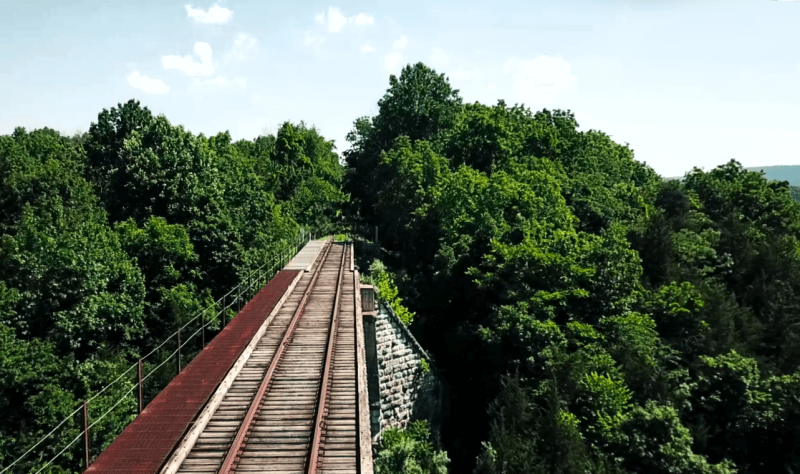
A section of abandoned freight rail proposed to be part of a new biking and walking trail in the Shenandoah Valley. (Photo by Ben Cunningham/Allegheny-Blue Ridge Alliance)
The board’s Feb. 17 decision now continues the process of exploring whether the corridor will be restored with a parallel trail or remain as a trail alone.
In December, Virginia’s transportation community was surprised when former Gov. Glenn Youngkin’s administration proposed that the board advance a multi-use trail and rail corridor versus a trail-only plan. This proposal, announced in December, carried a nearly $700 million price tag and reduced opportunities for public meetings and comment.
The board’s decision last month rescinded that directive and reaffirmed prior plans to study the project’s options with a focus on public transparency.
“The goal we are seeking to achieve is to complete the public engagement process that we told the public we would do with the release of the Phase 3 report,” said Secretary of Transportation Nick Donohue at the board’s Feb. 17 meeting.
Del. Tony Wilt, R-Harrisonburg, acknowledged that timing pressures and external constraints drove the administration’s decision, but he insisted the rail-with-trail plan must continue to follow the process laid out. In 2021, Wilt carried the budget request to study the feasibility and benefits of a rail trail.
“I’m very glad to see that the initial resolution was rescinded,” said Wilt. “We’re going to go back to ground zero … and I think that’s the right move.”
How we got here
The project took an unexpected turn after former Secretary of Transportation Shep Miller broke a 6-6 board vote to transfer it from the Virginia Department of Transportation to the Virginia Passenger Rail Authority at a Jan. 6 meeting.
VPRA would have overseen $35 million in grant funding, appropriated by the General Assembly in 2022, for preservation and improvements by the Shenandoah Valley Battlefield Foundation. The board reversed that move at its Feb. 17 meeting.
The foundation has faced both criticism and questions regarding its qualifications to work on the project.
The foundation responded by highlighting its track record in managing similar projects and overseeing millions in state funds. In 1996, Congress created the foundation to preserve the region’s Civil War battlefields and related historic sites around Harrisonburg, Staunton and Winchester.
Miller had said that delaying the Youngkin administration’s plan could jeopardize the project, including the merger between Norfolk Southern Corporation, the rail line owner, and Union Pacific Corporation. He emphasized that public input would remain part of the plan.
Under the terms of the transfer, the foundation would have purchased the rail line from Norfolk Southern. The remaining funds would be used to build the trail and meet state lawmakers’ criteria.
The agreement would have entrusted the foundation with building the trail by certain deadlines. It also gave the foundation authority to preserve the rail corridor for future passenger use and clarified operational roles and risk responsibility.
Miller said the state funds only support the trail’s development, and future rail options require additional fundraising.
A new direction
More than a month after the board’s Jan. 6 decision, Spanberger’s administration shifted the commonwealth’s approach in February, prioritizing public engagement instead.
“At the end of the day, the funds we are expending here are taxpayer dollars, and I believe it’s appropriate for us to meet the commitments we provide to the public and those taxpayers as we seek to use the dollars they have paid to the state,” Donohue said.
He also added that the authority has “no role in potentially half of what we may be considering in that corridor,” emphasizing that VPRA’s purpose is to promote passenger and commuter rail.
However, VPRA Executive Director DJ Stadtler did not rule out the possibility of passenger rail still being part of the project in the future during a Dec. 17 meeting with the authority’s governing board.
This follows the recent purchase of the 24-mile Manassas Line from Norfolk Southern Corporation. The line will be used by Virginia Railway Express for commuter service between Alexandria and Manassas, as part of expanding the transit service’s operations.
Stadtler did not publicly speak on the board’s decision at the February meeting.
Board members voiced concern that the new direction could jeopardize the plan’s inclusion of rail. Donohue responded by citing the General Assembly’s mandate that any land acquisition for the trail “shall not preclude the consideration of options to maintain rail transportation in the corridor.”
Speakers on both sides of the decision weighed in, including Board member John Good, who made a motion for a partial recession. The motion failed for a lack of a second. Ultimately, the board rescinded the Jan. 6 resolution, with Good and board member Becky Norton Dunlop voting in opposition. Board member Thomas Moore Lawson abstained.
Good argued that the agricultural community was more concerned with its livelihoods than with a recreational trail.
“As long as I’m here, I’ll be reminding everybody that we need to keep those folks in mind,” Good said, adding that he believes the foundation should continue with the project and assist with fundraising.
Donohue said resending the earlier vote is not “foreclosing opportunities” to partner on fundraising.
The board’s February vote keeps funding with VDOT. This maintains opportunities for public engagement and further consideration of the corridor’s best use.
Advocates want to boost the region’s economy and promote health by building a multi-use trail. Others see similar possibilities in restoring the Manassas Gap rail line, which has been inactive for 36 years, and building a trail alongside it.
VDOT says negotiations to acquire the corridor with Norfolk Southern are ongoing.
As of Sunday evening, the transportation agency had not released any public meeting dates. The final Phase 3 Report examines the constraints and costs of the rail-to-trail alternative, and includes these hearings.
The transportation board will ultimately decide the outcome after receiving a summary of the public feedback.
by Nathaniel Cline, Virginia Mercury
Virginia Mercury is part of States Newsroom, a nonprofit news network supported by grants and a coalition of donors as a 501c(3) public charity. Virginia Mercury maintains editorial independence. Contact Editor Samantha Willis for questions: info@virginiamercury.com.

Business Growth Series: Why Good Businesses Still Struggle to Grow

Brownies with Mini Chocolate Easter Eggs

Shenandoah Downs Opens 11th Season April 11 with Tribute to Roger Hammer

We Don’t Know Everything About DNA

How PAAS Came to Dominate the Easter Egg Dye Tradition

Spanberger Signs Bipartisan School-Safety, Student Support Bills Into Law

Melanie J. Pomeroy (1958 – 2026)

David Benjamin Heller (1990 – 2026)

1776 Wasn’t Just About Independence

Three-Tiered System for Urban Agriculture Based on Lot Size Takes Shape at Town Planning Commission Work Session

Child Abuse Awareness Month Brings Focus to Reporting, Prevention in Warren County

National Dental Hygienists Week: Is Your Oral Care Routine Optimal?

The Coin That Traveled Through Time and Space

One “What If?” Question Is Changing the Future of Farming

AA Speaker to Explain Recovery Program at United Methodist Men’s Dinner
Jeannette M. Hyland (1944 – 2026)

Allen William Derflinger II (1959 – 2026)

Warehouse Clerk: A High-Demand Job—Even With Robots

FDA Cracking Down on Compounded GLP-1 Drugs

“Christmas in April” or Overspending? Budget Draws Criticism

Court Ruling Voids Prince William Data Center Rezoning, Raising Stakes for Local Debate

Spanberger Signs First Bills Targeting Healthcare, Housing and Energy Costs

Blue Ridge Singers Spring Concerts to Showcase Powerful Blend of Voices and Brass
What Counts as “Good Policy” Depends on Who’s in Power
