
Automotive
A history of roads in Virginia: A broadened mission
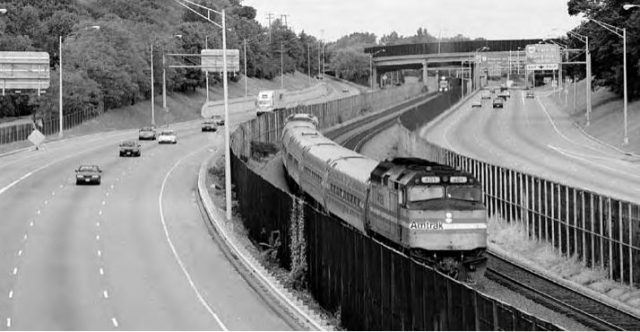
I-195 in Richmond was constructed through heavy traffic on historic thoroughfares by using the right of way of the Richmond, Fredericksburg and Potomac Railroad.
Economic conditions in the 1974-76 biennium slowed virtually all of the department’s operations as construction costs climbed 34 percent and revenue from state highwayuser tax sources fell approximately $30 million below estimates. A seven-month moratorium was placed on most new construction, and the General Assembly asked the Virginia Advisory Legislative Council to study the impact of the rising costs and reduced revenue.
The 10-year road and street improvement program approved by the commission in 1971 set the cost of highway improvement needs at $5.2 billion by 1982. Although cost and income trends seemed to stabilize by the mid-1970s, attainment of the 10-year objectives still proved beyond reach by 1982.
It was also in the wake of the country’s fuel crisis and the dollar’s declining buying power that the Department of Highways would undergo major organizational changes. The changes resulted from action of the 1974 General Assembly, which expanded the duties of the department and enacted a new transportation policy for Virginia. To reflect this expansion, the department was renamed the Department of Highways and Transportation.

“It is hereby declared to be the policy of the Commonwealth of Virginia that the present and future welfare and mobility of the citizens of Virginia require a balanced transportation system, consisting of coordinated private and public facilities and services, provided and administered to assure adequate, safe, economical, and efficient transportation,” the assembly said.
Such a system, it continued, should “stimulate economic growth, provide access to employment, health, educational, recreation, and other activities for all… citizens, facilitate the flow of commerce, encourage efficient allocation of human and economic resources, and preserve the inherent advantages of each mode, while utilizing inter-modal advantages to the fullest extent.”
The department’s job in the planning of air, rail, and waterway facilities was limited by the General Assembly to one of coordination. The authority of other state and local agencies and the private sector was kept intact.
Still, precisely what would be the state government’s role in the planning, development and administration of highways, rail transportation, air travel, urban mass transit, ports and waterways remained a question in the minds of department officials. And, how should state government’s resources be organized to fulfill the role?

The answer to these questions as they related to rail transportation came in 1973, after the bankruptcy of eight rail companies in the Northeast and Midwest regions of the country led the Congress to pass the Regional Rail Reorganization Act. Among other things, the act provided limited funds for rail financial assistance.
In order to qualify for the federal subsidies, states were required to develop rail plans providing an overall appraisal of their statewide rail systems and making detailed analyses of sections for which financial aid was to be requested. Development of this plan in the commonwealth was assigned to the Department of Highways and Transportation.
Virginia was fortunate that, with one exception, self-supporting rail service was provided by companies recognized as leaders in the railroad industry. The exception was the service formerly provided by the bankrupt Penn Central on the Eastern Shore and on a short segment in the Winchester area.
Since rail service in both of these areas was considered vital, the department submitted Virginia’s completed plan to the Federal Railroad Administration on Jan. 9, 1976, and it was approved less than six weeks later.

The role of public transportation in department operations enjoyed increased emphasis beginning in the late 1970s. Recognizing that well-planned transit service could reduce traffic congestion, air pollution, and the costly consumption of fuel, the 1978 General Assembly established a public transportation division within the department.
The decision to create a new division expanded a transit assistance program that began in the department nearly a decade earlier, elevating it to a higher organizational level and reflecting the growing importance of mass transit operations, particularly in urban areas.
Produced by the
Virginia Department of Transportation
Office of Public Affairs
1401 E. Broad Street
Richmond, VA 23219
VirginiaDOT.org




DLC Acquires Royal Plaza Shopping Center in Front Royal

Food Scares Can Hurt Restaurants That Had Nothing to Do With an Outbreak

Virginia State Police Rap Back Program Tops 55,000 Enrollments in First Year

Warren County Volleyball Set to Host Kettle Run Tuesday Night – September 1

Economic Growth Is Not the Same Thing as Economic Health

Virginia Health Leaders, Lawmakers Share Enhanced Healthcare Resources for Rural Communities

Commentary: Public Utilities Shouldn’t Be Funding the Campaigns of the People Who Govern Them

Voting Rights Struggle Continues, Gov. Spanberger and Advocates Say at March on Washington Anniversary
Warren County Volleyball Set to Host Strasburg Monday August 31st

Trump Administration Announces Venezuela Oil Deal, Space Academy Commission and Other Actions

Recalling the History of Recalls

September Celebrity Birthdays

Wawa to Open New Middletown Store With Grand Opening Celebration Sept. 4

Reaching Hearts Gospel Fest Returns to Downtown Front Royal, Seeks Community Sponsors

VDOT: Warren County Traffic Alert for August 31 – September 4, 2026

Why Should You Care If the Business Down the Street Closes?

Going Shopping? Don’t Forget to Ask About a Senior Discount
Virginia State Police Seize More Than $2.6 Million in Drugs During Weeklong Operations
Give Downtown Front Royal a Place to Sit

Warren County High School Welcomes E. Wilson Morrison Students After Emergency Closure

Warren Heritage Society Opens New Main Street Pocket Museum and Tour Headquarters

Carla Schwarck Slater (1947 – 2026)

PickleStock Returns to Warren County Fairgrounds September 12

William “Bill” John Mathers (1935 – 2026)
