
Local News
Blue Ridge Wildlife Center Patient of the Week: Blue Jay
It is illegal to keep a wild bird in your care in the United States.
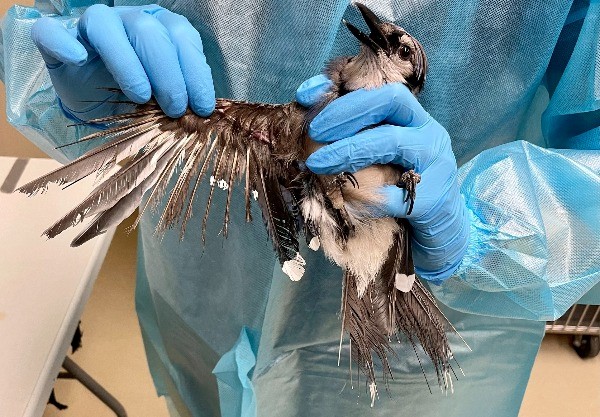
This Blue Jay was found by a well-intentioned person who, when the bird was just a nestling, attempted renesting. When that failed, this individual kept the bird for the next two years.
Once the finder learned of the law, they did the right thing and brought the jay to our Center.
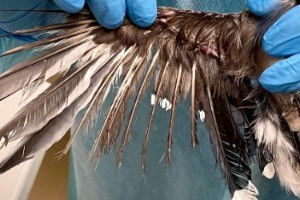
Upon exam, we found that the bird could not fly because they were obese and the feathers had been damaged so severely that only the shafts and a few barbs remained on the tail and both wings.
This was likely caused by a combination of inappropriate housing and diet.
As in humans, obesity can lead to a variety of physical health issues. And being housed alone and unable to fly leads to a variety of mental health issues in these animals.
We are hopeful that appropriate diet and socialization will improve this bird’s overall health, but the chances of it returning to the wild at this point are poor. We will continue to monitor this bird and we hope for the best!
Although it is illegal to keep a wild bird in your care throughout all of the United States, regulations regarding amphibians, reptiles, and mammals vary by state. This is because of The Migratory Bird Treaty Act (MBTA) of 1918 which “…prohibits the take (including killing, capturing, selling, trading, and transport) of protected migratory bird species…”. Because of this law, even wildlife centers like ours have to have prior authorization from the U.S. Fish and Wildlife Service to care for birds—and even to keep bird feathers, talons, or skulls to use as educational biofacts.
Do you know someone with a wild “pet”?
We recognize that most people who are holding onto wildlife have the best intentions and are unaware that it’s illegal. Despite intentions, these cases often have negative or fatal outcomes for the animal.
If you know of someone with a wild “pet”, please notify them of the law. Be understanding, but let them know they need to get that animal into appropriate, legal care as soon as possible. If they refuse, law enforcement needs to be involved.
To make an anonymous report regarding a wild bird, contact the U.S. Fish and Wildlife Service and for all other wildlife crimes in Virginia, contact The Department of Wildlife Resources.
Looking for an easy way to help native wildlife? Become a monthly BRWC donor! For as little as $5/month, you can provide year-round, sustainable support that helps us fulfill our mission.

AA Speaker to Explain Recovery Program at United Methodist Men’s Dinner

Jeannette M. Hyland (1944 – 2026)

Allen William Derflinger II (1959 – 2026)

Warehouse Clerk: A High-Demand Job—Even With Robots

FDA Cracking Down on Compounded GLP-1 Drugs

“Christmas in April” or Overspending? Budget Draws Criticism

Court Ruling Voids Prince William Data Center Rezoning, Raising Stakes for Local Debate

Spanberger Signs First Bills Targeting Healthcare, Housing and Energy Costs

Blue Ridge Singers Spring Concerts to Showcase Powerful Blend of Voices and Brass
What Counts as “Good Policy” Depends on Who’s in Power

Planned Parenthood Presses Virginia to Restore State Funding for Contraception Program

Weapon Offenses Rise on Virginia University Campuses

Trump Steps In to Pay TSA Workers as Congress Remains Stalled

Escaping the ‘Captivity of Activity’ by Making Time to Rest

Why Wearing a Bike Helmet Matters

Wilma J. Martin (1927 – 2026)
Michael Fanning (1957 – 2026)

Spanberger Order, RNC Lawsuit Highlight Divide Over Virginia Voter Roll Maintenance

DNC Kicks Off Voter Registration Blitz, Unveils New Campaign Playbook Ahead of Midterms

Republican State Lawmakers Propose Three-Month Gas Tax Holiday in Virginia

April Star Birthdays: Famous Faces Celebrating This Month

Time to Strengthen Those Hips Again

Supervisors Discuss Evolving FY-26/27 Budget Priorities and Revenue Sources, Including Real Estate Tax Hike & Cigarette Tax

From Students to Leaders: Mountain Vista Governor’s School Hall of Fame Honors Two Graduates
