
Local News
July 1 Marked Statewide Start of a Ban on the Use of Certain Plastic Foam Foodware Containers
Royal Examiner was recently alerted to the July 1, 2026, taking effect of a statewide ban on plastic foam foodware containers for all food vendors in Virginia. “This marks a major shift for Virginia waterways and local food businesses,” it was asserted.
Initial online research into the ban explained that: “Virginia’s ban on expanded polystyrene (EPS) food containers is now fully in effect. The prohibition applies to all restaurants, cafes, food trucks, and organizations across the state. Businesses can face civil fines of up to $50 per day for non-compliance unless granted a local economic hardship exemption.”
Our initial alert on the polystyrene (EPS) plastic foam foodware containers ban going into statewide effect came from the environmental advocacy group “Oceana”.
Oceana’s profile

A little more online research indicated that Oceana is: “the largest international advocacy organization dedicated solely to ocean conservation.” Their website added that “Oceana was established in 2001 by a group of leading foundations — The Pew Charitable Trusts, Oak Foundation, Marisla Foundation (formerly Homeland Foundation), and the Rockefeller Brothers Fund.
“In 1999, these foundations commissioned a study and discovered that less than 0.5 percent of all resources spent by environmental nonprofit groups in the United States went to ocean advocacy — an appalling statistic,” the global environmental advocacy group asserted, adding, “No organization was working exclusively to protect and restore the oceans on a global scale.
“To fill the gap, our founders created Oceana: an international organization focused solely on oceans, dedicated to achieving measurable change by conducting specific, science-based campaigns with fixed deadlines and articulated goals.
“In 2002, Oceana merged with American Oceans Campaign, founded by actor and environmentalist Ted Danson, to more effectively address our common mission of protecting and restoring the world’s oceans. Since its founding, Oceana has won more than 325 victories and protected more than 4 million square miles of ocean.”

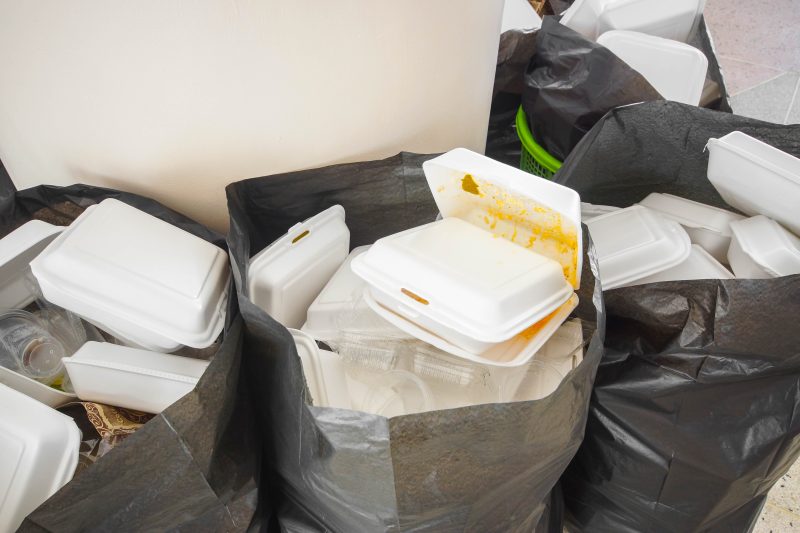
Regarding the statewide implementation of the plastic foodware container ban, Oceana’s Communications Department noted, “The ban already went into effect for food vendors with 20 or more locations on July 1, 2025.”
Having seen the banned containers referred to as “Styrofoam” in some online posts, we inquired whether that was an accurate description of the targeted food containers. We were told by Oceana that, “Styrofoam” is actually a trademark for a different type of foam and polystyrene is just regularly called Styrofoam mistakenly.”
So, what does the banning of these polystyrene-based plastic foodware containers, particularly single-use ones, have to do with ocean protection advocacy, one might ask.
A hazardous materials Domino effect

Oceana’s Senior Campaign Director Christy Leavitt has stated, “Plastic foam not only floods our waterways and harms wildlife, but represents a tangible threat to human health. By phasing out plastic foam foodware containers, Virginia is taking an important step to reduce harmful plastic pollution, protect ocean wildlife, and safeguard the health of Virginia communities.”
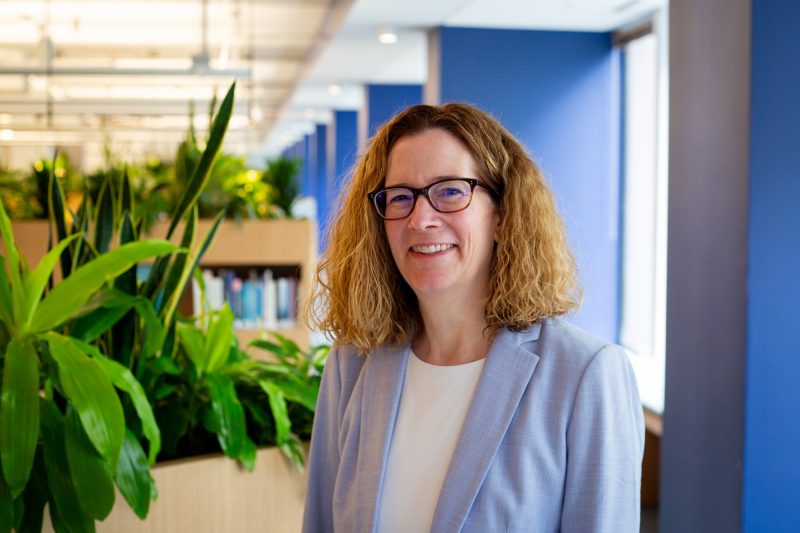
Oceana Senior Campaign Director Christy Leavitt has explained the domino effect of foam plastic container pollution, impacting sea and shore creatures, including human communities. Courtesy Photo Oceana
Of the potential of implementation of such a ban statewide, it is noted by Oceana’s Communications Department that: “Washington, D.C. passed a single-use plastic foam ban in 2014. The Anacostia River, which runs through the city, saw a 50% reduction in plastic foam pollution during the first year the law was implemented. After five years, foam pollution fell by 88%.
“Maryland also has a statewide ban on single-use foam foodware, and there’s national legislation (‘Farewell to Foam Act’) to phase out plastic foam that has been introduced,” Oceana noted, adding hopefully, “A poll conducted by Ipsos that Oceana released last year shows widespread bipartisan support for reducing single-use plastic foam.”

And so, why target polystyrene (EPS) food containers? We asked Oceana representatives. They responded: “Plastic foam is made with hazardous chemicals, like its main building block styrene, which is toxic to the human nervous system.
“Styrene is linked to cancer and considered a probable human carcinogen by the U.S. National Institutes of Health. Styrene and other chemicals can easily leach into food and beverages at all temperatures, but hotter temperatures heighten the risk. Food and drinks high in fat also increase the leaching of styrene and other chemicals. The American Academy of Pediatrics recommends that parents avoid giving their children polystyrene products, including plastic foam. Adding to the concern, tiny pieces of polystyrene microplastic have been found in our bodies, including the blood, lungs, kidneys, and reproductive systems.
“Plastic foam is both lightweight and brittle. Because it is so light, when plastic foam breaks apart, those tiny pieces can easily be carried far and wide by wind and water, making it one of the most abundant types of plastic pollution found in U.S. rivers, lakes, and marine environments. Plastic foam affects a wide variety of ocean wildlife, including sea turtles, seals, and shorebirds, and poses significant health threats to people. Plastic foam is also one of the most common forms of marine plastic pollution and was among the first types of plastic discovered in the ocean. Threatened and endangered sea turtles, protected marine mammals (including porpoise, elephant seals, and Steller sea lions), shorebirds, and crabs have all eaten plastic foam.”
Of the growth of Oceana’s commitment to restoring our planet’s oceanic environment, not only for the wildlife that lives in or adjacent to our oceans, but also those, including humans, impacted “downstream” by a failing oceanic environment it is added that, “The Ocean Law Project — also initiated by The Pew Charitable Trusts — was absorbed into Oceana in 2001 as Oceana’s legal arm.”

And it would appear that the legal arm is still reaching out to work for us all, both animal and human, as well as the latter group’s political aisle. One can only hope that medical research, common sense, and a survival instinct will continue to unite us behind Oceana’s environmental efforts moving forward.




Celebrate Kids Day Returns Sept. 27 With Family Fun, Activities and a New Train Ride

Survey Finds That More Than Half of Virginia Families With Children Face Food Insecurity

Could Virginia’s New Law Allowing 1% Sales Tax for School Construction Need a Fix?

Now They Want to Rein It In

From Oil Field to Gas Pump: What Really Determines What We Pay?

When Fields Flood: How Farmers Protect Crops and Plan for the Future

Draw Your Circles: A Map of the People Who Matter

A Heartfelt Farewell and Thank You

Data Centers Are Necessary. That Doesn’t Mean Warren County Needs One

Diesel Prices Shoot Upward as Top Farm-State GOP Senator Begs Trump for Export Embargo

From One Barrel of Oil: What Do We Actually Get?

CNN, MS Now, Politico Sue Trump Over White House Ban

Virginia-Made Marine Mattress Nominated for 2026 Manufacturing Cup

Virginia Works Plans October Job and Resource Fairs in Front Royal, Winchester

UVA Health Prince William Medical Center Earns Third Consecutive Magnet Recognition

Virginia Hunger Study Finds 37% of Blue Ridge Households Faced Food Insecurity

WCHS Volleyball Hosts Manassas Park on Sept. 22

ORDER OF PUBLICATION: In the Circuit Court for Warren County, Virginia

The Papers You Would Grab in Ten Minutes

Spanberger’s Carbon Tax Sets New Record, Could Add $1 Billion to Electricity Costs in One Year

Ask Stewart: What Should I Be Doing for My Trees This Fall?

Next Hearing in Supervisor Tony Carter’s DUI Case Set for Dec. 8

Commentary: We All Use Data Centers. So Where Should They Go?

From Wine to Whodunit: Local Events Raise Money for Community Programs