
State News
Report Outlines Challenges of Virginia’s Special Education Compliance System, Recommends Improvements
After years of inconsistencies and complaints, Virginia has moved closer to revising its process for reporting issues with special education services, aiming to improve the structure and ensure that families receive the necessary services for their students with disabilities.
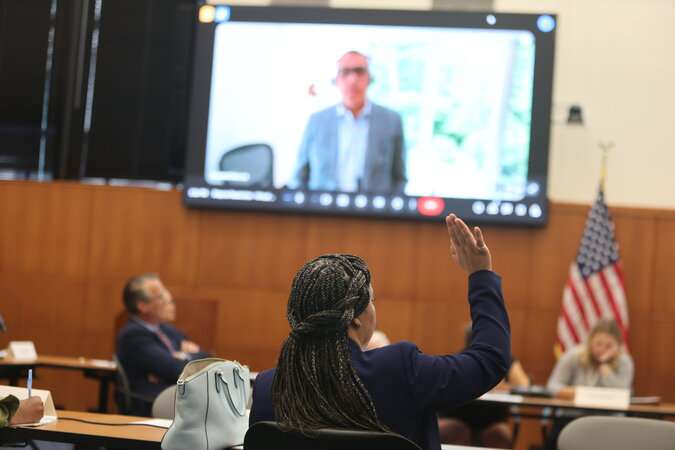
During a meeting in Richmond on July 7, 2025, Del. Carrie Coyner, R-Chesterfield, shared key takeaways identified by her subgroup from the recently published study of Virginia’s Special Education Resolution Dispute System. (Nathaniel Cline/Virginia Mercury)
The issues with the state’s dispute resolution system — an impartial procedure for parents and schools to resolve disagreements over issues with special education services — have created a divide among parents and public school leaders for at least the past five years.
As federal law states, Virginia is required to provide all students with disabilities a “free and appropriate public education” through personalized plans under the Individualized Education Program. Last year, Virginia recorded over 185,000 students receiving special education services during the 2024-25 school year.

Wendy Little, a parent advocating for her son who is autistic, spoke on Monday to the state’s dispute resolution system advisory group as it reviewed a study with findings about the existing system and recommendations for bettering it. Her son’s story was a key inspiration for the formation of the advisory committee through successful legislation to address the system. She called for an overhaul of the current system to resolve problems special needs families face concerning their children’s education.
“There is no resolution,” Little said. “It’s a dispute to the parents and you get nowhere. It’s not only broken, it is completely corrupt.”
A history of noncompliance
The system, which has been studied for the past five years, has been criticized by parents and advocacy groups for failing to monitor and respond to complaints raised by families. The situation reached a critical point when the Virginia Department of Education (VDOE) was investigated by the U.S. Department of Education’s Office for Civil Rights, which looked into why the agency had failed to resolve complaints.
“The time for continued study should end, and focus should turn to implementing the many reforms that have been offered throughout the years, and in this study,” said Deusdedi Merced, managing member for Special Education Solutions, LLC, which conducted the July 1 study. “The time to address the concerns of many is now. Only then will the full breadth of the protections afforded to students with disabilities on the (Individuals with Disabilities Education Act) will be realized.”

The report’s findings highlighted that dispute hearing officers did not meet standard legal practices. It also noted a public perception that VDOE has not effectively enforced the outcomes of investigations related to state complaint orders.
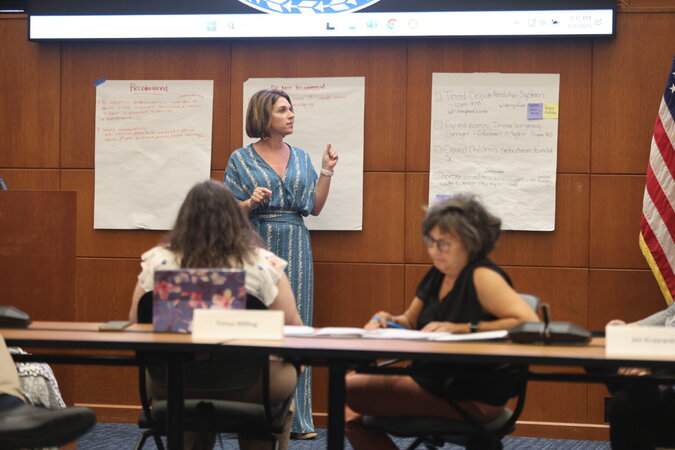
During a meeting in Richmond on July 7, 2025, Del. Carrie Coyner, R-Chesterfield, shared key takeaways identified by her subgroup from the recently published study of Virginia’s Special Education Resolution Dispute System. (Nathaniel Cline/Virginia Mercury)
The findings align with a 2020 study conducted by the Joint Legislative Audit and Review Commission (JLARC), which analyzes and provides oversight of state agencies on behalf of the General Assembly, regarding K-12 Special Education.
In that report, researchers identified significant shortcomings in the state’s provision of special education services, including low-quality Individualized Education Programs (IEPs) — customized learning plans for student’s disabilities — a lack of knowledge among educators about how to effectively support students with disabilities, and shortfalls in VDOE’s oversight of local divisions.

JLARC’s study also found that the VDOE does not require school divisions to carry out corrective actions that fully and appropriately remedy instances of noncompliance.
The state education agency began turning things around starting with the Board of Education updating Virginia’s regulations on due process on March 28, 2024. Last December, the Office for Civil Rights wrote a letter closing its findings and requirements against VDOE.
Next steps
Some of the draft recommendations the advisory group will be voting on to improve the system include training for all stakeholders compared to a select few, expanding data collection and improving special education mediation.
Sen. Barbara Favola, D-Arlington, chair of the Virginia Commission on Youth, said she hopes the draft recommendations will provide more standardization of the IEP process, better training across the system for the mediators and the hearing officers, and increased clarity and support for parents. Favola, along with Del. Carrie Coyner, R-Chesterfield, carried legislation to overhaul special education in 2024.

“We’re trying to bolster the system in a way that makes it more responsive to the parents and ensures a certain amount of quality across the state and I think that’s going to be the message in the report that we go forward with,” Favola said.
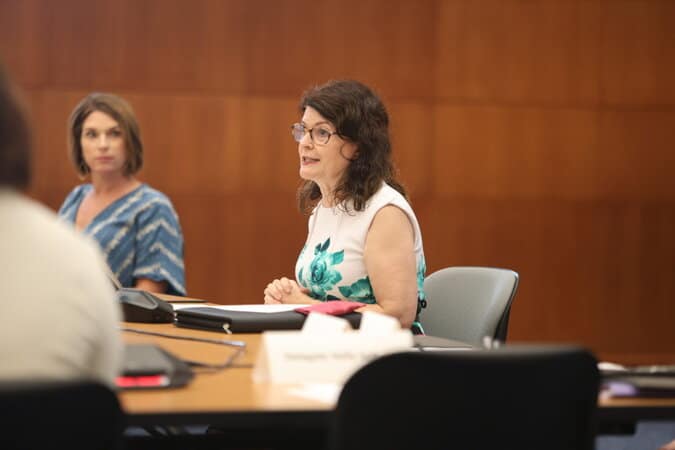
During a meeting in Richmond on July 7, 2025, Senator Barbara Favola, D-Arlington, addressed Virginians regarding the challenges in special education following the release of a study on Virginia’s Special Education Resolution Dispute System. (Nathaniel Cline/Virginia Mercury)
But some committee members, including Favola, expressed concern about whether the recommendations could be met, considering the threat to resources and programs posed by federal funding cuts. VDOE Superintendent of Public Instruction Emily Anne Gullickson said the agency will provide details about some of the cost impacts to special education at a future meeting.
The advisory group invited comments from the public, some of whom urged the committee to consider recommending a $10,000 cap on awards for parents, schools and hearing officers to reduce litigation costs. They also recommended better enforcement of federal laws, which includes the potential loss of licenses for non-compliance, and consistency across all divisions.

Kandise Lucas, an academic civil rights advocate, and parents also raised concerns about the mistrust the public has in Virginia’s public schools due to inconsistent eligibility determinations for students with disabilities and inadequate training across divisions.
“IDEA is a civil rights law that was created to make sure that children with disabilities are not marginalized; are not thrown away,” Lucas said.
The advisory committee’s draft recommendations will be presented to the Virginia Commission on Youth on Sept. 3, and will be open for public comment until October 15. The commission will vote on these recommendations during its meeting on Oct. 21.
by Nathaniel Cline, Virginia Mercury
Virginia Mercury is part of States Newsroom, a nonprofit news network supported by grants and a coalition of donors as a 501c(3) public charity. Virginia Mercury maintains editorial independence. Contact Editor Samantha Willis for questions: info@virginiamercury.com.




From Workers’ Parades to Backyard Cookouts: How Labor Day Began

Is It Too Late to Sign Up for the All About Trees Class This Year?

The Envelope That Decides Next Year

The Emergency Fund You’ll Actually Build

Stronger, Not Bigger: Rethinking Economic Development in Warren County

Kenneth Lewis Smith (1939 – 2026)

Strong Families Build a Stronger Warren County

The Science Prizes That Make You Laugh, Then Think

Grill the Perfect Corn on the Cob, Then Dress It Up

The Famous Last Words No One Wrote Down

US Supreme Court Again Urged to Permit Trump Vote-by-Mail Restrictions

President Trump’s Beef Policy May Help Food Prices, But At What Cost?

Virginia Attorney General Creates Worker, Federal Accountability Units as Office Highlights Meta Settlement

VDOT: Warren County Traffic Alert for September 7 – 11, 2026

Twenty-Five Years Later, Remembering When We Stood Together

U.S. Adds 162,000 Jobs in August as Manufacturing and Construction Hiring Rises

Spanberger Taps Daniel Young to Lead Government Watchdog Office

Update: Cline Appears Without Democratic Opponent at Winchester Congressional Event

UVA Health Experts Urge Athletes to Recognize Concussion Warning Signs as Fall Sports Begin

Bumblebees Solve Puzzle Without Training, Study Finds

Business Growth Series: “What If” Thinking Is Costing You Money

Blue Ridge Area Food Bank Calls on Community to Take Action Against Hunger in September

Virginia State Police Seize Guns, Nearly $200,000 in Cash During Weekly Crime Operations
The Queen is Gone. There Will Never Be Another
