
State News
Does Extreme Heat Cause Train Derailments? A Virginia Railroad Expert Weighs In
After a freight train derailed in Richmond earlier this month, questions have emerged about what caused the crash and whether the extreme heat played a role.
Excluding the July train accident in Richmond, Virginia, the Federal Railroad Administration has recorded four derailments since January, all at speeds under 9 mph, according to its data. The incidents reflect the broader challenge of preventing derailments, which can stem from track defects, equipment failures, human error, or adverse weather conditions.
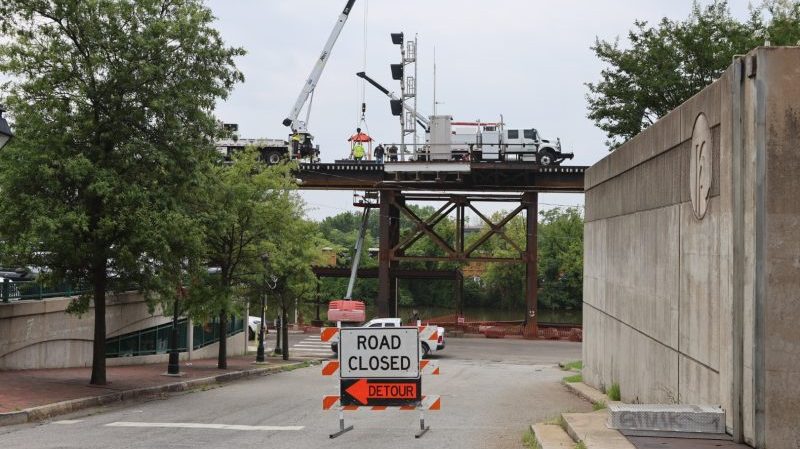
CSX Transportation is working to repair the damage near the intersection of Dock and 20th Streets in Richmond that contributed to three train cars derailing from a 200-car train and crashing into the Riverfront Canal on July 3, 2026. (Photo by Nathaniel Cline/Virginia Mercury)
J.B. Jones Chair of Mechanical Engineering at Virginia Tech and director of the Center for Vehicle Systems & Safety, Mehdi Ahmadian, is an expert in how extreme weather affects rail tracks, the role of steel in rail infrastructure, and how rail operators respond to extreme weather events.

“I can tell you confidently that the railroads do an exceptional job of maintaining the general condition of the track,” Ahmadian said. “There are thousands of trains and rail cars that operate on this complex railroad network that we have around the country, and by and large, they will travel on those tracks safely and without any incidents.”
Ahmadian, also the founder of the Railroad Transportation Laboratory, designed to help improve rail and truck safety through research and to educate students who will enter the transportation industry and advance public safety, said the U.S. rail network is “extremely complex,” carrying mostly heavy freight and sharing passenger trains in some corridors.
With over 35 years in the industry, Ahmadian said he believes railroads do an exceptional job maintaining track conditions. High-profile derailments can distort public perception, he added.
Ahmadian said one misconception is that all derailments result from extreme heat.

Impact to rail tracks in extreme weather
Regardless of the weather, Ahmadian said railroad tracks can be affected by both extreme heat and cold temperatures. This is one of the biggest challenges for railroad operators when moving passengers and cargo.
Even though train wheels look large, Ahmadian said the actual spot where each wheel touches the rail is only about the size of a quarter, roughly one inch across.
Under extreme heat, Ahmadian said rail tracks can expand and buckle, resembling a large S-shaped curve. Even the slightest deviation in the track can cause a wheel to drop between the rail tracks, triggering derailment, with each railcar carrying thousands of pounds over eight wheels.
In extreme cold conditions, rail tracks can contract as tension increases, like tightening a guitar string, Ahmadian said. If the force exceeds the rail’s strength, it will break, creating a gap in the track and possible derailment.

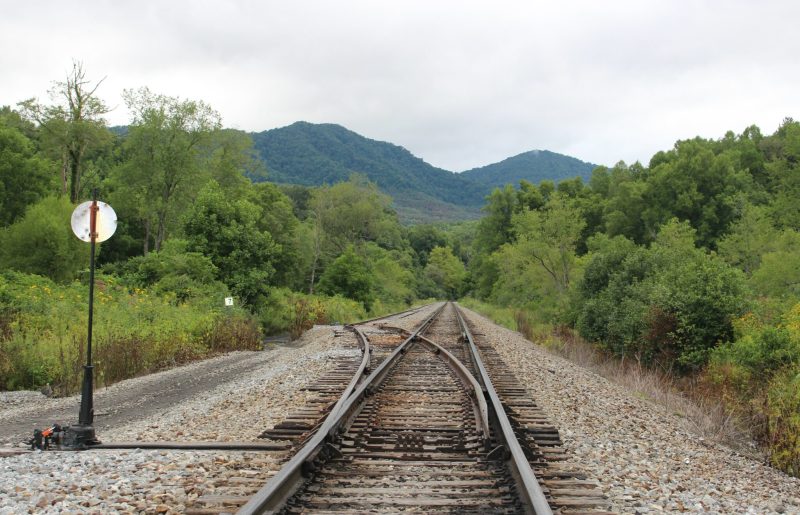
Railroad tracks near Keokee, Va. (Sarah Vogelsong/Virginia Mercury)
Steel remains the best ‘practical material’ for rail tracks
Since the 19th century, steel has been the preferred material for railroad tracks, and Ahmadian said it’s still the best choice for rail construction and maintenance.
“There is no better practical material that we can use for the extreme demands of running heavy trains,” Ahmadian said.
Steel has evolved over 150 years and is now specifically engineered to withstand extreme mechanical loads from heavy trains and resist wear.

Rail tracks can last between 20 and 40 years, depending on traffic volume and other conditions, Ahmadian said, which is amazing considering the continuous heavy loads, thermal cycling between heat and cold, and constant environmental exposure.
Ahmadian said rail steel is a cost-effective engineering achievement that can’t be easily replaced.
Rail operators’ response to extreme weather
Passenger rail operators regularly adjust travel schedules that can trigger train delays if weather conditions impact rail tracks. Ahmadian says this is common for maintaining safe travel for passengers.
On hot days, Ahmadian said operators may implement “slow orders,” which require trains to run at reduced speeds on affected segments of the rail track and help reduce the risk of a heat-weakened track causing a derailment.

Ahmadian said rail operators could also temporarily suspend traffic if conditions are deemed particularly risky, typically on the hottest parts of the day. He said services typically resume once conditions are considered safe.
Maintenance crews inspect tracks for cracks or breaks caused by cold-induced contraction on extremely cold days.
Crews also investigate rail tracks ahead of trains, often using pickup trucks fitted with rail wheels to move efficiently along the tracks. Ahmadian said these patrols monitor for lateral rail shifting, signs of track panel shifting or potential buckling. They then recommend slow orders, repairs, or other interventions, if needed.
Richmond derailment still under investigation
CSX is still working on repairing the damage near the intersection of Dock and 20th Streets in Richmond that contributed to three train cars derailing from a 200-car train into the Riverfront Canal on July 3.
No injuries and no HAZMAT issues resulted from the accident. Crews continue to remove the grain from the three cars submerged in the canal. A spokesperson said the case is still under investigation.
by Nathaniel Cline, Virginia Mercury
Virginia Mercury is part of States Newsroom, a nonprofit news network supported by grants and a coalition of donors as a 501c(3) public charity. Virginia Mercury maintains editorial independence. Contact Editor Samantha Willis for questions: info@virginiamercury.com.




This Drone Hunts Mosquitoes

William Morgan and the Anti-Mason Party

Luria and Kiggans Rematch in Virginia’s 2nd Congressional District Among Most-Watched Races In Nation

Youth Advocates Warn Higher Marijuana Fine Could Deepen Racial Disparities

Virginia DMV Wait Times Plummet to Record Lows After Major Reforms

Lorraine Kephart Dovell (1942 – 2026)

POLICE: 7 Day FRPD Arrest Report 9/28/2026

ORDER OF PUBLICATION: In the Circuit Court for Warren County, Virginia

The Silent Danger of Heating Season

Three Common Myths About STBBIs Explained

Standing Counts, but Walking Counts More

VDOT: Warren County Traffic Alert for September 28 – October 2, 2026

Virginia Health Committee Considers Mandating Licensed Nurses in Every School

After Obama-Era Chesapeake Bay Executive Order Rescinded, Environmental Groups Brace for Fallout

Federal Judge Strikes Down SNAP Deadline That Put Virginia at Risk of Added Costs

Children Activities by Samuels Public Library for the Month of October

$5,000 Match Challenge to Support Warren County Children on Give Like Dolly Day

October 23rd Set for Post-Discovery Motions Hearing in Bradley Treece Gunfire Incident With Neighbors

Virginia State Police Seize More Than $1 Million in Drugs During Weeklong Operations

Jolissa Steele Shifflett Mathews (1944 – 2026)

False Birth Control Claims are Proliferating, Survey Says

Business Growth Series: Your Work Environment Is Affecting Your Growth

Frog Hunting Offers Virginians a Different Kind of Outdoor Adventure

How the Tech Bros Shop for a House
