
State News
Everything You Need to Know About This Year’s Hurricane Season in Virginia
Hurricane season along the Atlantic Seaboard officially starts June 1.
The six-month period that runs through the end of November is when major storms are most likely to form in the ocean, threatening communities when they approach the coast.

A photo of Hurricane Helene making landfall in Florida the evening of Sept. 26, 2024. (Courtesy of National Oceanic and Atmospheric Administration)
This year, the National Oceanic and Atmospheric Administration projects a “below average” hurricane season for the first time since 2015.
That could include up to 14 named tropical storms and up to six becoming hurricanes. (Last year’s season saw 13 named storms and five that turned into hurricanes.)
The projections largely hinge on the likely presence of the natural weather pattern known as El Niño later this year.
El Niño conditions come with unusually warm water temperatures in the Pacific Ocean, which impact the atmosphere above. That increases storm risk for Pacific communities.
But in the Atlantic, El Niño increases vertical wind shear, changes in wind speed and direction that can help prevent hurricanes.
“It makes it harder for development of the eastern waves coming off of Africa to strengthen into storms,” NOAA Administrator Neil Jacobs said at a news conference Thursday.
Hurricanes form when warm ocean water evaporates into moist air. More air rushes in and rises, forming clouds and thunderstorms that release even more heat to power the storm.

In the long-term, experts say warmer seawater tied to climate change could fuel more active seasons.
Only a few hurricanes in modern history have directly passed through Hampton Roads. That includes Irene in 2011 as a Category 1, and an unnamed hurricane that hit the region in August 1933, which officials still consider the “flood of record” for southeastern Virginia.
Several other storms devastated the region despite not reaching Virginia as a hurricane.
Isabel, for example, made landfall on the Outer Banks in 2003 and moved through Hampton Roads as a major tropical storm. It became Virginia’s costliest natural disaster with more than $1 billion in damages.
“Don’t let words like ‘below average’ change the way you prepare,” National Weather Service Director Ken Graham said Thursday. “It just takes one.”
Here’s what to know as the 2026 season begins.
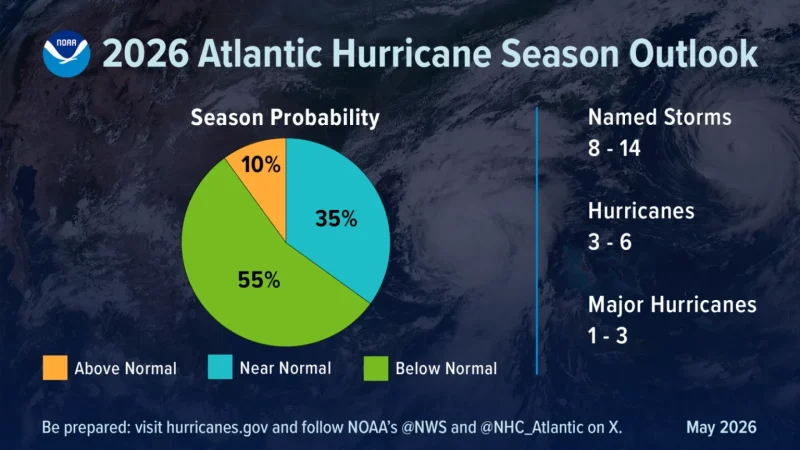
(Graphic courtesy of NOAA)
How to prepare your home and evacuate if necessary
The Virginia Department of Emergency Management urges people to look up their hurricane evacuation zone in advance. You can type in your address on the agency’s website to find out.
The zones are categorized from A to D, with A considered the most vulnerable to surging waters. You only need to evacuate to a higher non-evacuated zone. (If Zone A is the only one evacuated, for example, you can move to an area within Zone B, and so on.)
Watch for local officials’ instructions through local media outlets and social media.

“Depending on the emergency, being safe might mean staying at home, a short trip to higher ground, or traveling to a different region of the state,” VDEM says.
Officials also recommend considering your evacuation route in case the time comes. Those include the Hampton Roads and Monitor Merrimac Memorial bridge-tunnels, U.S. routes 58 West, 17 North, 60 West, 460 West, and 10 West.
On the Eastern Shore, residents should use Route 13 North. The Chesapeake Bay Bridge-Tunnel is not an evacuation route.
You can find a detailed hurricane evacuation guide on VDEM’s website.
Officials recommend building an emergency kit as much as you can. That could include infant supplies, pet food, non-perishable food and water, cash reserves for at least a few days, warm clothing, blankets, battery-powered radio, backup cell phone chargers, local maps, toilet paper, hand sanitizer, and irreplaceable sentimental items.
Many emergency preparedness products are eligible for Virginia’s tax-free weekend. This year’s weekend starts Aug. 7.
Actions to secure your home ahead of extreme weather include: boarding up windows and storm shutters; securing doors; bringing inside lightweight items such as patio furniture and garbage cans; anchoring objects unsafe to bring inside, such as gas grills; trimming or removing damaged tree limbs close to structures; buying a portable generator to use during outages; clearing debris from rain gutters to prevent water damage; and taking photos and video of your home’s condition before a storm for insurance purposes.
Graham said people tend to think they have weeks to prepare for a storm – but often, it’s days.
Every Category 5 hurricane that has made landfall in the U.S. was at tropical storm status or less within three days prior.
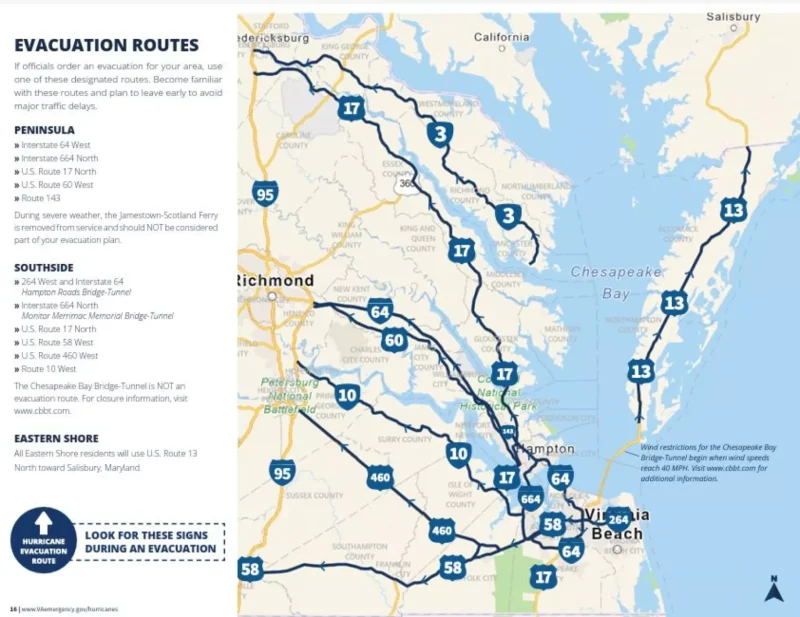
A map of evacuation routes in Hampton Roads. (Graphic courtesy of Virginia Department of Emergency Management)

You can’t buy flood insurance before a hurricane, so now’s the time
Flooding is often the deadliest aspect of a hurricane, with powerful storm surge quickly pushing large amounts of water onto land.
All that water also damages homes and businesses. A single inch of water in a home can cause more than $25,000 in damage, according to FEMA.
The best financial protection is flood insurance. Traditional homeowner’s insurance policies do not cover flooding.
The National Flood Insurance Program offers policies to homeowners, but typically has a 30-day waiting period before coverage begins. That means if a hurricane is on the horizon, it’s already too late to gain flood coverage for that particular storm.
The NFIP tends to see an uptick in people buying insurance after storms, then a decrease over time as memories of the storm fade.
Forecasting methods are changing, including new focus on inland communities
Changing climate conditions are fueling more intense rainfall within storms, and this can happen anywhere, not just the coast.
Helene, for example, dumped record amounts of rainfall in the mountains of North Carolina and western Virginia in 2024.
NOAA officials are working to enhance forecasting and preparedness efforts in inland communities.
“I’ve seen so many cases where the inland flooding causes more fatalities than on the coast, because we’re evacuating for (storm) surge,” Graham said.
The agency has implemented a new version of its famous “cone of uncertainty” forecast graphic to include storm watches and warnings for inland areas.

Federal forecasters are also using new surveillance technology, such as uncrewed drones and marine submersibles, and experimenting with artificial intelligence.
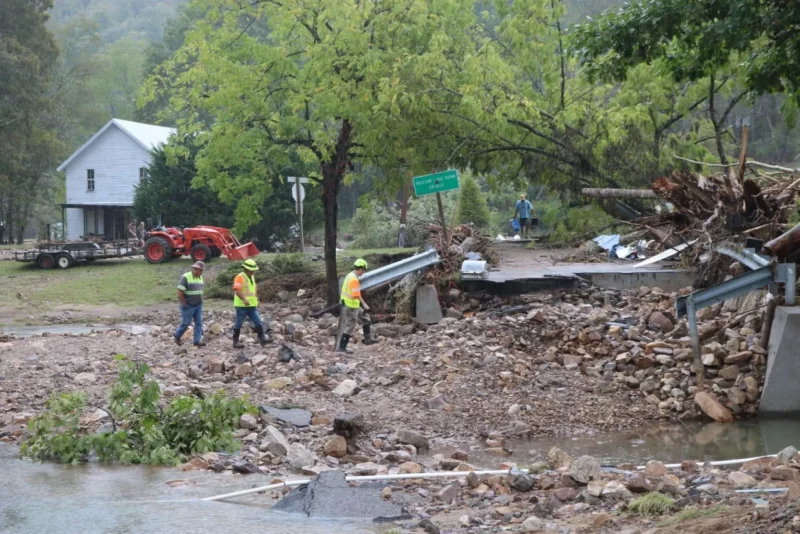
Damage to the Route 725 bridge in Taylors Valley, Virginia, following Hurricane Helene in September 2024. (Photo courtesy of Virginia Department of Transportation)
Recovering after a storm
After a storm passes through Hampton Roads, remember to take extra precautions when navigating roads that may be damaged and have downed electrical wires. Report downed lines and other safety hazards to Dominion Energy at 866-366-4357.
Avoid walking through floodwater or swimming in water bodies for at least a few days, because heavy rains push pollutants into waterways and contain bacteria that can make humans ill.
If using a portable generator, Graham emphasized people need to use them safely outdoors and away from windows. A majority of deaths associated with 2020’s Hurricane Laura came from improper use of generators rather than the storm itself.
If you experienced damage to your home or business, take photos and report it to your locality’s emergency management office so that officials can include it in their damage assessment.
Try to clean and disinfect anything that got wet to avoid the spread of bacteria from floodwater and the formation of mold. Air out enclosed spaces.
VDEM also recommends contacting local departments, such as social and human services, housing, public health, and community services boards, to access additional resources and information.
You can call 311 as a central clearinghouse for information and services, and 511 to learn about the latest road and traffic conditions.
You can track forecasted hurricane activity on the National Hurricane Center website and more local weather information from the NWS’ Wakefield office.
Editor’s note: This guide was originally published in 2025. It has been updated for the 2026 season.
By Katherine Hafner/WHRO
Virginia Mercury is part of States Newsroom, a nonprofit news network supported by grants and a coalition of donors as a 501c(3) public charity. Virginia Mercury maintains editorial independence. Contact Editor Samantha Willis for questions: info@virginiamercury.com.




Samuels Public Library Invites Young Writers and Artists to Enter 48th Annual Holiday Contest

New Exhibitions Bring World-Class Contemporary Art to Downtown Front Royal

VDOT: Warren County Traffic Alert for October 19 – 23, 2026

Discover The Many Benefits Of Organized Sports

The Family Bond That Doesn’t Necessarily End When Contact Does

Virginia State Police Urge Drivers to Stop for School Buses and Students

Economic Development Director Patrick Barker Details Maturing Plan at Town-County Liaison Meeting

Virginia Breeders’ Championships Begin This Weekend at Shenandoah Downs

Local Author Invited to Share Children’s Book at Irish Castle That Inspired It

Virginia State Police Seize More Than $334,000 in Drugs, Recover Five Firearms in Weeklong Operations

Business Growth Series: Big Projects Don’t Get Done — Small Tasks Do

Data Center Moratorium Bills Stack Up Ahead of Virginia Legislative Session in January

Transgender Care for Young Patients Remains On Hold at Virginia Hospitals

Commentary: Spanberger’s Energy Plan Dazzles – and Disappoints

The Workplace Accommodation That Costs Nothing

Nothing In Dolly Parton’s Library Is Ever Returned

Trump: Execution of Fort Hood Shooter Will Not Be Livestreamed

Harmony Hollow Holler Music Festival Brings Appalachian Music to Front Royal October 17

Winsome Earle-Sears Warns of Consequences of Virginia’s Proposed Constitutional Amendments

Federal Emergency Order Aims to Prevent Power Outages Across Mid-Atlantic, Including Virginia

Warren County Grand Jury Returns 17 Indictments Against 10 Individuals in October Session

Text Amendment for Aging in Place Community Succeeds at County Planning Commission Meeting

Virginia Lawmakers, Spanberger Grapple With Loss of Federal Healthcare Funds for Trans Youth

Virginia Sees Gains in Kindergarten Readiness, But Gaps Persist for Underserved Students
