
State News
Panel calls for ‘paradigm shift’ in Virginia school-to-prison pipeline
Schools have become places of trauma for students of color and help reinforce centuries of systemic racism by driving students into the criminal justice system, according to speakers at a recent University of Richmond symposium.
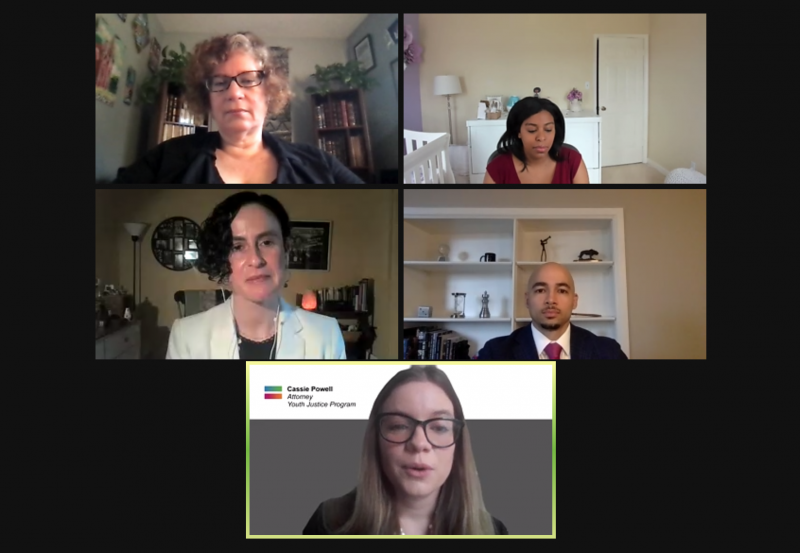
The UR School of Law hosted a six-hour event via Zoom with four presentations, nine panelists, and over 200 attendees. The event featured UR law students, educators, social justice advocates, and activists.
Suspension and expulsion are used disproportionately against Black students, other students of color, and those with disabilities, according to the U.S. Department of Education. Those punishments, along with arrests at school, often lead to students having a criminal record, according to the NAACP. The trend is known as the school-to-prison pipeline.
Julie McConnell, a UR law professor, said the origins of the school-to-prison pipeline are decades old. McConnell is the director of the university’s Children’s Defense Clinic, a program where law students represent indigent children in court.

The school-to-prison pipeline has been an issue for many years, but it began to take hold during the “super-predator era” in the 1990s, following incidents such as the Columbine High School shooting, McConnell said. The super-predator theory centered around fear there was going to be a wave of violent kids threatening communities and schools. The theory popularized strict zero-tolerance policies in schools.
“We would automatically suspend and expel kids who got in trouble in school for very minor offenses in many cases,” McConnell said.
She referenced a 2015 incident in South Carolina when a school resource officer tossed a student across a classroom after she refused to surrender her cellphone.
Zero tolerance policies mandate predetermined punishments for certain offenses in schools, including the possession of a weapon, alcohol, or drugs, according to Shared Justice. Minor offenses often punishable by suspension or expulsion include disorderly conduct and insubordination.

McConnell and other speakers discussed how punitive policies often drive students into incarceration, as some offenses previously handled within schools are now dealt with by juvenile courts. McConnell said suspending minors results in higher rates of dropout, mental health problems, delinquency, and substance abuse issues.
Virginia lawmakers have worked to return punishment back to the schools. Sen. Jennifer McClellan, D-Richmond, sponsored two measures that passed the Virginia General Assembly last year. Students cannot be charged with disorderly conduct during school, on buses, or at school-sponsored events. School principals no longer have to report student acts that constitute a misdemeanor to law enforcement, such as an assault on school property, including on a bus or at a school-sponsored event.
Valerie Slater, executive director for the RISE for Youth Coalition, said there are disproportionate rates of suspension in Virginia. RISE for Youth is a campaign focused on dismantling the youth prison model.
Black youths from ages 15 to 17 made up 21% of the state’s overall population during the 2016-2017 school year, but they accounted for 57% of youths suspended statewide, according to a 2019 Commonwealth Institute for Fiscal Analysis and RISE for Youth report. Black teens also made up 49% of Virginia minors reported to juvenile courts by school authorities and 54% of minors detained in local jails, according to the same report.

The country’s history of racial bias and discriminatory practices have enabled the school-to-prison pipeline, speakers said.
One panel focused on Richmond’s history of segregated housing trends, such as the illegal practice of redlining. That is when creditworthy applicants are denied housing loans based on the applicants’ race or neighborhood where they lived. White students as a result were concentrated in wealthier suburban areas and Black students in underprivileged urban centers, said panelist Genevieve Siegel-Hawley, an associate professor of educational leadership at Virginia Commonwealth University.
“We can easily see the vestiges of this history just in the way that we assign students to schools,” said panelist Kathy Mendes, a research assistant at the Commonwealth Institute for Fiscal Analysis.
Mendes said children of color from under-resourced areas often attend schools with insufficient resources.

Panelist Rachael Deane, legal director of Legal Aid Justice Center’s JustChildren program, said communities of color are “incredibly over-policed.” Community policing of these areas spills into schools, exposing children of color to constant surveillance by school resource officers, Deane said.
Heavy policing in schools does not effectively prevent juvenile delinquency, speakers said. Zero tolerance policies fail to consider the mental well-being of disadvantaged children. Children with behavioral problems may experience external stressors such as high rates of neighborhood crime, domestic violence, and extreme poverty.
“If you never got into the issue of why a student was fighting, then you are doing nothing but delaying another fight after suspending them,” said Rodney Robinson, winner of the 2019 National Teacher of the Year award. Robinson is a 19-year teaching veteran of Richmond Public Schools.
Schools need to replace school resource officers with mental health counselors, and teach students how to cope with trauma rather than driving them out of schools, Robinson said.

Robinson said he witnessed the severity of the school-to-prison pipeline issue while teaching convicted juveniles at Virgie Binford Education Center. He said there is a need for reformative school programs.
“To me, it wasn’t about the school-to-prison pipeline, it’s a school-to-cemetery pipeline,” Robinson said. “Because if you’re failing these kids, and they’re not graduating, and they’re ending up in such horrible conditions, then eventually they will end up a victim of street violence.”
Educator bias against students of color needs to be eliminated, Robinson said. He said teachers should understand how their privilege may affect how they view students.
Valerie L’Herrou, a Virginia Poverty Law Center staff attorney, said she feels “hopeful” about recent racial justice protests. L’Herrou said the protests showed more people are open to reexamining their privilege and role in maintaining racist structures.
Siegel-Hawley and other speakers proposed altering schools’ rezoning criteria in order to fully desegregate Richmond communities.
Slater encouraged leaders to focus on the “roots” over the “symptoms” of the school-to-prison pipeline and to create programs to permanently rehabilitate children and communities.
Educational funding needs to be equally distributed throughout the commonwealth, Slater said. She also proposed expanding the definition of school resource officers to include other forms of support such as credible messengers. Credible messengers are individuals who have passed through the justice system, transformed their lives, and provide preventative support to at-risk youth, according to the Department of Youth Rehabilitation Services.
“It is time for a paradigm shift in Virginia,” Slater said. “It is time to realize that a healthy, thriving community is the greatest deterrent to justice system involvement.”
By Christina Amano Dolan
Capital News Service
Capital News Service is a program of Virginia Commonwealth University’s Robertson School of Media and Culture. Students in the program provide state government coverage for a variety of media outlets in Virginia.




Dance and Arts VA Finds New Home, New Opportunities on Water Street

Ann L. Shuman (1933 – 2026)

Wendy Lee Whitacre-Stout (1966 – 2026)

Spanberger’s Energy Plan Keys in on Clean Energy to Meet Growing Demand and VCEA Goals

Jean Elizabeth Grubbs Fogle (1939 – 2026)

Feds Provide Guidance on New Federal K-12 Scholarship Tax Credit Program

Why Wait Till November? Mid-Term Election Early Voting Processes in Place Now

US Senate Leaves Nation’s Capital in Advance of Midterms With Much Still Undone

Business Growth Series: If You Don’t Control Your Day, It Controls Your Business

The End of a 20-Year Monopoly on the Credit Score

Voltron and Immigration

States OK Solar Panels for Balconies. Safety Guidelines Haven’t Caught Up

Trump TV Ads Paid for with $20M in Homeland Security Funds, Dems Find

Blue Ridge Wildlife Center Patient of the Week: Gray Treefrog

Birthday Twins: See Which Famous Face Shares Your Big Day

Meet-and-Greet Set Sunday for Republican-Endorsed Front Royal Candidates

Barbara Ann Mathews Smelser (1943 – 2026)

Kathleen Frances Elar (1956 – 2026)

Happy Creek Crossing to Hold Vendor Interest Meeting Oct. 8 in Front Royal

If the Car Name Fits, Drive It

Front Royal Begins Smoke Testing Sewer System; Residents May See Smoke Around Homes

Trump Orders Federal Agencies to Replace ‘Artificial Intelligence’ With ‘Super Intelligence’

Town-Wide Weed Spraying Underway in Front Royal Through Oct. 6

Southbound I-81 Lane Closure Near Strasburg Expected to Cause Significant Weekend Delays
