
Local News
Blue Ridge Wildlife Center Patient of the Week: Canada Geese
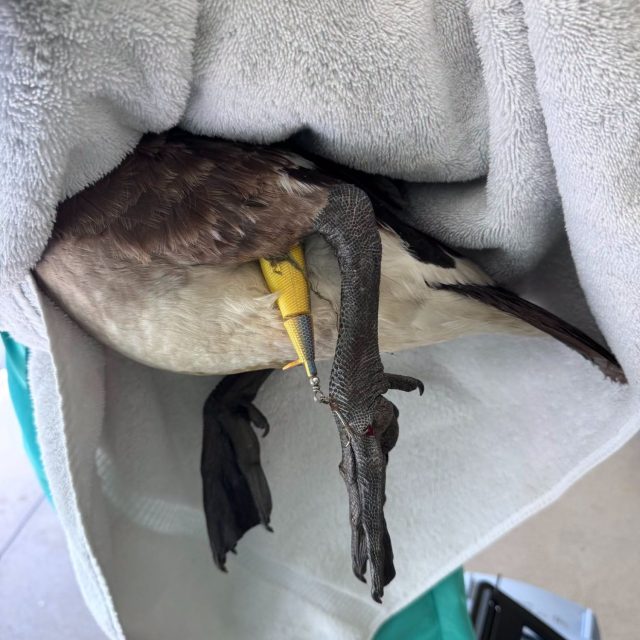
In the past week, we admitted six adult Canada Geese with injuries caused by discarded fishing hooks and lines.
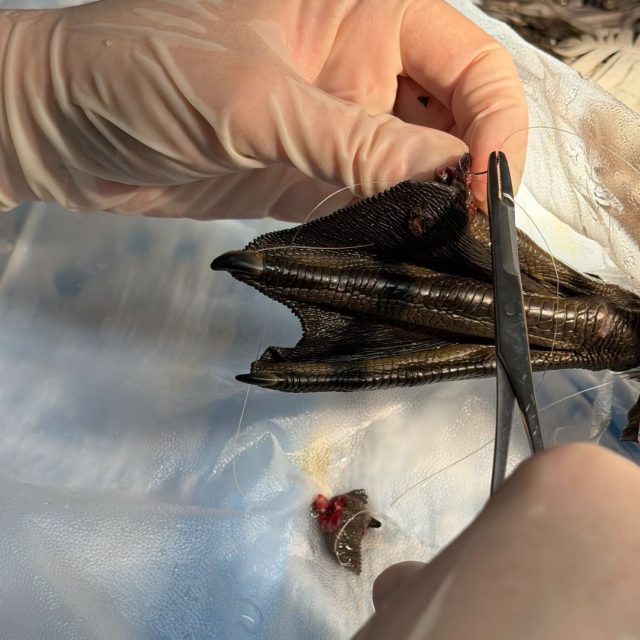
Discarded gear often results in severe entanglement and constriction, frequently leading to tissue death or lower limb loss if not treated quickly. Many patients also suffer from embedded hooks and associated infections.
If you find an entangled animal, do not attempt to remove the hook or line yourself.
Professional removal, under sedation, with strong pain medications can help to prevent further muscle damage and reduce recovery time.

When hooks and lines are removed prior to admission, we typically see much more severe infections and the animal suffers greater stress and discomfort.

If you come across an animal with hook or line entanglement, please contain the animal if possible or contact a wildlife rehabilitator or your local animal control immediately to assist.
Once contained, these animals can be treated properly.
Of the three Canada geese still in care, all required surgical repair of wounds and, in one case, partial amputation of a digit.

One of the geese has received two rounds of regional limb perfusion (a technique where we use a tourniquet, under anesthesia, to deliver more concentrated doses of antibiotics in a specific region).
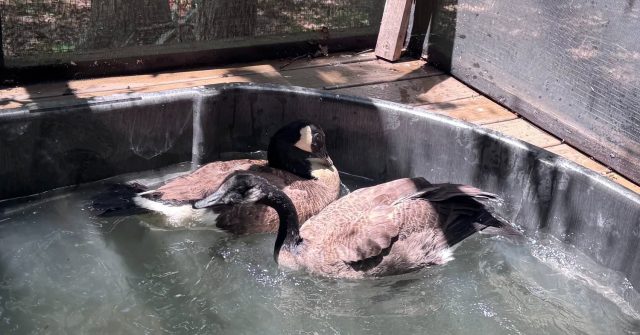
The geese pictured in this post are the first two who could be moved to one of our outdoor enclosures after healing sufficiently though they are both still on daily pain medications and antibiotics.
We know a lot of you will be out fishing this summer. Please remember that we are guests in the homes of our local wildlife.
While exploring and enjoying nature is a wonderful experience, be sure to carry out everything you bring with you and ensure all fishing line is disposed of properly.

If your line becomes snagged in bushes or trees, please make every possible effort to retrieve it.
Don’t hesitate to ask nearby boaters for help if needed, they likely love wildlife too and want to help out where they can.
Even if the litter isn’t yours, taking a moment to clean up what you find can make a significant difference. Ultimately, the most effective way to address these types of wildlife injuries is to prevent them from happening in the first place!
Looking for an easy way to help native wildlife? Become a monthly BRWC donor! For as little as $5/month, you can provide year-round, sustainable support that helps us fulfill our mission.





Women in Agriculture Continue to Face Barriers as Their Role Grows

This Week’s Showtimes at Royal Cinemas as of October 1st

Surveillance, Outdoor Dining, and Other Community Concerns at Town Council Meeting

When Elected Officials Cross the Line

Trump Administration Revokes $810M Approved by Congress for Refugee Aid and More

The Signs Offer Quick Cash for Homes. But States Want More Oversight

This Drone Hunts Mosquitoes

William Morgan and the Anti-Mason Party

Luria and Kiggans Rematch in Virginia’s 2nd Congressional District Among Most-Watched Races In Nation

Youth Advocates Warn Higher Marijuana Fine Could Deepen Racial Disparities

Virginia DMV Wait Times Plummet to Record Lows After Major Reforms

Lorraine Kephart Dovell (1942 – 2026)

POLICE: 7 Day FRPD Arrest Report 9/28/2026

ORDER OF PUBLICATION: In the Circuit Court for Warren County, Virginia

The Silent Danger of Heating Season

Three Common Myths About STBBIs Explained

Standing Counts, but Walking Counts More

VDOT: Warren County Traffic Alert for September 28 – October 2, 2026

Virginia Health Committee Considers Mandating Licensed Nurses in Every School

After Obama-Era Chesapeake Bay Executive Order Rescinded, Environmental Groups Brace for Fallout

Federal Judge Strikes Down SNAP Deadline That Put Virginia at Risk of Added Costs

Children Activities by Samuels Public Library for the Month of October

$5,000 Match Challenge to Support Warren County Children on Give Like Dolly Day

October 23rd Set for Post-Discovery Motions Hearing in Bradley Treece Gunfire Incident With Neighbors
