
Local Government
Town Planning Commissioners Recommend Denial of Proposed Junkyard
In a blur of governmental action, the percussive repetition of the data center concern may overwhelm a simple question: How should Front Royal’s precious, industrially zoned space be used? At a June 17 regular meeting of the Town Planning Commission, commissioners voted to recommend denial of a special-use permit application for a junkyard on an industrially zoned property on Kendrick Lane. Their reasoning was complex, reflecting questions about land use and water drainage on the six-acre site where this business would operate. As social media comments have aptly pointed out, this business would come in addition to an adjacent towing concern, which has a garage used that, for all practical purposes, at least gives the appearance of a junkyard.
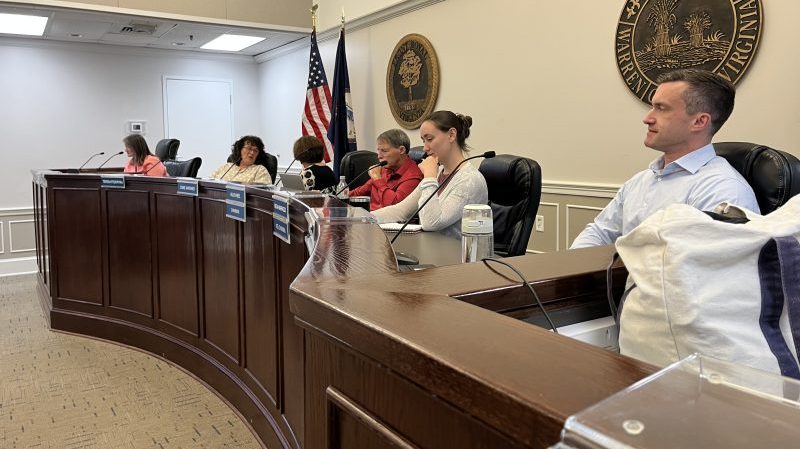
The Town Planning Commission met for a regular meeting on June 17. Royal Examiner Photo Credits: Brenden McHugh
At a work session on June 3, the commissioners discussed their questions and agreed to compile a list for staff to convey to the applicant. As of the evening of June 17, the applicant had not responded, and in fact arrived after the meeting was concluded, while the commission was conducting a work session, to be informed of the commission’s negative recommendation and encouraged by Planning Director Lauren Kopishke to answer the questions in advance of the next step: Action by the Town Council.
During the staff’s presentation on the item, Deputy Zoning Administrator John Ware illustrated the site’s topography, explaining the limits of the floodplain and how water naturally flows down the property’s incline, potentially conveying leaked automobile fluids into nearby waterways.

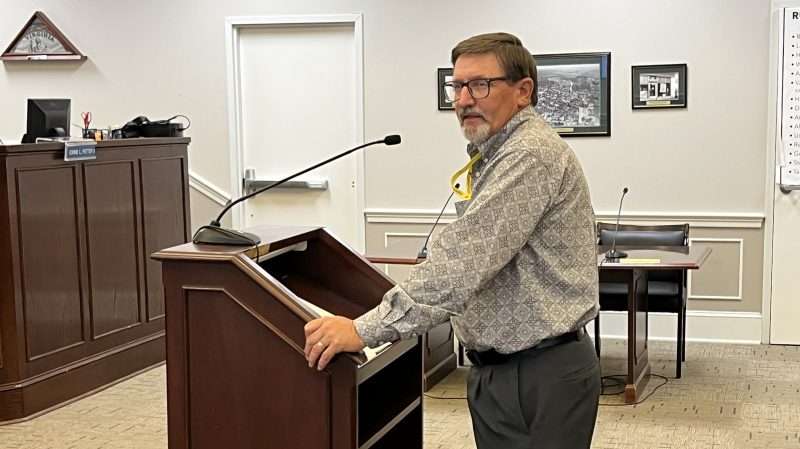
Deputy Zoning Administrator John Ware presents to the commission one item for public hearing.
Even though the commissioners were focused on the dangers of automobile fluids leaking into water flows, the question emerges: What is the best use of this space? It is a question that might once have been answered by the now-insolvent EDA.
As the County’s new economic development director, Patrick Barker calls it, a tool among many, perhaps the EDA still has a role to play. But as Vice-Mayor Amber Veitenthal has asked rhetorically: How long does one keep the lights on for an insolvent body?
The new director comes at a time when applications like the one above arrive at the commission and then the council with a sense of inertia. Leaders may be able to articulate what they do not want, while struggling to identify what they do want.





William Morgan and the Anti-Mason Party

Luria and Kiggans Rematch in Virginia’s 2nd Congressional District Among Most-Watched Races In Nation

Youth Advocates Warn Higher Marijuana Fine Could Deepen Racial Disparities

Virginia DMV Wait Times Plummet to Record Lows After Major Reforms

Lorraine Kephart Dovell (1942 – 2026)

POLICE: 7 Day FRPD Arrest Report 9/28/2026

ORDER OF PUBLICATION: In the Circuit Court for Warren County, Virginia

The Silent Danger of Heating Season

Three Common Myths About STBBIs Explained

Standing Counts, but Walking Counts More

VDOT: Warren County Traffic Alert for September 28 – October 2, 2026

Virginia Health Committee Considers Mandating Licensed Nurses in Every School

After Obama-Era Chesapeake Bay Executive Order Rescinded, Environmental Groups Brace for Fallout

Federal Judge Strikes Down SNAP Deadline That Put Virginia at Risk of Added Costs

Children Activities by Samuels Public Library for the Month of October

$5,000 Match Challenge to Support Warren County Children on Give Like Dolly Day

October 23rd Set for Post-Discovery Motions Hearing in Bradley Treece Gunfire Incident With Neighbors

Virginia State Police Seize More Than $1 Million in Drugs During Weeklong Operations

Jolissa Steele Shifflett Mathews (1944 – 2026)

False Birth Control Claims are Proliferating, Survey Says

Business Growth Series: Your Work Environment Is Affecting Your Growth

Frog Hunting Offers Virginians a Different Kind of Outdoor Adventure

How the Tech Bros Shop for a House

County Supervisors Fill Vacant Planning Commission Seat, Look to Future on Processes and Capital Improvements
