
Local News
Blue Ridge Wildlife Center Patient of the Week: Allegheny Woodrat

Allegheny Woodrats are very uncommon patients at the Center—in fact, this is the first adult we’ve ever treated! This species is only found in rocky forested areas along the Appalachian Mountains and is considered near threatened on the IUCN red list.
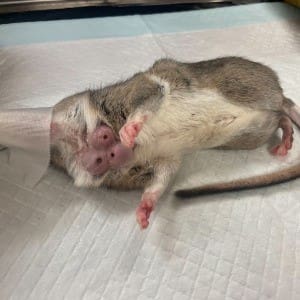
This individual was brought into care due to weakness and poor condition. Physical exam revealed the likely cause—three massive botfly larvae growing in her neck!
Cuterebra (botfly larvae) are quite common in our patients and they are found across a wide range of species, from squirrels to songbirds. They do not always require removal as they will grow and leave on their own. In general, the holes they leave do not require antibiotics and they ultimately cause little harm to the animal.
However, these specific larvae were pushing on the patient’s throat, making eating and swallowing difficult. Because of this, she became thin, dehydrated, and was unable to groom away fleas, leading to infestation.
The larvae were surgically removed, and she is now recovering well in care. Genetic samples from this patient and the removed larvae have been saved, in order to aid state biologists in better understanding this declining species.
We are hopeful that she will be ready for release in the next week and can continue to contribute to her species’ wild population!
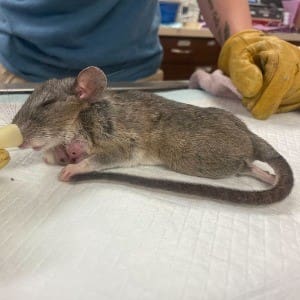
This photo, taken shortly after intake, highlights some of the identifying features of these protected rats.
Unlike the invasive Norway or Black Rat, the woodrat tail is furred all the way down. These rats are similar in size, but their ear:head ratio is slightly greater than the Norway Rat—which we think makes them even cuter!
Here in Virginia, the Allegheny Woodrat is a Species of Greatest Conservation Need and is tier IV in Virginia’s Wildlife Action Plan, which means that they have been designated as a species of moderate conservation need.
The Wildlife Action Plan prioritizes the protection of habitat, which helps not only the wood rats, but all species that thrive in that ecosystem!

Looking for an easy way to help native wildlife? Become a monthly BRWC donor! For as little as $5/month, you can provide year-round, sustainable support that helps us fulfill our mission.




Front Royal Man Charged with Two Counts of Forcible Sodomy Following RSW Regional Jail Investigation

James Edward “Jimmy” Mahoney (1953 – 2026)

Ask Stewart: Are There Any Scary Trees?

Janet Denny Casarotti (1933 – 2026)

Virginia Breeders Championship Series Opens at Shenandoah Downs with Impressive Performances

Clark Preston “Lucky” Cameron (1961 – 2026)

Commentary: Data Centers and AI – A Rare and Raw Issue in Virginia for This Midterm Election

Douglas MacArthur “Dougie” Green (1964 – 2026)

Dominion’s Energy Roadmap Keeps Fossil Fuels in the Mix, Expands Solar

Richmond No Kings Protest Turns Out Hundreds Ahead of Midterm Election

Dr. William Kent Renas (Bill) (1948 – 2026)

Careful With Money, Invisible to Lenders

3 Car Problems You May Avoid By Paying Attention

American Songs Concert Coming to First Baptist Church in Front Royal on October 25

When Grief Doesn’t Ease With Time

Sudden Cardiac Arrest May Not Be As Sudden As Its Name Suggests

100 Years of Hundred Acre Wood

A Moment of Honor: Veterans Receive a Powerful Tribute at the Tomb of the Unknown Soldier

Samuels Public Library Invites Young Writers and Artists to Enter 48th Annual Holiday Contest

New Exhibitions Bring World-Class Contemporary Art to Downtown Front Royal

VDOT: Warren County Traffic Alert for October 19 – 23, 2026

Discover The Many Benefits Of Organized Sports

The Family Bond That Doesn’t Necessarily End When Contact Does

Virginia State Police Urge Drivers to Stop for School Buses and Students
