
Opinion
Commentary: The Exemption Virginia Can’t Price and Won’t Stop
Virginia gave data centers a $928 million tax break in a single fiscal year, 2023, and the General Assembly cannot pass a budget because it can no longer agree on whether to keep doing it. That is the fight underneath the standoff in Richmond, with state spending set to expire June 30 and the conferees who should be writing a deal gone home without one.
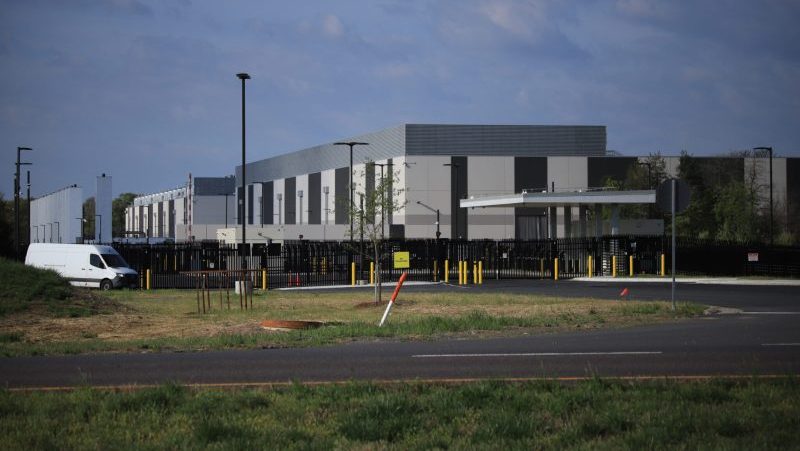
Marvell data center is one of eight newly approved data center campuses in Culpeper County. (Photo by Evan Visconti/Virginia Mercury).
The state’s own auditors laid out the stakes more than a year ago. The Joint Legislative Audit and Review Commission studied the exemption in 2024 and found it provided $928 million in tax savings in fiscal 2023. About 90% of the state’s data center industry was using it. The exemption has been on the books since 2010 and is scheduled to expire in 2035.
Local governments race to attract data centers, often in spite of concerns from their constituents
The significance of JLARC’s findings about the return on that money has eluded the budget debate so far.
The benefit is real but front-loaded. JLARC estimated the industry contributes 74,000 jobs, $5.5 billion in labor income, and $9.1 billion in GDP to the state economy, then added the qualifier that matters: most of it comes from construction, not from running the centers once built.
A typical data center employs about 50 full-time workers, half of them contractors, JLARC’s report found. At the height of building one, roughly 1,500 workers are on site. The jobs that justify the break are mostly the jobs that end when the concrete cures.
Then there is the cost that lands on people who will never own a server.
JLARC commissioned an independent study of utility rates and found that current rates correctly assign costs to the customers who cause them, data centers included. But the industry’s appetite for power changes the math going forward. Meeting it requires building generation and transmission that would not otherwise be built, and those fixed costs get spread across every ratepayer.
JLARC put a number on it: a typical Dominion residential customer could see generation and transmission costs rise by $14 to $37 a month in today’s dollars by 2040. That is the quiet transfer inside this debate. An industry that buys its equipment tax-free helps drive a power buildout that shows up on household bills.
This is where the Senate and the governor parted ways. Senate Finance Chair Louise Lucas has pushed to wind the exemption down rather than let it run untouched to 2035, and walked out of the meeting when that went nowhere.
Gov. Abigail Spanberger and House Appropriations Chair Luke Torian have resisted early repeal, arguing the state must honor the agreements it signed. A single tax preference has been able to hold the whole budget hostage.
Spanberger’s data center position is the test of her affordability message
The contract argument deserves a closer look than it usually gets. Companies claiming the exemption sign a memorandum of understanding with the state, and Virginia law spells out what that document must contain: the company’s investment target, its job target, the timeline, and what it owes back if it falls short.
The binding promises run from the company to the commonwealth, enforced by clawback. Nothing in that framework commits the state to keep the exemption alive for any set term. The life of the break is fixed by statute, and a statute can be amended by the body that wrote it.
That points to an option neither side is championing, though JLARC named it plainly: The Assembly could apply a partial exemption after 2035, or end the full break early, drawing the line to protect existing commitments while changing the terms for what comes next.
JLARC noted the Assembly could even narrow an expiration to one region, while warning a Northern Virginia-only approach would do little to slow statewide growth, since the industry is now spreading down the I-95 corridor into central Virginia. A prospective change avoids the contract objection entirely because no facility can claim it relied on a benefit it was never offered.
The reason the clean version isn’t on the table is the same reason the budget is stuck. Prospective-only changes raise little money now, and the money is the point.
Lucas wants revenue this biennium for services that federal cuts are squeezing. Phasing the breakout for the existing base delivers that; protecting the base does not. So the legally cautious path is the fiscally weak one, and the fiscally strong path invites the fight over the agreements. Both sides understand the tradeoff. Neither states it out loud.
A skinny budget may keep the lights on past June 30. It will not resolve what the standoff revealed.
Virginia built an incentive that its own auditors say returns less to the state than it costs, watched it grow into a near-billion-dollar annual line, and has not decided whether it has the will to change course. Localities adopting their own budgets this month, waiting on state numbers that may not come, will feel that indecision first.
by Tommy Turner, Virginia Mercury
Virginia Mercury is part of States Newsroom, a nonprofit news network supported by grants and a coalition of donors as a 501c(3) public charity. Virginia Mercury maintains editorial independence. Contact Editor Samantha Willis for questions: info@virginiamercury.com.

UVA Health Review Examines Real-World Results of Incisionless Liver Tumor Treatment

Maximilian James Donora (1995 – 2026)

Dollars for Dolly Campaign Aims to Turn Small Gifts Into Big Community Impact

Clean Virginia: NextEra’s Utility Takeover Attempts, Alleged Political Moves Relevant to Merger Case

Commentary: If You Enjoy Virginia’s Wildlife, Thank a Hunter or Angler

Spanberger Presses Congress for AI Guardrails as States Forge Ahead

‘Drive Them Into Hell’: Trump Ponders Destruction of Iran at United Nations

National Chicken Month Celebrates a Versatile Source of Protein

Face Paint That Can Read Your Heartbeat

Leisa Wood (1961 – 2026)

GO VOTE: Because Complaining Alone Isn’t a Good Strategy

The Third Most Important Gift Is Laughter

Skates, Treats and Safety: Warren County Sheriff’s Office Foundation Pack October with Community Events

Celebrate Kids Day Returns Sept. 27 With Family Fun, Activities and a New Train Ride

Survey Finds That More Than Half of Virginia Families With Children Face Food Insecurity

Could Virginia’s New Law Allowing 1% Sales Tax for School Construction Need a Fix?

Now They Want to Rein It In

From Oil Field to Gas Pump: What Really Determines What We Pay?

When Fields Flood: How Farmers Protect Crops and Plan for the Future

Draw Your Circles: A Map of the People Who Matter

A Heartfelt Farewell and Thank You
Data Centers Are Necessary. That Doesn’t Mean Warren County Needs One

Diesel Prices Shoot Upward as Top Farm-State GOP Senator Begs Trump for Export Embargo

From One Barrel of Oil: What Do We Actually Get?
