
Local News
A Living Legacy: Kilby Museum Connects Past Struggles to Present and Future Generations
On Shenandoah Shores Road, a quiet home holds a powerful story, one shaped by courage, sacrifice, and a determination to create change.
Today, that home is the James Wilson Kilby African American Museum and Education Center, a place where history is not only preserved but actively carried forward by the very family it represents.
“This is the house that he initially built, and we grew up in,” said Patricia Kilby-Robb. But the home is also marked by painful memories from the civil rights era. “It’s where the noose was thrown on the porch… where the cross was burned… where the gunshots came in.”
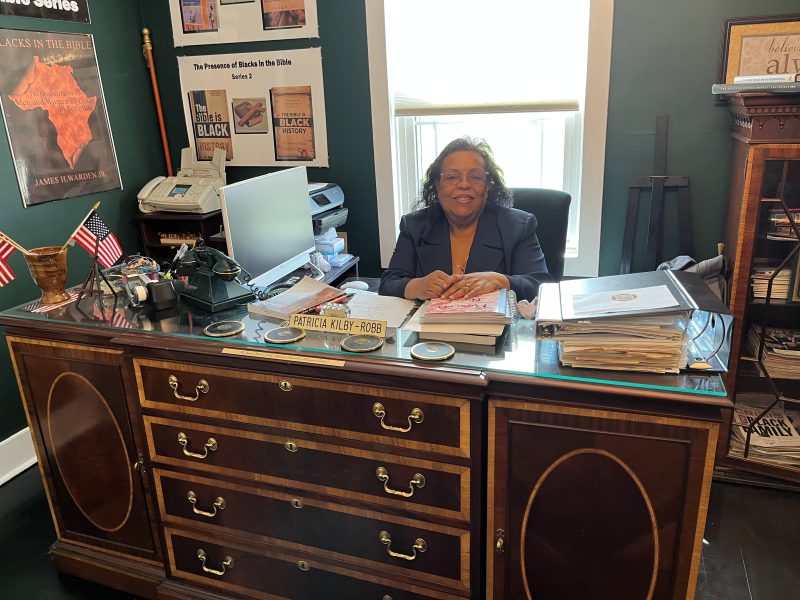
Patricia Kilby-Robb sits at her desk inside the James Wilson Kilby African American Museum, where she continues her work preserving her family’s history. Photo by Brenden McHugh.

Those acts of violence came after her father, James Wilson Kilby, helped lead the fight to desegregate Warren County High School in the late 1950s. Working alongside the NAACP and other Black fathers, Kilby pushed for equal education in a county where opportunities were deeply unequal.
“Dad believed in equal education,” Kilby-Robb said, recalling how her father—himself denied consistent schooling as a child of sharecroppers—refused to accept limited options for his children.
The fight came with real danger. On the eve of integration, the family faced violence at their home.
Despite the threats, Kilby pressed forward—not just for his own family, but for the entire community.
Before his death in 2003, he left behind a clear vision.

“I want my grandchildren and my great-grandchildren to know that I lived and made a difference,” his family recalled.
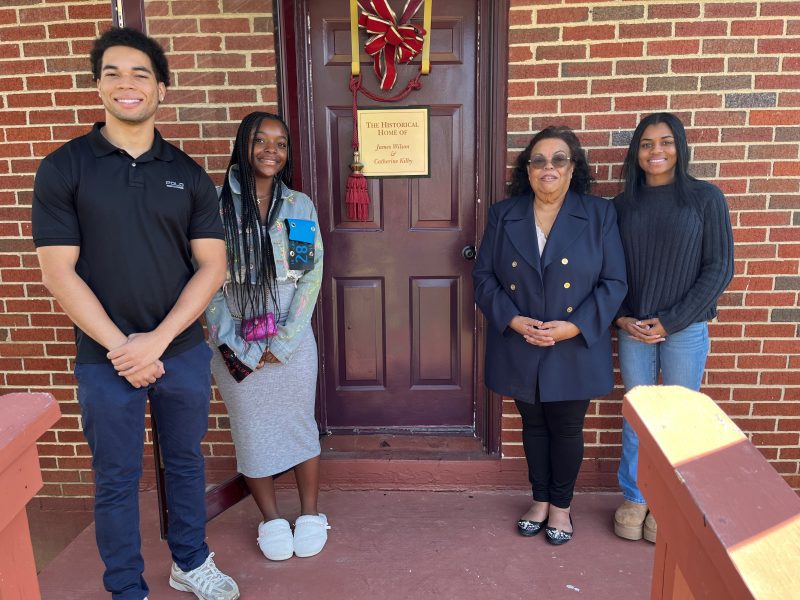
With her grandchildren. L to R: Dylan Franklin, Museum Director, Adrianna Nunn, Virginia Connections Intern, Patricia Kilby-Robb, and Dayanna Robb, Happy Creek Project Director.
That vision now lives on inside the museum.

Unlike traditional institutions, this museum is deeply personal—and deeply alive.
“Generally, when you go to a museum, you think it’s about people who are dead, but this is a museum about people who are still alive,” said Dylan Franklin, Kilby’s grandson and the museum’s director.
Each room tells part of the story. One space focuses on the civil rights struggle. Another honors Catherine Kilby, a central figure in the family and community. A newer addition, the “Howard Room,” highlights the importance of education and the network of leaders who influenced Kilby’s work.
“Howard University was really the kind of connective tissue that brought a lot of these intelligentsia together,” Franklin said.
Though Kilby did not attend college himself, he worked closely with figures such as Thurgood Marshall and Oliver W. Hill. His family describes him as a man of vision.
“He was forward-thinking. He had a vision for his children and grandchildren,” a family member said.

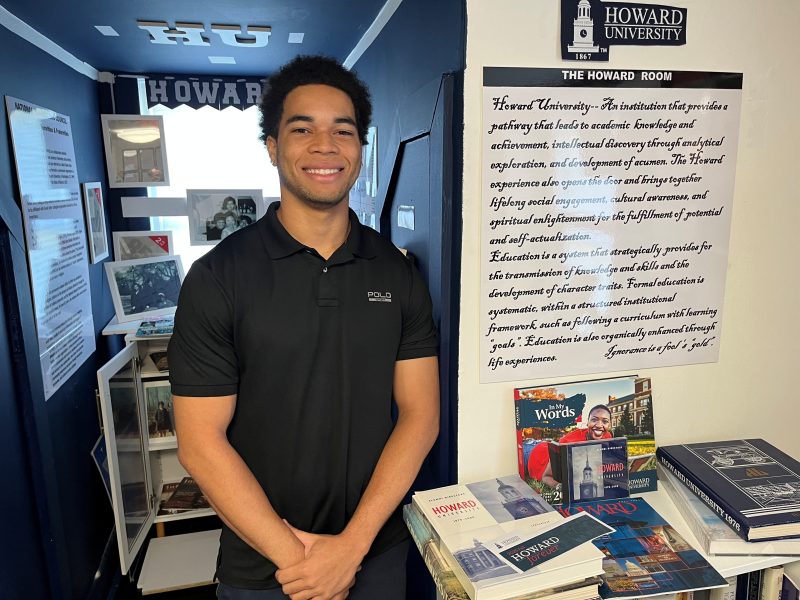
Dylan Franklin poses in the Howard Room at the James Wilson Kilby African American Museum, where exhibits explore education, legacy, and the influence of Howard University on the Kilby family.
That vision extended beyond education. Kilby also worked to improve housing, economic opportunity, and overall quality of life in the community.
“But he had another facet to him, and that was community development and improving the quality of life,” Kilby-Robb said.
The museum reflects that broader mission through projects like the Happy Creek initiative, which documents the histories of local Black families dating back to the 1800s.
“The plan is that once we open up… they will be the ones that get the key so that they can go into their mailbox and see all of their history,” a researcher explained.

For the next generation, the museum is more than a tribute—it is a learning space and a call to action.
“I was so excited to become a part of the museum because I was working in an education center where I could learn more about my people and my family,” said Adrianna Nunn, a great-granddaughter of Kilby.
Her experience has reshaped how she sees both the past and the present.
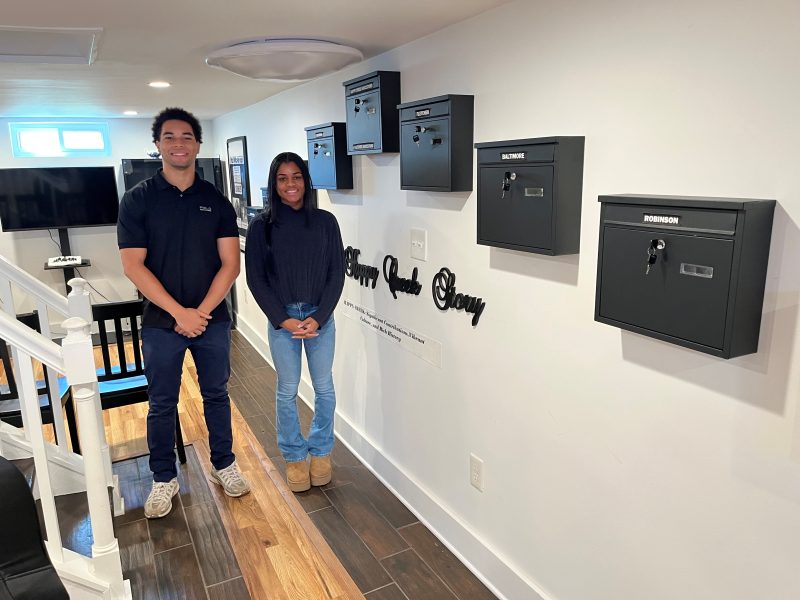
Dylan Franklin and Dayanna Robb pose beside a growing collection of boxes, each representing a family’s story within the community.
“It was also just fascinating to know that people like my great-grandparents worked very hard to make my life right now possible before I was even born,” she said.
She added that those lessons continue to guide her today. “I can learn from them, and I can continue to advocate for myself and for my people.”
That connection between past and present is central to the museum’s mission—especially as the family sees echoes of history in today’s world.
“We’re going back to a racially divided country, period,” Kilby-Robb said.
For her, that makes the museum’s work even more urgent.
“This is essential… make sure that they are capturing not only the past, but they are also capturing the present,” she said.
Despite its impact, the museum faces challenges. Funding has been difficult to secure, with grants currently on hold.
“Everything you see in this museum, my husband and I have used all of our resources,” Kilby-Robb said.
Still, the family continues to push forward, driven by both memory and purpose.
Reflecting on her upbringing in the Happy Creek community, Kilby-Robb described a strong foundation built on family and resilience.
“What I experienced was a two-parent loving family and having a community where I felt protected,” she said.
That sense of connection is something she hopes every visitor will feel.
“I hope when people come here it will not only be a learning experience, but a feeling experience… I want this to be that kind of place,” she said.
In the end, the museum is more than a collection of artifacts. It is a living promise—one man’s determination carried forward by generations who continue to learn, teach, and build on his legacy.
And as long as those stories are told, the impact of James Wilson Kilby will not fade—it will grow.
For information, email patriciakilbyr@gmail.com.




Autumn Delights: Spotlight On Pumpkins!

Lord Fairfax Health District Receives $5,000 Grant To Support Local EMS Crews

Why an AI Bubble Could Reach Your Savings

The Platypus: A Truly Amazing Animal!

A Thing of the Heart: Two-Fold Outreach to Children and Award Presentation Brings Hike Kidz to Stone Branch Arts Center

Virginia State Police Seize Drugs Valued at More Than $830,000, Recover 13 Firearms

Commentary: We Hate Technology. Please Like and Share

One Medicare Open Enrollment Decision That Can Be Hard to Undo

Constitution 101: The Postal Clause

VDOT: Warren County Traffic Alert for October 12 – 16, 2026

UVA Poison Expert Warns of Emerging Synthetic Opioids That Fentanyl Tests May Miss

Pumpkins Will Take to the Skies at Front Royal Warren County Airport Oct. 24

Front Royal Remains Under Mandatory Water Conservation As Shenandoah River Flow Drops

Front Royal Women’s Resource Center Opens 2027 Dare to Dream Grant Applications

Warner, Mizusawa Outline Competing Approaches to Disability Policy

Fable Greenhouse and Gardens Breathes New Life into Former Horton’s Nursery

Louise Virginia “Mom” Messer (1936 – 2026)

Business Growth Series: Doing Everything Yourself Is Slowing You Down

The Mystery of the Purple Seal

Front Royal Outdoors Founder Don Roberts Named 2026 Protector of the Shenandoah

Front Royal Man Held Without Bond Following Child Sexual Abuse Material Investigation

Performing Arts Center Pointing to 2027 Opening as Local Entertainment, Business, and Educational Partner

Town Planning Commission Continues to Prepare for the Arrival of Cannabis on the Local Market

Warren County Schools Improve, But Federal Rules Lower Seven Ratings
