
State News
Abortion Funds in Virginia See Surge in Calls as More Patients Travel from Restrictive States
Virginia-based abortion funds are citing an increased uptick in calls to their intake lines, as more people rely on their assistance to help cover the cost and sometimes travel expenses to get abortions.
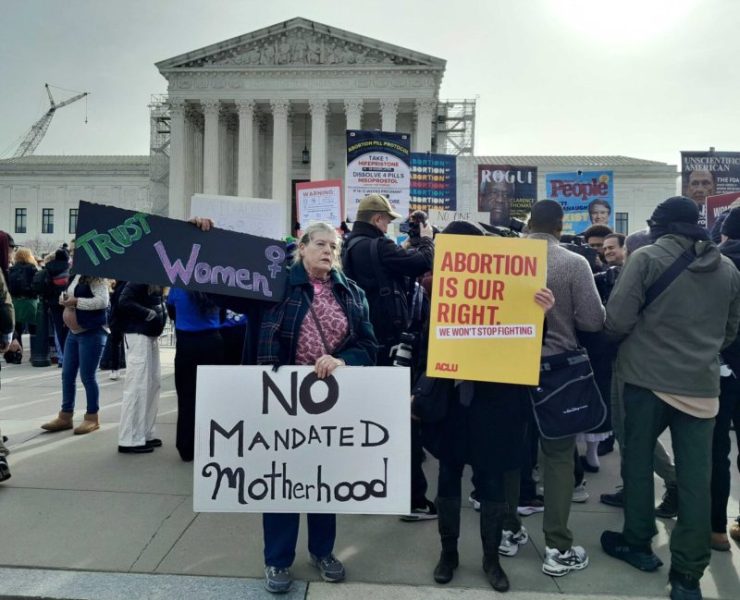
Supporters of reproductive rights protested outside the U.S. Supreme Court on Tuesday, March 26, 2024, as justices heard oral arguments over access to mifepristone, one of two pharmaceuticals used in medication abortion. (Photo by Ashley Murray/States Newsroom)
Since federal protections were overturned by the U.S. Supreme Court three summers ago, various states have enacted restrictions or near-total bans on the procedure. With Virginia the least-restrictive southern state, several funds here told the Virginia Mercury in interviews they’re seeing a spike in assistance requests.
But it’s not just from out-of-state patients, they said, as higher costs of living mean Virginians seeking abortions have also needed a boost from organizations like the Blue Ridge Abortion Fund (BRAF), Richmond Reproductive Freedom Project (RRFP) or Hampton Roads Reproductive Justice League (HRRJL).

Over the past year, BRAF said it supported over 2,300 callers and saw a 54% increase in funding provided for callers. Before 2023, about 15% of people BRAF supported came from out of state, but that number now accounts for 25% of people the fund has served as of this year.
“We’re seeing a ripple effect,” executive director April Greene shared in a recent call.
Other Virginian abortion funding groups echo that they’re seeing requests for assistance from North Carolinians, Georgians and Floridians in particular.
Florida and Georgia ban the procedure after 6 weeks (a time when some people are just learning they are pregnant), while North Carolina blocks the procedure after 12 weeks. The longer it takes to afford, schedule and travel for an abortion and the further into pregnancy a person becomes, the higher the need to come to a state like Virginia, which caps most abortions around 26 weeks, rises.

Abortion providers challenge FDA’s remaining mifepristone restrictions in federal court
A spokesperson from RRFP noted that out-of-state patients can strain the resources for Virginia patients too. But this is also why Greene, from BRAF, said several funds in various states remain in communication with each other.
Greene explained that abortion funds are more than a fund for patients to tap into; they are also a source of moral support and information.
This is particularly the case, she said, for patients who need to travel further for care, or ones who reach out with questions and are counseled or comforted by intake staff while they navigate delays in locking down appointments. Sometimes funds help patients book hotel rooms or flights as needed, or even talk someone through their pre-flight jitters if it’s their first time on a plane.
“We’re sort of walking alongside people so much longer than people would think,” Greene said. “It’s not just ‘here’s 500 dollars for your abortion.’ It’s so much more than that.”

Sara Blachman, a volunteer with the Hampton Roads Reproductive Justice League, said that the largest increase in out-of-state callers her organization has seen are people coming from Georgia or Florida.
“Being located in Hampton Roads we have always had callers from North Carolina, and callers from our neighboring state seem to be increasing too,” she said in an email.
Blachman added that the fund usually gets between 50 and 70 calls a week, despite only having the funding to make three to five pledges a week. RRFP relayed that their funding line was typically open from 9 a.m. to 2 p.m. prior to the overturn of Roe, but now, they are routinely flooded with calls and have had to close their line earlier in the day.
“While some of this is due to more people and clinics knowing about us, more importantly it’s a reflection of the higher need we are seeing,” the spokesperson said.
New River Abortion Access Fund, which is rooted in Southwest Virginia but like its counterparts connects patients around the state, has suspended its hotline for the time being.
Its director, Val Washington, connected with The Mercury but was unable to follow through on an interview to glean more details by the time of this publication.
Meanwhile, the costs associated with getting an abortion in the first place has also been rising amid national inflation. As out-of-state patients seek to tap into Virginia funds, the RRFP spokesperson also noted cost burdens on Virginians.
“People in Virginia need more support than before because the cost of living (which affects the cost of food, hotels, rideshare rides, gas, etc. around appointment dates) has increased without their wages increasing,” the spokesperson said. “Even a meal after an abortion is much more expensive now than it was five years ago, and that has nothing to do with overturning Roe.”

Newer to the abortion assistance landscape is State Line Abortion Access Partners (SLAAP), which has its “Last Mile Fund.” Anchored in Bristol along the Virginia and Tennessee border, the hyper-local fund “bridges the gap” for people who have secured money for abortion care but still need some help. The organization coordinates with other abortion funds to help transport patients to a reproductive health clinic in Bristol by reimbursing volunteer drivers for gas.
With a rise in demand, sometimes the fundraising keeps pace, and sometimes it doesn’t.
Greene from BRAF shared that the fund noted a surge in donations around the time that Roe was overturned and supporting abortion access was top of mind for people feeling philanthropic. Those numbers eventually dropped, but Greene said that funds like BRAF began to strategize how to meet the needs of the people it serves and sustain itself.
“We were incredibly lucky over the past few years to get some infrastructure,” Greene said.
This came in the form of support through the National Network of Abortion Funds and tapping into other organizations.
And while abortion funds aren’t directly affected by federal funding freezes, Greene still said funding organizations are watching with caution.
For instance, three Virginia-based Planned Parenthood clinics have been waiting for federal funding tethered to family planning and cancer screening services for low-income people amid a federal funding freeze announced this spring. Though the funding is not connected to abortions specifically, the fact that Planned Parenthood clinics do provide the procedure has drawn ire from abortion opponents. Legal battles are also underway regarding other federal funding that clinics have historically received.
Still, Greene said that BRAF missed out on some non-federal grant funding this year — necessitating a small budget reduction for the time being.
“I think everyone’s a little tentative, a little bit unsure about what’s happening in the philanthropic landscape,” she said.
by Charlotte Rene Woods, Virginia Mercury
Virginia Mercury is part of States Newsroom, a nonprofit news network supported by grants and a coalition of donors as a 501c(3) public charity. Virginia Mercury maintains editorial independence. Contact Editor Samantha Willis for questions: info@virginiamercury.com.



Mayor Lori Athey Cockrell Looks to Water, Economic Development and Rail Trail in Another Term

WCHS vs. Brentsville HS – Girls Volleyball – October 6, 2026

BMI Is Only One Piece of the Health Picture

The Eye Surgery Factory That Could Not Expand

Ancient Ownership of Israel

VDOT: Warren County Traffic Alert for October 5 – 9, 2026

Reaching Out Now Expands Programs and Opportunities for Warren County Youth

Dance and Arts VA Finds New Home, New Opportunities on Water Street

Ann L. Shuman (1933 – 2026)

Wendy Lee Whitacre-Stout (1966 – 2026)

Spanberger’s Energy Plan Keys in on Clean Energy to Meet Growing Demand and VCEA Goals

Jean Elizabeth Grubbs Fogle (1939 – 2026)

Feds Provide Guidance on New Federal K-12 Scholarship Tax Credit Program

Why Wait Till November? Mid-Term Election Early Voting Processes in Place Now

US Senate Leaves Nation’s Capital in Advance of Midterms With Much Still Undone

Business Growth Series: If You Don’t Control Your Day, It Controls Your Business

The End of a 20-Year Monopoly on the Credit Score
Voltron and Immigration

States OK Solar Panels for Balconies. Safety Guidelines Haven’t Caught Up

Trump TV Ads Paid for with $20M in Homeland Security Funds, Dems Find

Blue Ridge Wildlife Center Patient of the Week: Gray Treefrog

Birthday Twins: See Which Famous Face Shares Your Big Day

Meet-and-Greet Set Sunday for Republican-Endorsed Front Royal Candidates

Barbara Ann Mathews Smelser (1943 – 2026)
