
Local News
Blue Ridge Wildlife Center Patient of the Week: House Finch
Photos / Blue Ridge Wildlife Center
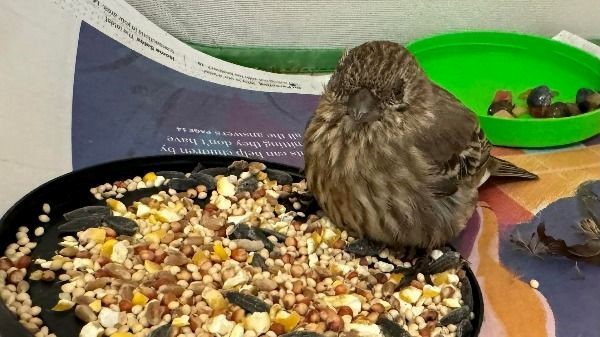
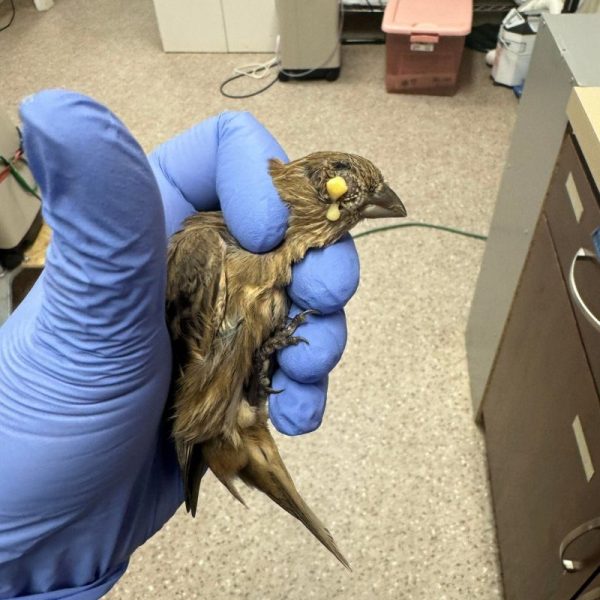
This female House finch patient is suffering from mycoplasmosis or “finch eye disease”, an infection caused by the bacterium Mycoplasma gallisepticum (similar to pink eye in people). This bacterium causes eye swelling and discharge, leading to temporary blindness, which then leaves these birds vulnerable to predation and prevents normal foraging.
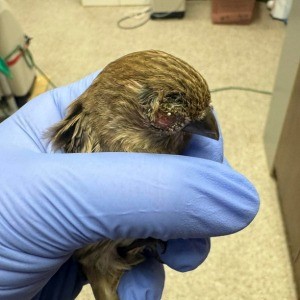
While this disease is widespread in our area, you may be surprised to learn that it’s most often spread by bird feeders. Why? Bird feeders promote unnatural congregation of birds, meaning it only takes one sick bird to infect many others, especially if the bird feeder isn’t being cleaned regularly. Tube-style feeders are especially good at spreading this disease as birds must literally rub their eyes on the feeding area to eat.
Mycoplasma is also not the only disease that can be spread at feeders, so it is always important to clean feeders and choose feeders that can be easily disinfected.

If you feed birds on your property, it is your responsibility to clean your bird feeders regularly. Follow these simple steps every week (more often if it’s hot or rains):
- Fully empty out all debris and leftover seed from the feeder. To avoid wasting bird seed, only fill the feeder a small portion of the way and see how long that lasts. You can always add more!
- Wash the entire feeder with soap and water (or run it through the dishwasher).
- Soak each part of the feeder in a 1:10 bleach solution for 15 minutes.
- Rinse fully, then allow to dry before refilling.
Please do not feed on the ground or other surfaces, as dirt cannot be disinfected and ground feeding often leads to congregation of multiple species, not just birds. Feeding in this manner can be especially dangerous. Better yet—ditch the feeders! Contrary to popular belief, wild birds do NOT need bird feeders. It should not be thought of as something that wild birds rely on to survive.
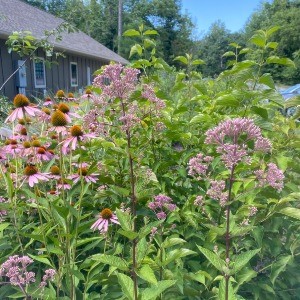
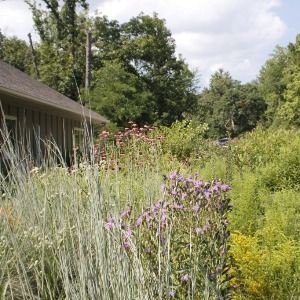
There is an easy alternative that you never have to clean—NATIVE PLANTS! Consider planting native plants around your home to provide more natural food sources for birds.
In the spring and summer, most bird species, even those who are primarily seedeaters as adults, rely on insects to feed and raise their babies.

Native plants support these necessary insects for raising and maintaining healthy birds while also minimizing disease spread. Native plants even provide seed well into the winter for our native seed eaters!

Looking for an easy way to help native wildlife? Become a monthly BRWC donor! For as little as $5/month, you can provide year-round, sustainable support that helps us fulfill our mission.




Mayor Lori Athey Cockrell Looks to Water, Economic Development and Rail Trail in Another Term

WCHS vs. Brentsville HS – Girls Volleyball – October 6, 2026

BMI Is Only One Piece of the Health Picture

The Eye Surgery Factory That Could Not Expand

Ancient Ownership of Israel

VDOT: Warren County Traffic Alert for October 5 – 9, 2026

Reaching Out Now Expands Programs and Opportunities for Warren County Youth

Dance and Arts VA Finds New Home, New Opportunities on Water Street

Ann L. Shuman (1933 – 2026)

Wendy Lee Whitacre-Stout (1966 – 2026)

Spanberger’s Energy Plan Keys in on Clean Energy to Meet Growing Demand and VCEA Goals

Jean Elizabeth Grubbs Fogle (1939 – 2026)

Feds Provide Guidance on New Federal K-12 Scholarship Tax Credit Program

Why Wait Till November? Mid-Term Election Early Voting Processes in Place Now

US Senate Leaves Nation’s Capital in Advance of Midterms With Much Still Undone

Business Growth Series: If You Don’t Control Your Day, It Controls Your Business

The End of a 20-Year Monopoly on the Credit Score
Voltron and Immigration

States OK Solar Panels for Balconies. Safety Guidelines Haven’t Caught Up

Trump TV Ads Paid for with $20M in Homeland Security Funds, Dems Find

Blue Ridge Wildlife Center Patient of the Week: Gray Treefrog

Birthday Twins: See Which Famous Face Shares Your Big Day

Meet-and-Greet Set Sunday for Republican-Endorsed Front Royal Candidates

Barbara Ann Mathews Smelser (1943 – 2026)
