
Local Government
County supervisors ponder Shenandoah Farms residents divide over Sanitary District Management initiative
While no decision was to be made at a Tuesday night, March 29, work session on an initiative by the Property Owners of Shenandoah Farms (POSF) Board to take management control of the Farms Sanitary District operations back from the County, a split crowd of supporters and opponents of the proposal showed up to state their opinions on the perceived merits or lack thereof of the proposal. A “Public Comments Period” was included on the work session agenda to allow the board to hear Farms residents weigh in on the matter.
A basic divide appeared to be trust of the POSF board to successfully and ethically manage the Sanitary District. That divide appeared centered on those involved in one way or another with the board supporting their management plan, while those with limited contact or who avoid interaction with the board opposed it.
The official count, verified by Board Deputy Clerk Emily Ciarrocchi who herself left the dais to address the issue as a resident of Shenandoah Farms, was an 8-8 tie in public comments speakers for and against the Farms Property Owners group re-taking control of the Sanitary District Management operations after 11 years of County management. Ciarrocchi explained her unplanned remarks being a result of what she had heard from the POSF Board leadership and supporting members during the work session.
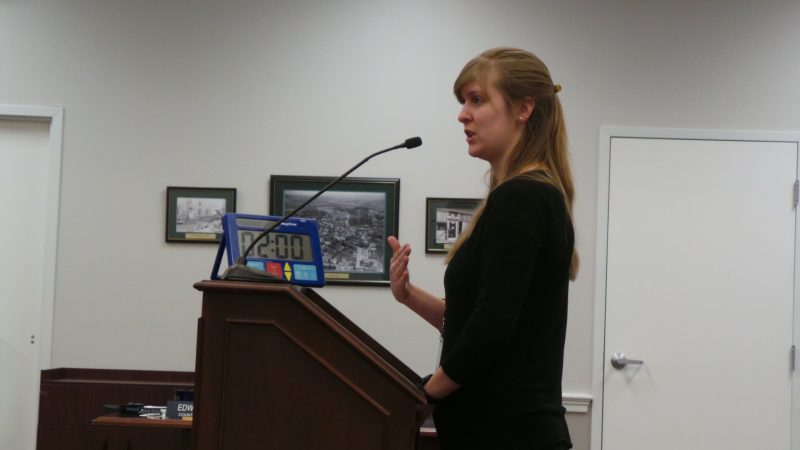
Board Clerk Emily Ciarrocchi put on her interested Farms resident’s hat to express support for POSF management based on the presentations she heard at Tuesday night’s work session. The clerk brought her timer clock with her to assure she did not exceed the 3-minute speaker’s limit – she finished with time to spare. Royal Examiner Photos by Roger Bianchini

“I was a little bit hesitant when I first heard about this because my initial gut reaction was, ‘Oh no, we’re having another Town Building Inspections Debacle.’ Here they are, they want to get rid of an agreement. What happens six months from now, one year from now when they come back and try to get the County to resume management? ‘If it ain’t broke, don’t fix it’ is usually my motto.
“But if there is a better way to do something and things aren’t working and there’s an actionable and executable plan, I can listen and I can adapt and change my point of view. And throughout this meeting I have changed my point of view … it seems like they have a very involved and active volunteer board. They seem really dedicated; they seem knowledgeable. They seem like they have an actionable and executable plan. – And I’m in favor of it,” Ciarrocchi concluded.
From the POSF perspective, as presented by current board Chairman Ralph Rinaldi to open the work session discussion, there are good reasons for the move at this point in time and an existing Sanitary District contractual arrangement between the County and POSF that allows the change to occur with 90-days notice of intent to terminate by either party to the Management Agreement.
“Really, there’s no decision to make, the contract is very clear,” Rinaldi later told Royal Examiner when asked about the Management Agreement referenced by both him and Assistant County Attorney Caitlin Jordan, the latter during one of four visually assisted staff presentations on various aspects of the Management Agreement and dynamics of a transfer of management back to the POSF. As to the related Court Order regarding creation of the Sanitary District dating to 1995, Rinaldi added the opinion that “the Sanitary District Court Order has nothing to do with our notice to re-take management of the district.”

Queried on the County end, County Administrator Ed Daley said that the County’s Assistant Attorney Jordan “was researching” those legal dynamics, with an opinion likely ready for the supervisors by their 9 a.m. meeting on April 5.
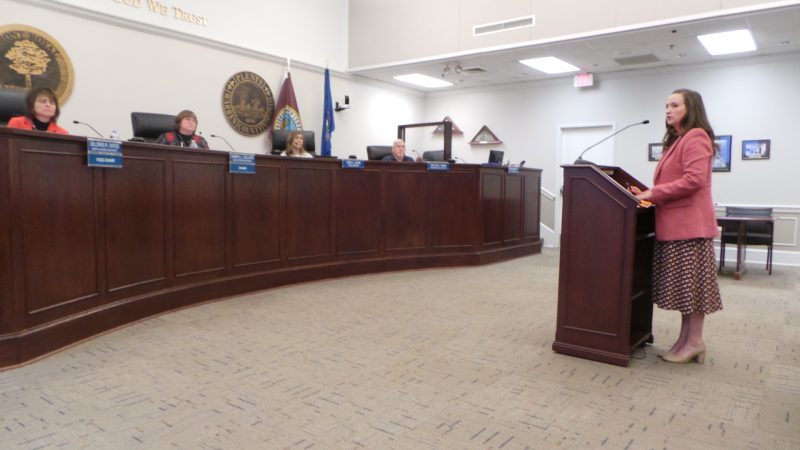
Assistant County Attorney Caitlin Jordan reviews details of the 2011 Management Agreement between the County and POSF when the POSF sought County assistance in overseeing Sanitary District business, including road improvements and maintenance. Now the POSF board believes it can do a more cost-effective job for its citizens.
It would seem likely Jordan’s findings would initially be presented in closed session, with subsequent public discussion by the board during a work session scheduled to follow the open meeting and a closed session. “Legal Advice” regarding the Farms Sanitary District is one of two “Closed Session” topics.
As Rinaldi noted at the beginning of his presentation, the Shenandoah Farms Sanitary District was created in 1995 and the POSF managed the district for 16 years, from 1995 to 2011. “In 2011, we asked the county administration to assist in the management,” Rinaldi said in opening his prepared remarks. “During that time thru the current time, our board has learned and studied Warren County management policies and procedures. We have learned and experienced the success of the ever-growing district.”

Referencing three Sanitary District managers on the County side, two being current Sanitary District Manager Michael Coffelt and former Deputy County Administrator Bob Childress, Rinaldi added, “We are deeply thankful for the opportunity to grow, learn and work with all the very talented managers.”
Of the transfer of management responsibility to the County – the date of the existing Management Agreement is April 5, 2011 – Rinaldi observed, “During the transition from POSF management to County management it was emphasized by both parties, a reversal of management back to the POSF was on the table. At this time POSF feels we can effectively manage the district. We feel the POSF board exhibits a sense of common purpose and unity that will allow for the continued success of our community. We look forward to working with you and county staff in making this transition effective.”
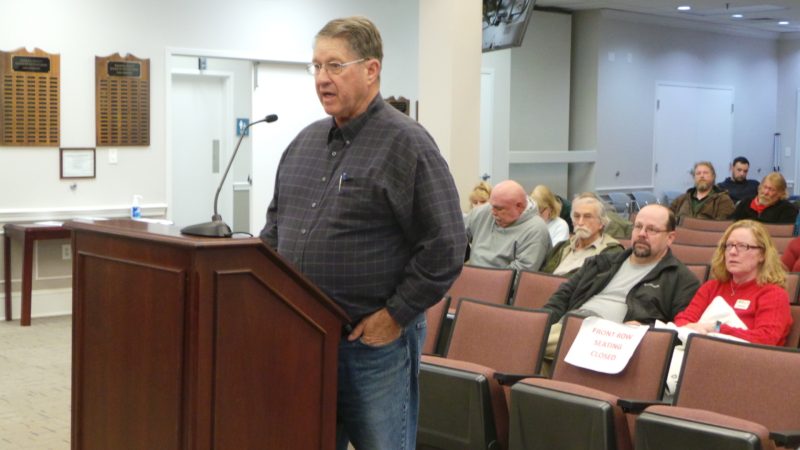
POSF Chairman Ralph Rinaldi presented a historical overview of the 27-year-old Shenandoah Farms Sanitary District, and responded to questions about the impetus for the requested shift of management back to the POSF. Pressed on reasons for a change now, Rinaldi cited one bottom line as money-saving road infrastructure projects that would reduce Sanitary District fee costs to residents, while meeting future road improvement needs.
Questioned by supervisors on what motivated the management transfer initiative now, Rinaldi explained lapses in financial reports from the County during a period of recent flux in its finance department – 4 finance directors in 2 years he later elaborated. Rinaldi pointed to one speaker favoring the management changes’ comment, “If I didn’t get but one financial report from my bank for two years, I’d look for a new bank.” From our notes that comment came from Tracie Lane.

And while that finance department situation may be stabilizing now with the hiring of Finance Director Matt Robertson, Rinaldi pointed to cost-effective approaches to road improvements in the sprawling Sanitary District, one of, if not the, largest rural communities in the Commonwealth it was pointed out, as a major motivating factor for the retaking of management control from the County.
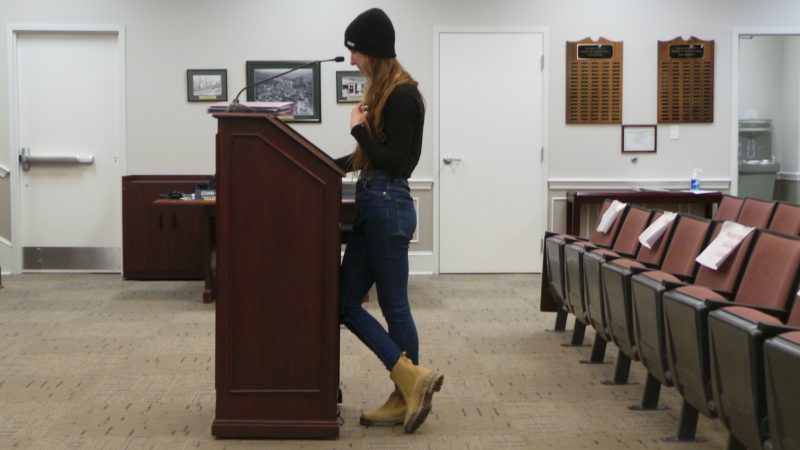
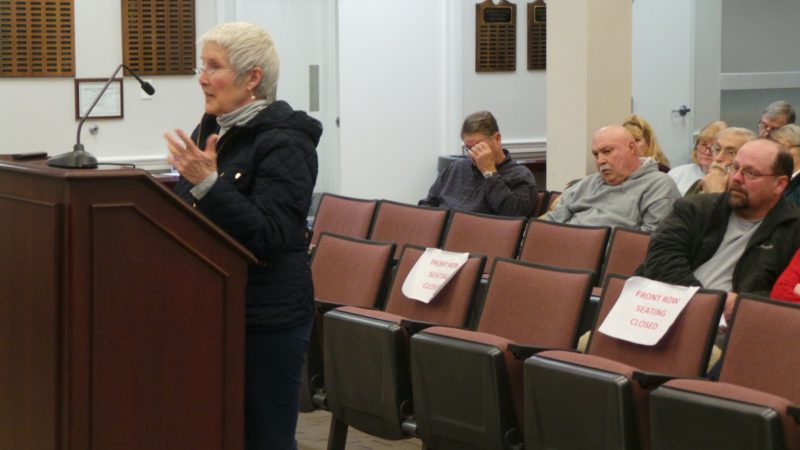
Farms resident, contractor, and POSF Board supporter Sarah Saber asserted belief in the current board and responded to some criticisms aimed at its way as dated and unrelated to how the current board functions. Below, Melissa Chappell-White opened Public Comments with criticism of the POSF Board and its management initiative.
During the subsequent conversation, it was noted that POSF plans to use “value engineering” related to tar and chip improvements done to “industry standards” versus plant-mix asphalt roads done to VDOT standards. That strategy is projected to save the Farms Sanitary District significant money in the coming years. Discussing that plan later, Rinaldi told Royal Examiner that in addition to the upfront savings such tar and chip roads generally do not need any maintenance for five to six years, whereas the replaced gravel roads generally have the most expensive ongoing maintenance costs. So, savings are compounded in two directions, easily covering tar and chip road maintenance costs when eventually needed.
Of one criticism heard from a number of opponents of the POSF regaining management control – a lack of POSF communications to residents about meetings, including Tuesday’s work session with the supervisors, Rinaldi said this: “Lots of speakers complained about not getting notice of meetings – and they are correct. Our communications aren’t what they should be. We are working to take care of that. That was a wake-up call for us – that will improve,” the POSF chairman promised.

Following Rinaldi’s remarks and Q&A with the supervisors, the first staff presentation was from Assistant County Attorney Jordan on the legal framework surrounding such a move.
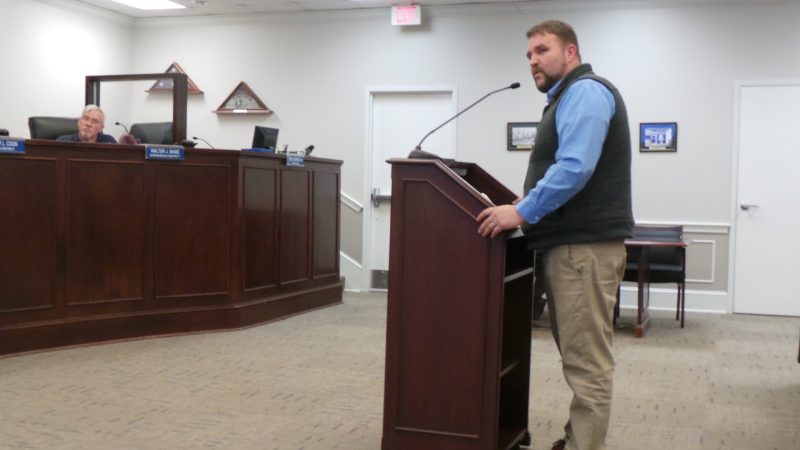
County Public Works Director Mike Berry reviews Sanitary District staffing, CIP plans and various revenue streams to achieve those plans, most pressingly road improvement and maintenance. Below, is one of the Public Works graphics on personnel related to management and operations of the Shenandoah Farms Sanitary District.
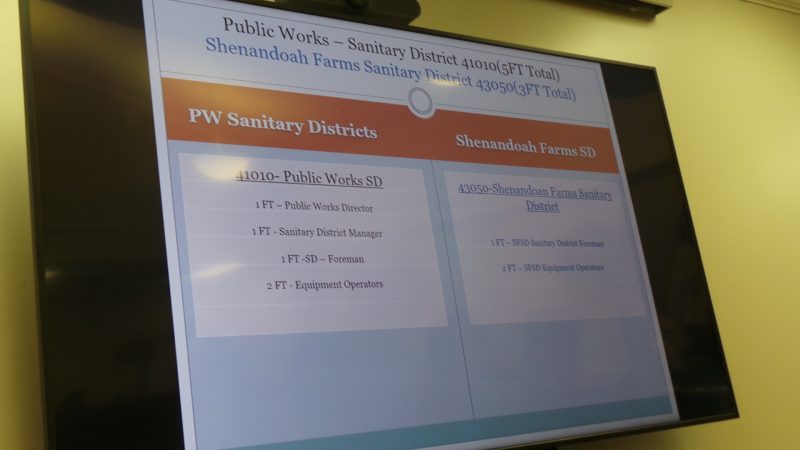
Then Public Works Director Mike Berry presented a double-edged PowerPoint, first on staffing implications of the transfer on his department, and then impacts on the status of Sanitary District Capital Improvement Plans involving VDOT and County financial contributions. Finally, Finance Director Matt Robertson traced impacts on both County and POSF revenues and expenditures. Then came the public comments, including a revisiting of several speakers to the podium to respond to things they had heard from other speakers.
Included in the legal summary of the 2011 Management Agreement following reference to the above-cited 90-day notice by either party to end it clause, was a letter from Rinaldi dated March 9, informing the Board of Supervisors membership that such notice was being served by the POSF. Possibly reflecting some confusion with dates prevalent recently, Rinaldi wrote the projected termination date as “June 31, 2022” which he admitted should have been June 30, leading to the management change effective on the July 1 start of the new fiscal year.




Mayor Lori Athey Cockrell Looks to Water, Economic Development and Rail Trail in Another Term

WCHS vs. Brentsville HS – Girls Volleyball – October 6, 2026

BMI Is Only One Piece of the Health Picture

The Eye Surgery Factory That Could Not Expand

Ancient Ownership of Israel

VDOT: Warren County Traffic Alert for October 5 – 9, 2026

Reaching Out Now Expands Programs and Opportunities for Warren County Youth

Dance and Arts VA Finds New Home, New Opportunities on Water Street

Ann L. Shuman (1933 – 2026)

Wendy Lee Whitacre-Stout (1966 – 2026)

Spanberger’s Energy Plan Keys in on Clean Energy to Meet Growing Demand and VCEA Goals

Jean Elizabeth Grubbs Fogle (1939 – 2026)

Feds Provide Guidance on New Federal K-12 Scholarship Tax Credit Program

Why Wait Till November? Mid-Term Election Early Voting Processes in Place Now

US Senate Leaves Nation’s Capital in Advance of Midterms With Much Still Undone

Business Growth Series: If You Don’t Control Your Day, It Controls Your Business

The End of a 20-Year Monopoly on the Credit Score
Voltron and Immigration

States OK Solar Panels for Balconies. Safety Guidelines Haven’t Caught Up

Trump TV Ads Paid for with $20M in Homeland Security Funds, Dems Find

Blue Ridge Wildlife Center Patient of the Week: Gray Treefrog

Birthday Twins: See Which Famous Face Shares Your Big Day

Meet-and-Greet Set Sunday for Republican-Endorsed Front Royal Candidates

Barbara Ann Mathews Smelser (1943 – 2026)
