
Health
Sit-stand desks: Studies find some benefits, but drawbacks, too
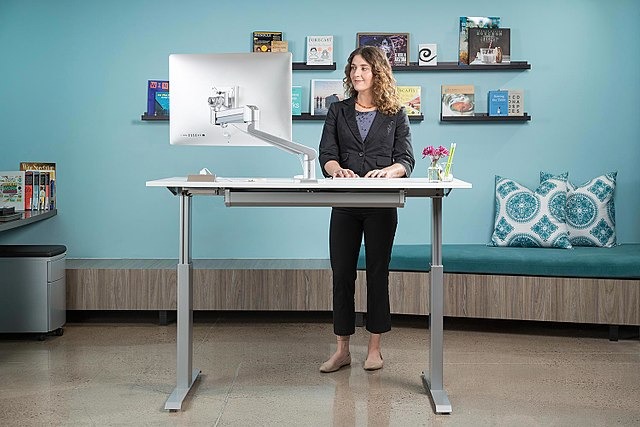
Work is increasingly stationary: 10 hours at a desk, for example, where people write, code, and communicate.
The new trend is to move this computer work up into a standing position with sit-stand desks.
The latest research from the University Hospitals of Leicester, England, found that, after one year, height-adjustable work stations prompted workers to sit 82 minutes less per day than those without such desks. When the workers were later interviewed, they said they had less anxiety, improved job performance, and work engagement.
Using a standing desk isn’t for everyone, however, and there are best practices that increase satisfaction.

1. Stand regularly, but not all the time.
The idea of an adjustable desk is that you change position from sitting to standing, not that you stand all the time.
Quoted in U.S. News, Alan Hedge, professor of design and environment analysis at Cornell University, points out that standing all day introduces new problems. Back problems can increase over time as your spine compresses. Varicose vein and cardiovascular problems increase since the body has to work against gravity.
A 2017 study in the American Journal of Epidemiology confirmed this, pointing out that more than 7,000 people in standing-only professions had double the risk of heart disease over a 12-year period.
The best combination, according to Hedge, is 20 minutes sitting, 8 standing, and 2 moving.

2. Movement while sitting or standing is helpful.
While standing, use a foot rest to switch weight between feet. In a chair, try reclining to a 135-degree angle or try stretches. Even small movements help. But treadmill desks probably don’t help with tasks that involve typing or learning, according to a 2015 study by Brigham Young University.
3. Sit for longer periods of concentration.
Hedge says brains perform highly concentrated tasks better when the body is seated. While in a state of concentration, don’t suddenly stand to work. This can cause a disruption of thought that lasts about 20 to 25 minutes.
4. You could just try standing up sometimes.
If you are talking on the phone or if someone approaches your desk, you could use it as a signal to stand and stretch.
If you do have a sit-stand desk, you could use the standing position for work that doesn’t require intense concentration.





Warren County Draft Plan Targets Six Industries for Future Economic Growth

Warren County Volleyball Set to Host Sherando Wednesday Night – September 16

Century-Old Law Gives Virginia Legislator-Lawyers Broad Power to Delay Court Cases

Virginia Lawmakers Move Closer to Regulating Self-Driving Vehicles

Remembering 9/11 25 Years Later

Loudoun to Consider Data Center Pause, Removing By-Right Grandfather Clause

From Field to Glass: Brew Farms Put Agriculture at the Heart of Beer Making

ORDER OF PUBLICATION: In the Circuit Court for Warren County, Virginia

Preparedness Includes Your Wallet

Grandparents’ Day Celebrates the Bonds That Connect Generations

Update: Two Killed in Fiery I-81 Crash Near Exit 310 in Frederick County

Front Royal Hosts 5th Annual NAACP ‘Hope & Holiness Gospel Fest’

Mediterranean Diet Offers Variety With a Focus on Healthy Choices

The Woman Who Helped Save a Forest — and Its Species

Invested Retirees Need an Emergency Fund, Too

Patricia Ann “Patty” Vaught Brown (1961 – 2026)

Warren County Fire and Rescue to Kick Off Fire Prevention Week Oct. 4

Literacy Volunteers Students Earn Publication in Statewide Magazine

Virginia Transportation Board Schedules Fall Meetings, Including Stops in Weyers Cave and Culpeper

VDOT: Warren County Traffic Alert for September 14 – 18, 2026

Shenandoah River State Park Packs September With Fishing, Night Hikes, Pawpaws and More

How 9/11 Changed the Way America Surveils Its Citizens

Virginia General Fund Revenues Up 5.4% Through August

Virginia State Police Report More Than $580,000 in Drug Seizures During Weeklong Operations
