
State News
Virginia waters troubled by multiple harmful algal blooms
Phenomena known as harmful algal blooms have led Virginia to add portions of Lake Anna and six other water bodies to its impaired waters list, an inventory of waterways that don’t meet state environmental standards.
Other listed waterways include Mint Springs Lake in Albemarle County, Aquia Creek east of Stafford, Wilcox Lake south of Petersburg, Woodstock Pond in James City County, Prince Edward Lake near Farmville, and an unnamed tributary of the Chickahominy River in the Richmond area.
Listings were made based on harmful algal blooms, or HABs, that occurred in 2019-20. But this summer has also seen Virginia issue numerous advisories for HABs around the state, marking a growing occurrence that a state report released last fall says requires more funding to monitor.
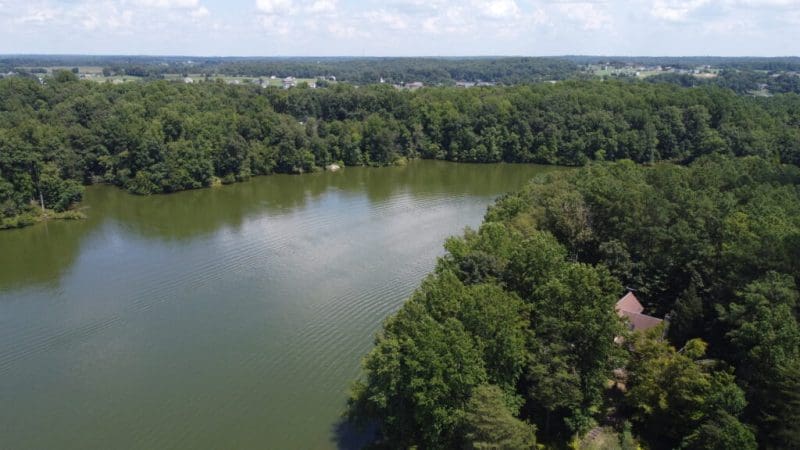
Harmful algal blooms color the water a bright green at Lake Anna on Aug 10, 2022. (Courtesy of Kenny Fletcher/Chesapeake Bay Foundation)
The North Anna and Upper Pamunkey branches, including Terry’s Run, of Lake Anna in the counties of Orange, Louisa, and Spotsylvania, experienced a HAB this July, according to a notice from the Virginia Department of Health.
Lee Lake, also known as Nottoway Lake, in Nottoway County just north of Blackstone, also experienced a bloom at the end of June.
Notices of both HABs advise people to avoid contact with the waters, as some harmful algae, cyanobacteria, can cause a skin rash and gastrointestinal illness, including upset stomach, nausea, vomiting, and diarrhea. Children and pets are at greater risk of severe illness from ingesting water. Users should be wary of water that smells, is discolored, or where dead fish are present.
A Virginia Department of Health map tracking the instances of HABs shows that several sections of Lake Anna are still under advisory. Advisories may be lifted following two acceptable water samples, taken 10 days apart, containing cyanobacteria cell concentrations and toxins below safe swimming levels.
Last summer, parts of the Shenandoah River experienced a HAB before it cleared up in the fall.
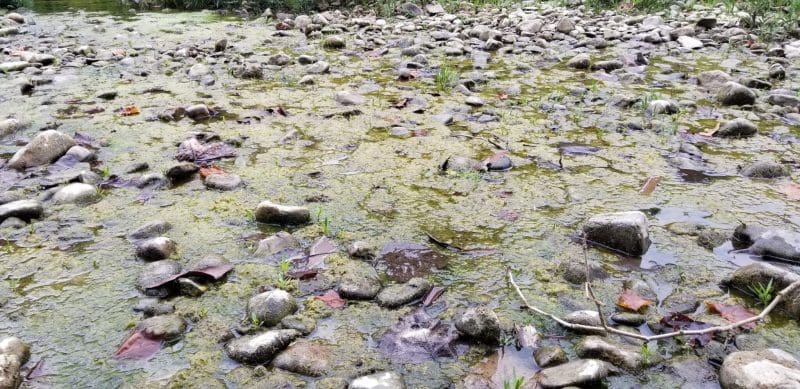
Algae in the North Fork of the Shenandoah in August 2021. (Matt Kowalski/Chesapeake Bay Foundation)

Not uncommon
HABs have been happening in the commonwealth and around the country for 20 years, with a dramatic increase in magnitude and frequency of advisories issued in recent years, a 47-page report from the Department of Environmental Quality published in September states.
The report stated that DEQ couldn’t point to the cause of the blooms, but increased nutrients, particularly nitrogen and phosphorus, can result in abundant algae growth. The blooms are also characteristic of low water levels and higher temperatures. According to the Environmental Protection Agency, warmer water temperatures due to climate change might favor harmful algal blooms in a number of ways.
A community reporting tool found that Louisa and Spotsylvania counties, where Lake Anna is located, have had over 40 and 30 reports of HABs, respectively, since 2017. Those reports are double the amount of the next most frequently cited problem area, a section of the Shenandoah River in Shenandoah County. The Virginia Beach area had the next highest number of reported HABs. Some 53 localities in total reported the problem.
The state looks at HABs in two forms: those in marine waters around the coast and those in fresh waters throughout the rest of the state.
A HAB Task Force led by the Department of Environmental Quality and VDH was created in 1997 in coordination with the Virginia Marine Resources Commission, Virginia Institute of Marine Science, and Old Dominion University to monitor marine HABs. DEQ’s September report states that harmful algal blooms in marine waters could potentially threaten the estimated $500 million annual economic impact of Virginia seafood.
But no funding exists to monitor freshwater blooms, a job estimated to cost an additional $510,000 in funding, according to the DEQ report.
Funding to protect water quality
The nutrients leading to HABs come from humans through wastewater treatment plant discharges, stormwater runoff, livestock waste, fertilizers used for lawn care and agriculture and acid rain, among others, the September DEQ report stated.
Non-point source pollution management plans from the state can help reduce the flow of those nutrients. So can the creation of a plan called a total maximum daily load, which determines the number of pollutants a body of water can handle and still meet standards set under the federal Clean Water Act. Plans specifically for HABs don’t exist, but others have identified nutrients as causes of impairments.
Virginia has been under a federally imposed “pollution diet” to clean up the Chesapeake Bay by 2025. As of June this year, 97 projects resulting from TMDLs have been completed to address 607 impairments, according to numbers provided by DEQ spokesperson Irina Carlos.
Virginia saw record funding this year to assist farmers to reduce the flow of nutrients from their land into waterways, an investment that could help prevent HABs from developing across the state.

The state offers an Agricultural Best Management Practice Cost-Share Program with the Virginia Department of Conservation and Resources.
The program works in the form of reimbursements, sometimes as much as 100%, to help farmers reduce the amount of runoff coming off their property. Projects eligible for funding include fencing to keep cattle out of streams and planting cover crops to prevent erosion.
Some $81 million was allocated by the Virginia Soil and Water Conservation Board to land exclusively or partly within the Chesapeake Bay watershed, which includes Lake Anna and the Shenandoah River. Roughly $70 million was allocated for areas outside the Chesapeake Bay watershed.
Reducing nutrient runoff from multiple sources may contribute to a reduction in HABs, said DCR spokesperson Dave Neudeck.
“This year’s record amount of state funding for agricultural best management practices will accelerate the implementation of conservation measures that will reduce nutrient runoff from farm-related sources,” Neudeck said. “Other sectors, such as development, are also working to reduce their nutrient runoff to assist with Chesapeake Bay cleanup.”
DEQ and VDH received $3.5 million in the biennial budget to study harmful algal blooms in Lake Anna and the Shenandoah River, which feeds water to the Chesapeake Bay. Calos said the work is expected to include monitoring.
Citizen monitoring of blooms to assist DEQ and VDH is already occurring. The September report noted that the Lake Anna Civic Association has contributed hundreds of data points on blooms.
“We’re frustrated,” LACA President Greg Baker said of the advisories continually being issued for Lake Anna.
A July listing of Lake Anna as impaired means the state will begin a cleanup plan to reduce the flow of pollutants into the body.
The designation will be removed once data are given to the EPA showing water quality criteria have been met or changes to assessments.

On Wednesday, the State Water Control Board also expanded its criteria to determine if algae mats, which can produce harmful algae toxins, have reached nuisance levels on the Shenandoah River.
Chesapeake Bay Foundation Virginia Executive Director Peggy Sanner touted reducing pollution runoff as a solution to algal blooms.
“Virginia’s elected leaders invested historic levels of funding in programs that reduce pollution to Virginia’s rivers, lakes, and streams,” Sanner said. “This funding should make a significant difference. DEQ’s work monitoring and identifying impaired waters, along with the efforts of local groups such as the Lake Anna Civic Association, is also crucial to focusing these restoration efforts where they are most needed.”
by Charlie Paullin, Virginia Mercury
Virginia Mercury is part of States Newsroom, a network of news bureaus supported by grants and a coalition of donors as a 501c(3) public charity. Virginia Mercury maintains editorial independence. Contact Editor Sarah Vogelsong for questions: info@virginiamercury.com. Follow Virginia Mercury on Facebook and Twitter.




This Week’s Showtimes at Royal Cinemas as of October 22nd

Debbie’s Lighthouse Combats Food Insecurity While Helping Small Businesses Grow in Front Royal

Decision on ‘EagleView’ Contractual Oversight of Photographic Assessment Technology Delayed to November 17

Blue Ridge Wildlife Center Patient of the Week: Great Horned Owl

Dominion-NextEra Merger Hits Turbulence, Faces Opposition from Virginia Leaders, SCC Staff

Cheaper Manufactured Homes Could Be Having a Moment, If Only States Can Catch Up

POLICE: 7 Day FRPD Arrest Report 10/19/2026

Sight & Sound’s JOSHUA LIVE! Comes to Royal Cinemas — Limited Run, October 29 – November 4

You Are Not Wasting the AI’s Time

The ‘Beer Belly’ Isn’t Really About Beer

Virginia State Police Launch Two-Day Interstate 81 Safety Enforcement Campaign October 21–22

Everybody Is a Leader Somewhere

Warren County Wildcats Host Meridian in Girls Volleyball Match Tuesday Night – October 20

Closing Virginia’s Childcare Affordability Gap Could Cost Up To $4.5B a Year

New Coalition Aims to Keep Virginians Covered as Medicaid Rules Tighten

General Assembly Calls Off Oct. 26 Special Session to Elect Judges

Trump Order Sets Up New Women’s Health Research Initiative at NIH, White House Task Force

What Is Puberty?

First New Class of Pain Medicine in Decades Comes with A 14-Day Limit

Front Royal Man Charged with Two Counts of Forcible Sodomy Following RSW Regional Jail Investigation

James Edward “Jimmy” Mahoney (1953 – 2026)

Ask Stewart: Are There Any Scary Trees?

Janet Denny Casarotti (1933 – 2026)

Virginia Breeders Championship Series Opens at Shenandoah Downs with Impressive Performances
