
State News
Bill, If Successful, Would Remove Confederate Monuments from Virginia’s Capitol Square
A bill by outgoing Sen. Adam Ebbin, D-Alexandria, that would remove Confederate monuments from Virginia’s Capitol Square advanced in the state legislature Wednesday.
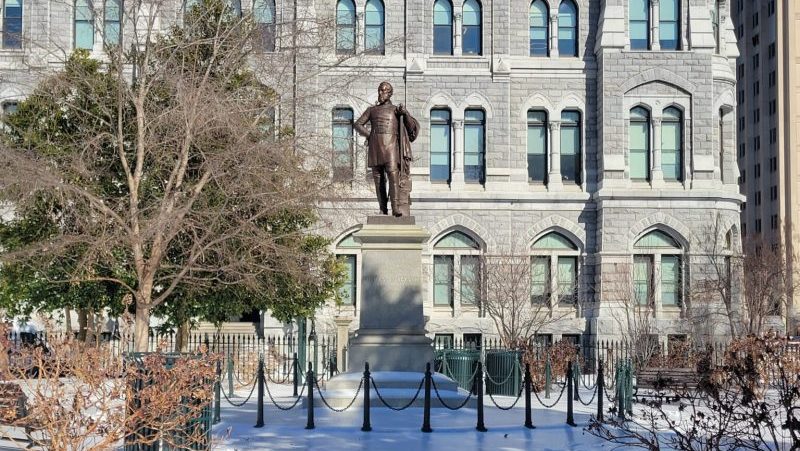
A statue of Confederate General Thomas “Stonewall” Jackson in Virginia’s Capitol Square on Jan. 29, 2026. (Photo by Charlotte Rene Woods/Virginia Mercury)
The statues depict General Thomas “Stonewall” Jackson, Gov. William “Extra Billy” Smith, and Dr. Hunter Holmes McGuire; they were erected in the late 1800s and early 1900s, when laws disenfranchising Black Americans were enacted and memorials to the Confederacy were surfacing in public spaces like courthouses and other municipal buildings.
Jackson and Smith were prominent Confederate generals, and Smith went on to become governor of Virginia in the mid-1800s. McGuire, a Confederate doctor during the Civil War, supported slavery and later opposed voting rights for Black people. A local Veterans Affairs hospital in Richmond that was previously named after him has since been renamed.

“These are not people we need to lionize,” Ebbin said during deliberation of the bill at the state Capitol Wednesday morning.
Ebbin’s bill directs the Department of General Services to remove and store the statues until the General Assembly can determine a final disposition for them.
A substitute that was adopted in the Senate Finance and Appropriations Committee on Wednesday also directs state agencies to develop options for final disposition of any other Confederate monuments or memorials that are in state government possession, which will be subject to review and approval by the joint Rules committees.
Having cleared the Senate committee, Ebbin’s bill will need to pass in the Senate and eventually the House of Delegates before it has a chance to be potentially signed, amended or vetoed by Gov. Abigail Spanberger.

Many Confederate monuments and memorials have been removed around Virginia since a 2020 state law granted local governments the ability to relocate them. Some monuments in Charlottesville and Richmond garnered the most attention, with fierce debates and demonstrations both in support of and opposition to the objects.
Supporters, including Groups like United Daughters of the Confederacy, headquartered in Richmond, said the statues represent a heritage of Southern pride and resistance to federal overreach. Detractors, including the Virginia State Conference NAACP and other civil rights groups, say the objects represent a legacy of racism, violence and intolerance while glorifying people who fought to preserve the enslavement of Black people.
Virginia’s movement to remove Confederate iconography can be traced back to 2016, when then-high school student Zyahna Bryant petitioned Charlottesville city council to take them down. By 2017, councilors Wes Bellamy and Kristen Szakos spearheaded a local ordinance to remove it from a local park.
That decision was then challenged in courts, as state law had not yet granted local governments such authority. In the summer of 2017, the Ku Klux Klan, far-right militia groups and Confederate groups rallied in the city, culminating in the deadly Unite the Right rally.

As 2020 demonstrations sparked nationwide following the death of George Floyd, a Black man in Minneapolis, at the hands of police — calls for criminal justice reform and renewed efforts to remove symbols that venerated the Confederacy flared anew.
By 2021 both Charlottesville and Richmond had removed most Confederate monuments from public spaces which had caught national attention. Charlottesville’s Jackson monument has since been reworked into a Los Angeles art installation, and a public input process is ongoing in Charlottesville to determine how to reuse the Lee statue.
Several other Confederate statues around Virginia were moved to historic battlefields or cemeteries and the city of Richmond’s Monument Avenue statues remain in storage at a wastewater treatment facility.
Regarding the statues in Capitol Square, Ebbin said he added removing them to his to-do list after giving tours to constituents and feeling jarred by escorting people past them to statues that honor civil rights leaders and women.

As he prepares to leave the state legislature and join Spanberger’s administration as senior advisor to the Cannabis Control Authority, he likened the attempt to remove them to the way people clean up a campsite before moving on.
“I’d like to leave Capitol Square better than I found it,” Ebbin said.
by Charlotte Rene Woods, Virginia Mercury
Virginia Mercury is part of States Newsroom, a nonprofit news network supported by grants and a coalition of donors as a 501c(3) public charity. Virginia Mercury maintains editorial independence. Contact Editor Samantha Willis for questions: info@virginiamercury.com.





Virginia Measles Cases Surge Past 70, Concentrated in Central Virginia

Congress Nears Major Bipartisan Housing Bill with Support from Virginia Lawmakers

Warren County School Board Weighs Scent Awareness Policy

Virginia Schools Push for Local Tax Option as Aging Buildings Strain Rural Divisions

Virginia Farmers Talk Meat Production, Fertilizer Costs with USDA Officials

The Ants Are Back — and They Mean Business

U-Pick Outings Offer Fresh Fruit, Fresh Air and Local Support

Disc Brakes and Drum Brakes Use Friction in Different Ways

Cline Highlights Memorial Day Ceremony, Lyme Disease Awareness, Cybersecurity, and Local Manufacturing Visits

Local Students Earn Degrees from James Madison University

Michael Sean Williams Takes on the Pastoral Role at First Baptist Church Without the ‘Interim’ Attached

Virginia Officials Urge Hurricane Preparedness as 2026 Storm Season Begins

Warren County Announces Leadership Appointments in Economic Development and Planning

The Request for Money from Nigeria: At Fire Department Luncheon, Senior Citizens Learn to Recognize AI Fakes

Don’t Miss This! – Say Cheese! Warren Coalition Serves Up Second Annual Fundraiser

Is A Parking Garage in Front Royal’s Future? Town Council Discusses Prospective Parking Study

Constitution 101: Naturalization Clause

Aging At Home Drives Growing Demand for Virginia Caregivers

Another Year, Another Virginia Retail Cannabis Market Veto Leaves Businesses, the Public with Few Options

A Cure for Sickle Cell? Science Says Yes. Your Wallet May Disagree.

What You Need to Know About Hives

Fruit Trees Can Add Beauty, Shade and Fresh Harvests to the Backyard

Irene May Jenkins (1928 – 2026)

Blue Ridge Wildlife Center Patient of the Week: Striped Skunk
