
Interesting Things to Know
June is National Safety Month: Safety Is a Team Sport
Nobody knows the hazards of a job better than the people doing it every day.
That is why shared responsibility is one of the most powerful tools in workplace safety. It is also one of the easiest to put into practice. A safer workplace is not built only by rules, posters or inspections. It is built by people who are willing to look out for one another.
Often, that starts with small moments.
It may be as simple as mentioning a wet floor to the person walking behind you. It may mean pointing out that a ladder looks shaky before someone climbs it. It may be pulling a coworker aside and saying, “Hey, your hard hat strap is loose.”

Those are not acts of bossiness. They are acts of respect.
During National Safety Month, employers and workers are reminded that safety works best when everyone has a role. Supervisors set expectations. Workers follow procedures. Coworkers speak up when something does not look right. Everyone has a reason to care because everyone wants to go home healthy at the end of the day.
Toolbox talks and safety meetings are a good example. They do not have to be long to be useful. A five-minute huddle at the start of a shift can give workers a chance to talk about the day’s tasks, changing conditions, and hazards that may be easy to miss.
According to a report from Associated Builders and Contractors, companies that hold daily safety briefings have much lower recordable incident rates than companies that meet only monthly. That kind of difference shows how powerful regular communication can be.

The Occupational Safety and Health Administration has also found that workplaces with active safety participation programs can reduce injury rates and save money through prevention and training. But the real payoff is simpler than any statistic: people watching out for people.
Shared responsibility also helps create trust. When workers know they can report a hazard without being ignored or blamed, problems are more likely to be fixed early. When employees feel comfortable asking questions, mistakes are less likely to turn into injuries.
A strong safety culture does not mean nobody ever makes a mistake. It means people care enough to catch problems before someone gets hurt.
That is why speaking up matters. A loose cord, a missing guard, a rushed shortcut, or a tired coworker can all become hazards. Calling attention to them may feel awkward for a moment, but silence can be far more costly.

Safety is not one person’s job. It is a team sport.
Speak up. Listen up. Look out for each other. That is shared responsibility in action.



This Week’s Showtimes at Royal Cinemas as of September 24th

POLICE: 7 Day FRPD Arrest Report 9/21/2026

Blue Ridge Wildlife Center Patient of the Week: Eastern Cottontail

UVA Health Review Examines Real-World Results of Incisionless Liver Tumor Treatment

Maximilian James Donora (1995 – 2026)

Dollars for Dolly Campaign Aims to Turn Small Gifts Into Big Community Impact

Clean Virginia: NextEra’s Utility Takeover Attempts, Alleged Political Moves Relevant to Merger Case

Commentary: If You Enjoy Virginia’s Wildlife, Thank a Hunter or Angler

Spanberger Presses Congress for AI Guardrails as States Forge Ahead

‘Drive Them Into Hell’: Trump Ponders Destruction of Iran at United Nations

National Chicken Month Celebrates a Versatile Source of Protein

Face Paint That Can Read Your Heartbeat

Leisa Wood (1961 – 2026)

GO VOTE: Because Complaining Alone Isn’t a Good Strategy

The Third Most Important Gift Is Laughter

Skates, Treats and Safety: Warren County Sheriff’s Office Foundation Pack October with Community Events

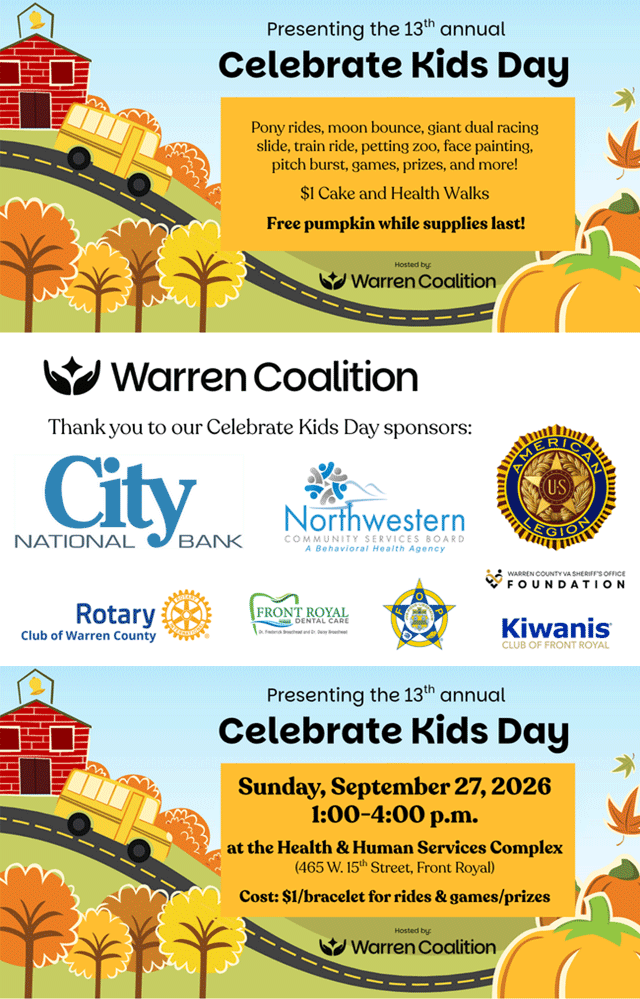
Celebrate Kids Day Returns Sept. 27 With Family Fun, Activities and a New Train Ride

Survey Finds That More Than Half of Virginia Families With Children Face Food Insecurity

Could Virginia’s New Law Allowing 1% Sales Tax for School Construction Need a Fix?

Now They Want to Rein It In

From Oil Field to Gas Pump: What Really Determines What We Pay?

When Fields Flood: How Farmers Protect Crops and Plan for the Future

Draw Your Circles: A Map of the People Who Matter

A Heartfelt Farewell and Thank You