
Local News
Blue Ridge Wildlife Center Patient of the Week: Striped Skunk
The past week alone, we’ve admitted more than a dozen baby skunks!

Most of these youngsters arrive after their den has been accidentally disturbed during landscaping, construction, or other outdoor activities. Others become orphaned when their mother is killed by a vehicle or illegally trapped and relocated.
While people often have good intentions, moving wildlife almost always creates problems for both the animals left behind and the surrounding ecosystem.
Many of these baby skunks are still completely dependent on their mother for warmth, protection, and food. Without intervention, orphaned kits have little chance of surviving on their own.
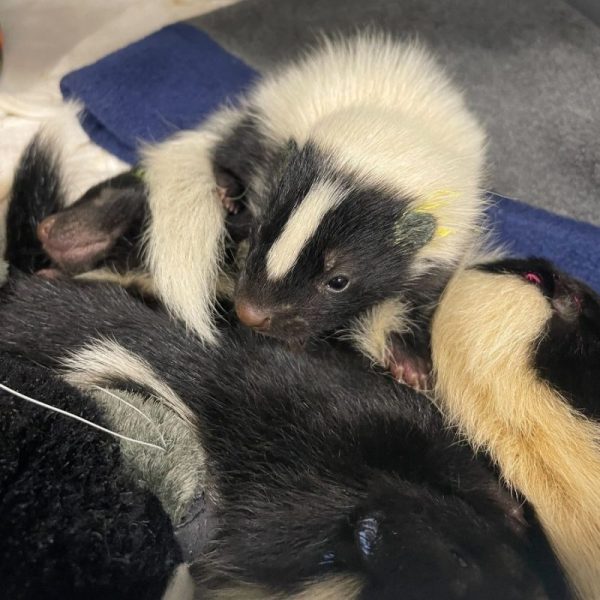
Fortunately, the finders of our recent skunk patients did exactly the right thing. They contacted wildlife professionals, avoided direct contact, and safely transported the babies to our hospital for care.

It’s important to remember that skunks are classified as a high-risk rabies vector species.
Any direct contact with a skunk can have serious consequences for both people and pets. If you encounter a skunk that appears injured, orphaned, or in distress, never handle it with your bare hands.
Use a towel, thick gloves, or another protective barrier if absolutely necessary, and contact a permitted wildlife rehabilitator for guidance as soon as possible.
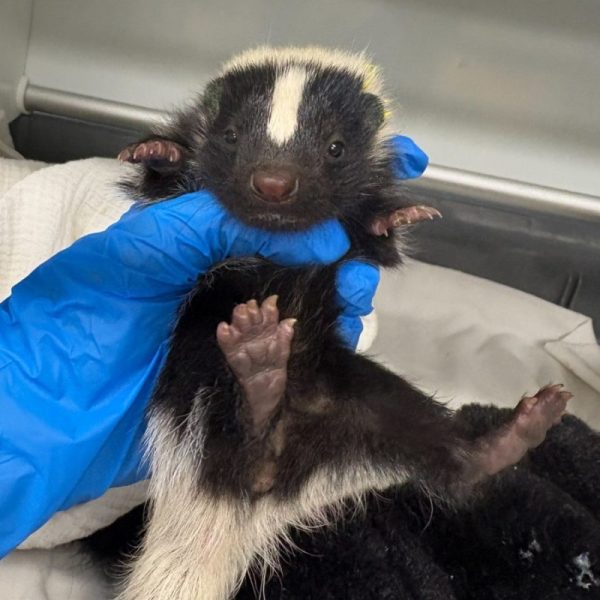
Although we’re never happy to see wildlife in need of assistance, skunks hold a special place in the hearts of many of our staff and volunteers. These often-misunderstood animals play an important role in the ecosystem by consuming insects, rodents, and carrion, helping keep our environment healthy and balanced.

We are honored to provide these youngsters with a second chance and look forward to the day they can return to the wild where they belong.
Did you know?
Skunks do not have an infinite amount of liquid in their scent glands to spray, so they only use it when they think their lives are in danger.
Skunks will typically stomp their front paws to warn potential predators and they will even raise their tail as a threat at those who ignore this first warning. Finally, if the threat continues, they will spray. This spray causes eye irritation and has an extremely potent smell meant to distract and discourage predators from continuing their threatening advances.

Once they use their full amount, it can take days for skunks to “recharge,” leaving them potentially vulnerable to predators looking to test their luck.

Stay away and don’t get sprayed! Give skunks ample room to move away from you and try not to make quick movements. Sudden movements can make animals nervous and send them into defense mode. Keep pets on a leash when outside in an un-fenced area to help prevent them from being sprayed!
Looking for an easy way to help native wildlife? Become a monthly BRWC donor! For as little as $5/month, you can provide year-round, sustainable support that helps us fulfill our mission.




Virginia Considers Calls for Mandatory School Nurses as Healthcare Gaps Persist

Ask the Expert: What Happens to a Mortgage When a Spouse Dies?

Shingles Shot May Help Protect the Brain

VDOT: Warren County Traffic Alert for August 24 – 28, 2026

Warren County School Board Reviews Visitor Rules, Special Education Support and Summer Meal Growth

Every Community Needs Champions

Fauquier Health to Join Bon Secours Mercy Health Network

Historical Travels: Beaver Lake, Utah

Why Your Birthday Is Worth Celebrating at Any Age

How Much Is Too Much?

When Leadership Forgets Who Wears the Servant’s Cloak

Sanders “Ray” Rowe (1940 – 2026)

Virginia State Police Report $8.5 Million in Drug Seizures During Weekly Operations

Front Royal Lifts Voluntary Water Conservation Restrictions After Recent Rainfall

Virginia Health Department Improves Nursing Home Inspection Backlog, Reforms Sanction Criteria for Facilities

After Eastern Groundwater Report Detailed Aquifer Concerns, Virginia Lawmakers Consider Policy Shifts

Rachel Judith Brandon Sears (1944 – 2026)

Ingrid Jolly (1944 – 2026)

Royal Shine Builds on Detailing Legacy With New Name, Same Focus on Quality

Business Growth Series: Overthinking Is Slowing Your Business Down

Feds’ Proposal to Alter Head Start Could ‘Dismantle’ Program in Virginia, Parents and Advocates Say

Freedom 250 Grand Prix Brings First INDYCAR Race to National Mall

Judge Affirms Ruling in Favor of Former Felons in Voting Rights Lawsuit

ORDER OF PUBLICATION: In the Circuit Court for Warren County, Virginia
