
Home
Born Feb. 25, 1841 Renior: Painter of love and nature
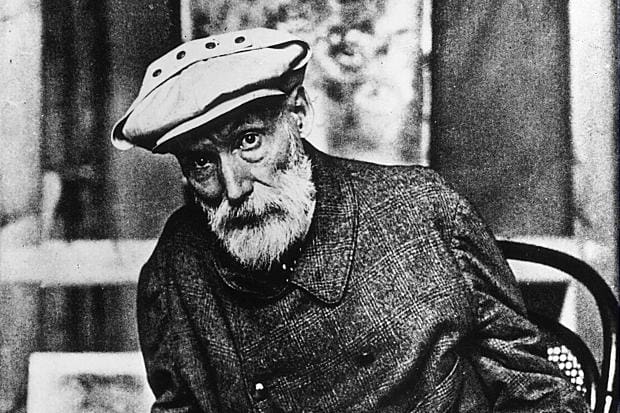 French painter Pierre-Auguste Renoir was born just 11 days short of Valentine’s Day on February 25, 1841. His life, however, would be framed by his love for nature and people and his expression of that in painting.
The man who would go on to become a central figure in the Impressionist movement, collaborating with other renowned French masters like Claude Monet and Jean Frederic Bazille, started off in humble beginnings, the sixth of seven children. His family’s financial circumstances precipitated a move to Paris from Renoir’s birthplace of Limoges when he was only 3 years old. This would eventually prove fortuitous, and their new city address was only a stone’s throw away from the Louvre. The world-renowned art museum would become a refuge for Renoir when at age 13, he had to give up the pursuit of a musical career and get an apprenticeship at a porcelain factory, painting plates.
At the Louvre, Renoir explored 18th-century French masters and showed the curiosity for the work of others that would later lead to experimentation and the creation of a new movement. The factory owner, who recognized Renoir’s talent, encouraged him to pursue studies in art. Some time after the factory closed, in 1862, Renoir began serious study under Charles Gleyre in Paris.
Renoir’s early career was marked by poverty, and he is known to have struggled through the 1860s, barely able to buy paints and canvases. He didn’t give up, however. He submitted his work to the Salon and forged alliances with people who would prove to be patrons. The turning point in his career came in 1867 when he painted his mistress Lise Trehot. ‘Lise and the Parasol’ displayed Renoir’s sensitivity to female sensuality and the female nude would become one of his primary subjects. Trehot, herself would become an inspiration for a number of his paintings, according to Sophie Monneret’s 1991 memoir called ‘Renoir.’

Producing thousands of paintings in his lifetime, Renoir’s work in review shows an artist driven by love. After his marriage in 1890, he turned his attention to capturing his wife, family life and children. In his late career, after a diagnosis of rheumatoid arthritis that left his fingers permanently disfigured, he still continued to create, hiring an assistant to help him realize his artistic visions in sculpture.




Turning Off an Airbag Is Allowed in Limited Circumstances

A Retirement Account for a Grandchild Starts With a Summer Job

Your Photos Survive A Lost Phone, But Not A Wrong Tap

Walking Malls Don’t Solve Problems

Festival of Leaves 2026 Wraps Up a Successful Day in Downtown Front Royal

Autumn Delights: Spotlight On Pumpkins!

Lord Fairfax Health District Receives $5,000 Grant To Support Local EMS Crews

Why an AI Bubble Could Reach Your Savings

The Platypus: A Truly Amazing Animal!

A Thing of the Heart: Two-Fold Outreach to Children and Award Presentation Brings Hike Kidz to Stone Branch Arts Center

Virginia State Police Seize Drugs Valued at More Than $830,000, Recover 13 Firearms

Commentary: We Hate Technology. Please Like and Share

One Medicare Open Enrollment Decision That Can Be Hard to Undo

Constitution 101: The Postal Clause

VDOT: Warren County Traffic Alert for October 12 – 16, 2026

UVA Poison Expert Warns of Emerging Synthetic Opioids That Fentanyl Tests May Miss

Pumpkins Will Take to the Skies at Front Royal Warren County Airport Oct. 24

Front Royal Remains Under Mandatory Water Conservation As Shenandoah River Flow Drops

Front Royal Women’s Resource Center Opens 2027 Dare to Dream Grant Applications

Warner, Mizusawa Outline Competing Approaches to Disability Policy

Fable Greenhouse and Gardens Breathes New Life into Former Horton’s Nursery

Louise Virginia “Mom” Messer (1936 – 2026)

Business Growth Series: Doing Everything Yourself Is Slowing You Down

The Mystery of the Purple Seal
