
State News
Legislation hopes to expand broadband access for low-income students
RICHMOND, Va. — The Virginia General Assembly passed legislation in an effort to expand broadband internet access to low-income students across the commonwealth.
Senate Bill 1225, proposed by Sen. Jennifer Boysko, D-Fairfax, authorizes school boards to appropriate funds to partner with private companies for the purpose of implementing and subsidizing broadband internet access for low-income and at-risk students.
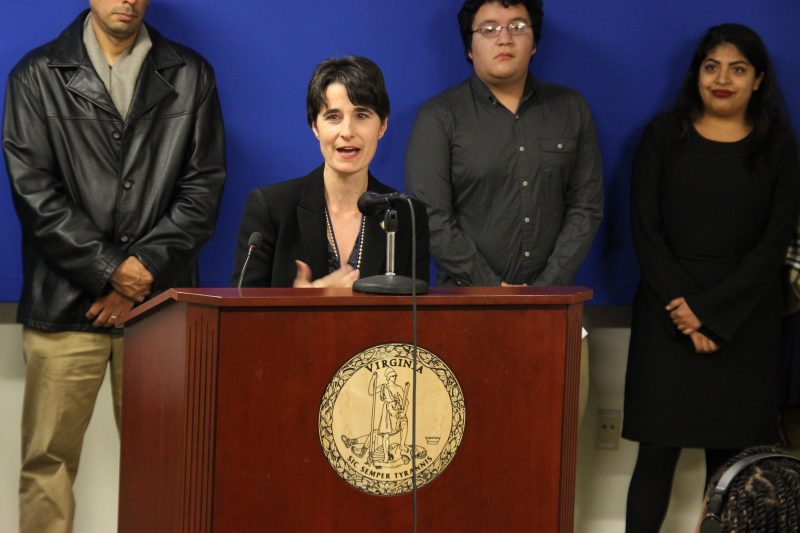
“Distance learning during the pandemic has left these students struggling not just with homework but with classwork and lessons as well,” Boysko said before a House panel.
The reduced rate broadband would be eligible for students who qualify for child nutrition programs and other programs that are recognized by the school board as a measure to identify at-risk students. That means programs that are funded by the U.S. Department of Agriculture, such as the schools’ breakfast, lunch, and after-school snack programs.

These broadband programs already exist, but Boysko said the bill clarifies that school boards can enter into partnerships with private broadband companies and permits the companies to promote the service. Boysko said there are nearly 600,000 students who qualify for those supplemental programs, though 215,000 people are currently utilizing them.
One plan offered to qualifying families is $9.95 a month, according to a Comcast representative who spoke in favor of the bill.
Phillip Lovell, vice president for policy development and government relations at the Alliance for Excellent Education said students without access to reliable technology are experiencing the brunt of the pandemics’ drawbacks.
“If you don’t have high-speed home Internet, and if you don’t have a device, then you are in a world of hurt,” Lovell said.

More than 20% of households in Virginia lack high-speed internet, according to a recent analysis by Future Ready Schools, a research project of the Alliance for Excellent Education, a national nonprofit committed to improving education outcomes. This translates to almost 394,000 children without an efficient network to complete their instruction. The same organization reports that over 200,000 students are without internet in households that earn below $50,000 annually. Future Ready Schools also found that 8% of Virginia households have no computer devices. This impacts over 140,000 students.
Lovell said access to a cell phone instead of a computer is an insufficient way of learning. He challenged adversaries to complete work without access to a desktop.
“They should try to write a five-page research paper on any topic they would like … and try to do it on their cell phone,” Lovell said.
Disparities in academic performance can be seen within different races, income levels, English-language proficiency, learning disabilities and sex, according to Education Week, a news organization devoted to education news.
Lower-income students are less likely to have access to a quality remote learning environment; devices that they do not need to share; high-speed broadband internet; and parental supervision during school hours, according to Mckinsey and Co., a consulting firm to governments and organizations.

Rural students are also suffering from a lack of broadband internet access.
Keith Perrigan, president of the Coalition of Small and Rural Schools of Virginia, said during a Fund Our Schools virtual rally earlier in the week that access to broadband internet is perhaps the biggest equity issue faced by the state’s rural students. Fund Our Schools is a coalition of education advocates that work to increase Virginia public schools funding.
“Students are driving 10, 12, 15 miles to get to their nearest Dollar General who will allow them to sit in the parking lot and tap onto the Wi-Fi,” Perrigan said. “And you have students in other parts of the state that sit in their living room and have access to the internet at their disposal all the time.”
Boysko said her bill is not going to solve the problem of rural broadband infrastructure. Other bills will expand access to infrastructure building. She said the bill is primarily for urban and suburban areas where families can’t afford to pay for the internet, but there’s existing broadband infrastructure in place.

Both the House and Senate budget bills propose $50 million per year from the general fund for two years for the Virginia Telecommunications Initiative. The funds will supplement the construction costs of expanding access to areas that are presently unserved by broadband providers. The Department of Housing and Community Development will work with the Broadband Advisory Council to designate unserved areas that require funds.
Boysko also sponsored SB1413 that will make permanent a pilot program that permits some electric utility companies to petition the State Corporation Commission to provide broadband capacity to unserved areas of the state.
By Josephine Walker
Capital News Service
Capital News Service is a program of Virginia Commonwealth University’s Robertson School of Media and Culture. Students in the program provide state government coverage for a variety of media outlets in Virginia.





Judge Calls Trump Mail Ballot Rule ‘Substantively Unconstitutional’ as Court Battle Extends

US House Clears Spending Stopgap Backed by Trump That Averts Government Shutdown

Apple Lawsuit Puts Employee Offboarding and Digital Access in the Spotlight

Virginia Education Board Updates Graduation Requirements, Expands Course Options for Students

Commentary: The Day Virginia Took Down Confederate Statues, a Black Church Remembered a Lynching Victim

Inside Virginia’s City Halls, Concerns, Confusion Rise with Flock Surveillance Protests

A Summer of Recalls Exposes Holes in the Nation’s Food Safety Net

Stewart E. Burke Sr. (1934 – 2026

DLC Acquires Royal Plaza Shopping Center in Front Royal

Food Scares Can Hurt Restaurants That Had Nothing to Do With an Outbreak

Virginia State Police Rap Back Program Tops 55,000 Enrollments in First Year

Warren County Volleyball Set to Host Kettle Run Tuesday Night – September 1

Economic Growth Is Not the Same Thing as Economic Health

Virginia Health Leaders, Lawmakers Share Enhanced Healthcare Resources for Rural Communities

Commentary: Public Utilities Shouldn’t Be Funding the Campaigns of the People Who Govern Them

Voting Rights Struggle Continues, Gov. Spanberger and Advocates Say at March on Washington Anniversary
Warren County Volleyball Set to Host Strasburg Monday August 31st

Trump Administration Announces Venezuela Oil Deal, Space Academy Commission and Other Actions

Recalling the History of Recalls

September Celebrity Birthdays

Wawa to Open New Middletown Store With Grand Opening Celebration Sept. 4

Reaching Hearts Gospel Fest Returns to Downtown Front Royal, Seeks Community Sponsors

VDOT: Warren County Traffic Alert for August 31 – September 4, 2026

Why Should You Care If the Business Down the Street Closes?
