
Local News
Patient of the Week: Black-throated Green Warbler
Are your windows safe for birds?
Each spring, billions of birds migrate back into the USA from their wintering grounds down south. And right now, spring migration is at its peak!
Sadly, this is also the time of year we see a sharp increase in patients admitted after colliding with a window, like this Black-throated Green Warbler.
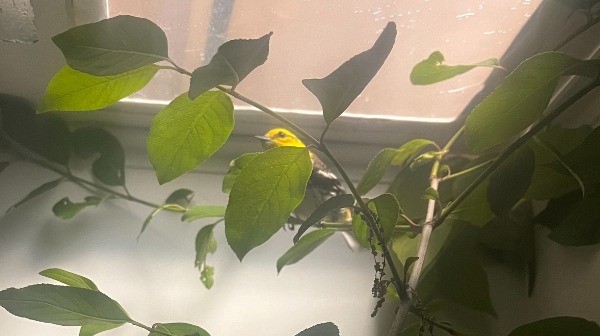
So far this year, we have admitted 54 window-strike patients.
Window collisions are a top threat to birds, killing an estimated 1 billion birds in the United States each year.

Why? You may be surprised to learn that neither people nor birds can detect glass. However, humans use visual cues to distinguish a window from an opening—birds are unable to tell the difference.
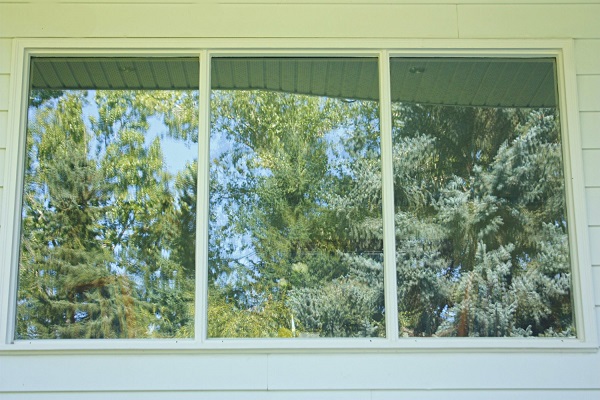
To make matters worse, during the day, windows reflect the sky and vegetation outside making a window look like open sky.
Also, lights at night reflecting off windows can confuse birds into thinking they can fly into the reflected sky or trees they see, causing collisions.
Reflected lights also create “traps” where birds can’t reorient themselves out, exhausting birds who are often already relying on limited energy to make their long journey.

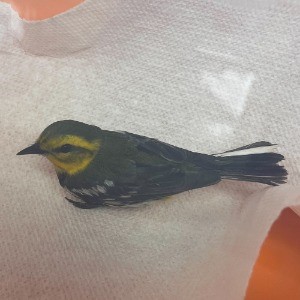
What to do if a bird strikes your window:
It is still widely believed that window-strike birds are fine to recover in a box for an hour and then simply be released.
While this used to be common advice, we now know that window-strike birds can fly off while still suffering from life-threatening injuries that can worsen over time.
If you find a bird who has struck a window, get that bird contained in a box somewhere warm, dark, and quiet, and get them to a licensed rehabilitator right away!
Luckily, there are many ways to prevent window strikes from happening that you can try at home.

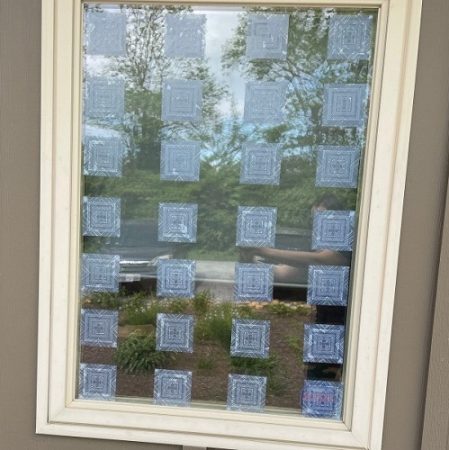
Click here to download our free, printable window strikes brochure.
Our native birds travel thousands of miles during migration. The least we can do is make the journey a little safer for them.
Thankfully, our warbler patient was treated with supplemental oxygen, fluids, and pain medications. After a few days in care, we were able to get this bird back on their migration route!
Looking for an easy way to help native wildlife? Become a monthly BRWC donor! For as little as $5/month, you can provide year-round, sustainable support that helps us fulfill our mission.




Trump Administration Announces Venezuela Oil Deal, Space Academy Commission and Other Actions

Recalling the History of Recalls

September Celebrity Birthdays

Wawa to Open New Middletown Store With Grand Opening Celebration Sept. 4

Reaching Hearts Gospel Fest Returns to Downtown Front Royal, Seeks Community Sponsors

VDOT: Warren County Traffic Alert for August 31 – September 4, 2026

Why Should You Care If the Business Down the Street Closes?

Going Shopping? Don’t Forget to Ask About a Senior Discount

Virginia State Police Seize More Than $2.6 Million in Drugs During Weeklong Operations

Give Downtown Front Royal a Place to Sit

Warren County High School Welcomes E. Wilson Morrison Students After Emergency Closure

Warren Heritage Society Opens New Main Street Pocket Museum and Tour Headquarters

Carla Schwarck Slater (1947 – 2026)

PickleStock Returns to Warren County Fairgrounds September 12

William “Bill” John Mathers (1935 – 2026)

Trump Orders Commission to Explore Creation of U.S. Space Academy

First Warren County GOP Meeting Under Scott Lloyd Stalls in Procedural Disputes, Ends Without Officer Vote

Virginia Officials Announce Disbursement of $122 Million in Rural Health Transformation Fund Awards

If Virginia’s Reproductive Rights Amendment Passes, Challengers Say They’ll Fight to Overturn It in Court

Agritourism Summit Brings Farmers, Tourism Leaders and State Officials Together in Frederick County

Terry Wayne Foster (1962 – 2026)

Cottonwood Ranch Hosts Saturday Social With Live Music, Wine and Local Food

Business Growth Series: Why Simple Businesses Grow Faster

As Student Well-Being Concerns Grow, Virginia Advocates Push for Stricter School Tech Guidelines
