
Local Government
Town, County ponder changes, formalization of Corridor Agreement
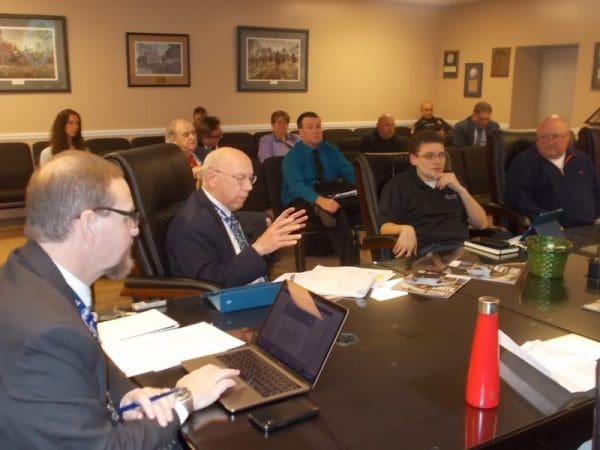
The Front Royal Town Council appears poised to join the Warren County Board of Supervisors in amending the so-called “Voluntary Settlement Agreement” on how the county government compensates the town government for the extension of central water and sewer service into the Route 340/522 Commercial Corridor.
That 1998 Corridor Agreement established with State authorization in 1999 was reached as the community struggled to re-establish a viable commercial tax base in the decade after the Avtex Fibers plant closing, particularly related to county support of the public school system.
From a summary presented to the town council by Town Attorney Doug Napier at a Monday evening (April 2) work session, the primary impetus for the fourth amendment to the Voluntary Settlement Agreement is formalization of the most recent amendment established in 2015. The county supervisors are scheduled to vote on authorizing execution of the proposed amendment at their meeting Tuesday morning (April 3).
According to the town staff summary, the formalization of the most recent amendment to the 1998 corridor agreement is designed to appease concerns of the corridor’s newest proposed restaurant client Chic-fil-A that either principal could easily pull out of the Memorandum of Agreement (MOA) signed onto by the Town and County in 2015.
Such action Chic-fil-A fears could lead to the Town’s re-imposition of its own Meals Tax-based fees in the corridor. In addition to formalizing the MOA, the new amendment adds the land for the planned Crooked Run West expansion into the agreement; and places a formal 25-year moratorium (to 2043) on the Town’s ability to launch annexation proceedings on County land in the north side commercial-industrial corridor.
The 2015 MOA to the 1998 Voluntary Settlement Agreement mandates that the County pay the Town 30% of the revenue realized from its corridor Meals Taxes and 5% of its Lodging Tax revenue. That compensation agreement came after six years of often contentious negotiations in the wake of the Town’s loss of a 2009 lawsuit filed by Applebee’s, Cracker Barrel and TGI-Fridays that voided Town collection of Meals Tax-based PILOT (Payment In Lieu Of Taxes) fees attached to its corridor water-sewer utility bills.
PILOT fees were seen as a compromise to see that corridor businesses in the county did not have a competitive advantage over town businesses due to their not being subject to Town taxes. Town businesses pay both County and Town taxes.
In the wake of the County’s initial refusal to make accommodations to the Town for its lost Meals Tax revenue – we seem to recall one county official observing that the lost revenue was a “Town-utility customer problem”, rather than a Town-County problem – a previous town council proposed either new, rewritten contracts imposing the Meals Tax PILOT fee on new corridor restaurants, or even launching annexation proceedings against some of the commercially-developed corridor land benefitting from Town central water-sewer utilities.
The rising Town-County tension and threats of more contentious litigation led to the 2015 MOA and the County’s agreement to pay 30% of its Meals Tax and 5% of its Lodging Tax revenues to the Town.
Town Finance Director B.J. Wilson said based on the first of two fiscal year installments paid in December the Town was estimating $237,252 in total corridor tax revenues from the county in FY18. As with the previous year’s MOA-arranged corridor payment total to the Town, most of that revenue is meals tax generated. Of a total payment of $227,874 to the Town in FY17, $225,266 was meals tax revenue, with just $2,608 in lodging tax revenue.

Based on PILOT fees corridor businesses were paying in the two-year run up to the January 2009 filing of the restaurant lawsuit, the Town estimated coming Meals Tax-based corridor revenues between $600,000 and $800,000 annually.
The Chic-fil-A concern about the Town pulling out of the current MOA with the County and re-imposing Meals Tax-based PILOT fees appears to uphold the Town stance the lost 2009 court ruling WAS based on a contractual wording glitch, rather than a ruling that the Town could not re-implement meals-tax based PILOT fees under new and reworded water-sewer utility service contracts
The Town still collects PILOT fee revenues from corridor water-sewer customers in the county, based on the other taxes collected from businesses in town.




100 Years of Hundred Acre Wood

A Moment of Honor: Veterans Receive a Powerful Tribute at the Tomb of the Unknown Soldier

Samuels Public Library Invites Young Writers and Artists to Enter 48th Annual Holiday Contest

New Exhibitions Bring World-Class Contemporary Art to Downtown Front Royal

VDOT: Warren County Traffic Alert for October 19 – 23, 2026

Discover The Many Benefits Of Organized Sports

The Family Bond That Doesn’t Necessarily End When Contact Does

Virginia State Police Urge Drivers to Stop for School Buses and Students

Economic Development Director Patrick Barker Details Maturing Plan at Town-County Liaison Meeting

Virginia Breeders’ Championships Begin This Weekend at Shenandoah Downs

Local Author Invited to Share Children’s Book at Irish Castle That Inspired It

Virginia State Police Seize More Than $334,000 in Drugs, Recover Five Firearms in Weeklong Operations

Business Growth Series: Big Projects Don’t Get Done — Small Tasks Do

Data Center Moratorium Bills Stack Up Ahead of Virginia Legislative Session in January

Transgender Care for Young Patients Remains On Hold at Virginia Hospitals

Commentary: Spanberger’s Energy Plan Dazzles – and Disappoints

The Workplace Accommodation That Costs Nothing

Nothing In Dolly Parton’s Library Is Ever Returned

Trump: Execution of Fort Hood Shooter Will Not Be Livestreamed

Harmony Hollow Holler Music Festival Brings Appalachian Music to Front Royal October 17

Winsome Earle-Sears Warns of Consequences of Virginia’s Proposed Constitutional Amendments

Federal Emergency Order Aims to Prevent Power Outages Across Mid-Atlantic, Including Virginia

Warren County Grand Jury Returns 17 Indictments Against 10 Individuals in October Session

Text Amendment for Aging in Place Community Succeeds at County Planning Commission Meeting
