
Local News
Blue Ridge Wildlife Center Patient of the Week: Great Horned Owl
These owlets won’t be ‘leaving the nest’ anytime soon.
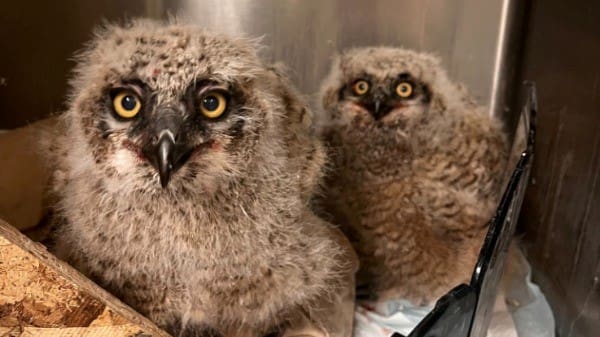
Patients 24-393/452 being raised together at BRWC. @BRWC 2024
This nestling great horned owlet was found on the ground back in early April.
The finders called for advice on how to assist the baby, and they were walked through the renesting process. They were directed to monitor the baby, including checking for fresh feces, noting attitude, and looking for parental activity.
Although alert at first, the finders noticed on their most recent check that baby was wet and looking sad. They were advised to bring the baby in for a checkup, and we are glad they did!
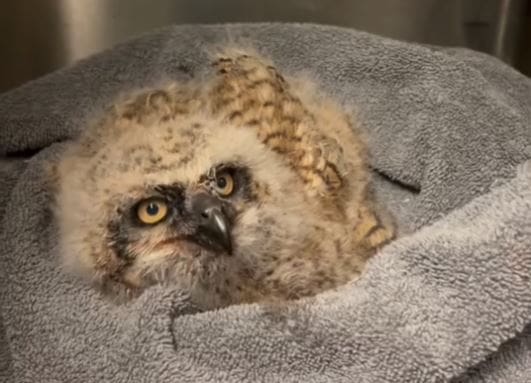
Patient 24-393 at intake. @BRWC 2024
Upon admission, it was clear the baby was not being cared for by parents. They were extremely thin, dehydrated, and lethargic.
After providing nutritional and fluid support, as well as heat, this little owlet perked up and began clacking, fluffing, and swaying—all appropriate defensive behaviors for this species!
Although babies being raised by their parents is always Plan A, we are glad to be available as a Plan B when reunitings do not work.
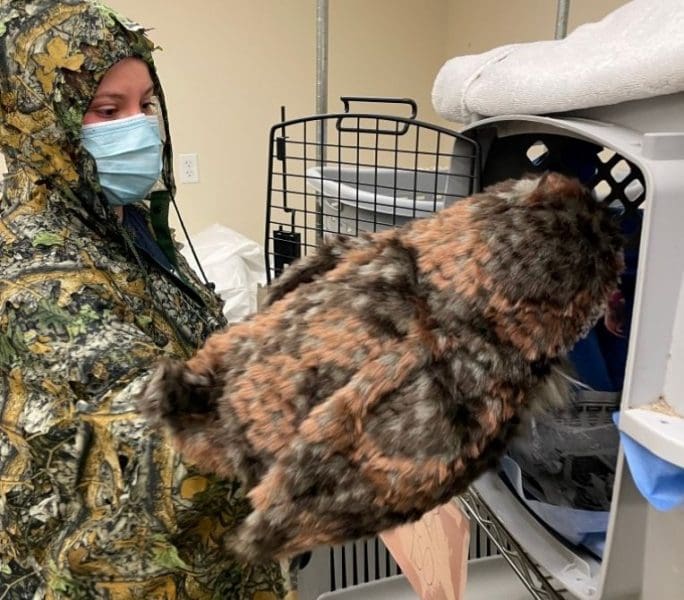
Great horned owlets being fed by puppet to avoid imprinting. @BRWC 2022

Since nestlings are highly susceptible to imprinting, we take extra precautions by wearing camouflaged suits and feeding with a species-appropriate puppet. Though these babies do not believe that the puppet is their parent, it distracts them from the hidden human.
It is also crucial for development and future survival in the wild that babies grow up with conspecifics (members of the same species).
If a baby is unable to identify themselves as a member of their own species, they will not be able to thrive and survive in the wild. Being raised with conspecifics helps to solidify this understanding of identity.
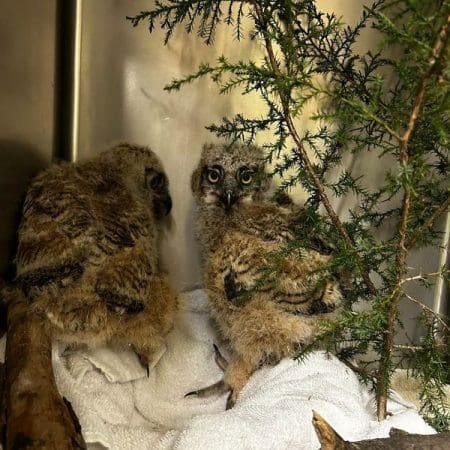
Patients 24-393/452 being raised together at BRWC. @BRWC 2024
Luckily, our friends at the Wildlife Center of Virginia and Southwest Virginia Wildlife Center each had a single owlet and were able to transfer them to us.
Did you know that most great horned owlets stay with their parents into early fall?
While most of our young birds are with us for just over a month or so, raptors (especially great horned owls) take MUCH longer to develop, mature, and become competent enough to be released back into the wild.
This is because great horned owl parents don’t necessarily teach their babies how to hunt—they simply feed them until their hunting skills become proficient enough to sustain them.
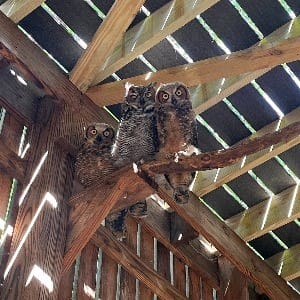
Patients 24-393/452/581 being raised together at BRWC. @BRWC 2024
In rehabilitation, we can simulate this by “hacking,” or soft-releasing our owls, where they are released out of a familiar enclosure where we continue providing food.

If they need it, they can return for sustenance while they practice out in the real world on their own. It takes time to practice the skills necessary to not only catch a live animal, but manipulate it well enough to be able to kill it too.
There are plenty of nestling and fledgling owls out this time of year. If you have any concerns about one that you see, please contact the Center before intervening so that we can help assess that animal!




Virginia State Police Launch Two-Day Interstate 81 Safety Enforcement Campaign October 21–22

Everybody Is a Leader Somewhere

Warren County Wildcats Host Meridian in Girls Volleyball Match Tuesday Night – October 20

Closing Virginia’s Childcare Affordability Gap Could Cost Up To $4.5B a Year

New Coalition Aims to Keep Virginians Covered as Medicaid Rules Tighten

General Assembly Calls Off Oct. 26 Special Session to Elect Judges

Trump Order Sets Up New Women’s Health Research Initiative at NIH, White House Task Force

What Is Puberty?

First New Class of Pain Medicine in Decades Comes with A 14-Day Limit

Front Royal Man Charged with Two Counts of Forcible Sodomy Following RSW Regional Jail Investigation

James Edward “Jimmy” Mahoney (1953 – 2026)

Ask Stewart: Are There Any Scary Trees?

Janet Denny Casarotti (1933 – 2026)

Virginia Breeders Championship Series Opens at Shenandoah Downs with Impressive Performances

Clark Preston “Lucky” Cameron (1961 – 2026)

Commentary: Data Centers and AI – A Rare and Raw Issue in Virginia for This Midterm Election

Douglas MacArthur “Dougie” Green (1964 – 2026)

Dominion’s Energy Roadmap Keeps Fossil Fuels in the Mix, Expands Solar

Richmond No Kings Protest Turns Out Hundreds Ahead of Midterm Election

Dr. William Kent Renas (Bill) (1948 – 2026)

Careful With Money, Invisible to Lenders

3 Car Problems You May Avoid By Paying Attention

American Songs Concert Coming to First Baptist Church in Front Royal on October 25

When Grief Doesn’t Ease With Time
