
Local News
Blue Ridge Wildlife Center Patient of the Week: Bald Eagle(s)
Some of the greatest threats to wildlife are the ones most people never see.
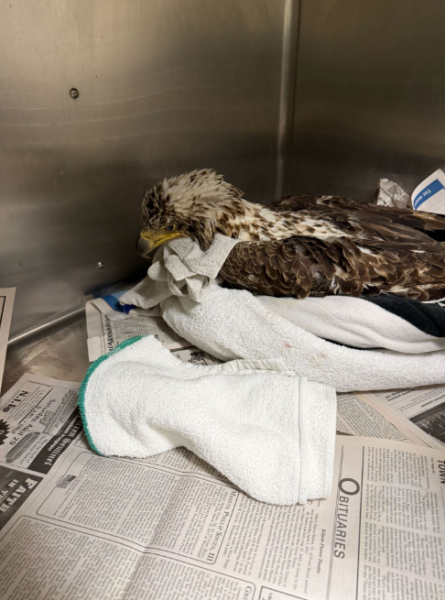
Earlier this month, two immature Bald Eagle were admitted after being found at a landfill in Loudoun County. A third eagle was reported down at the same location but was able to fly away before rescue could be attempted.
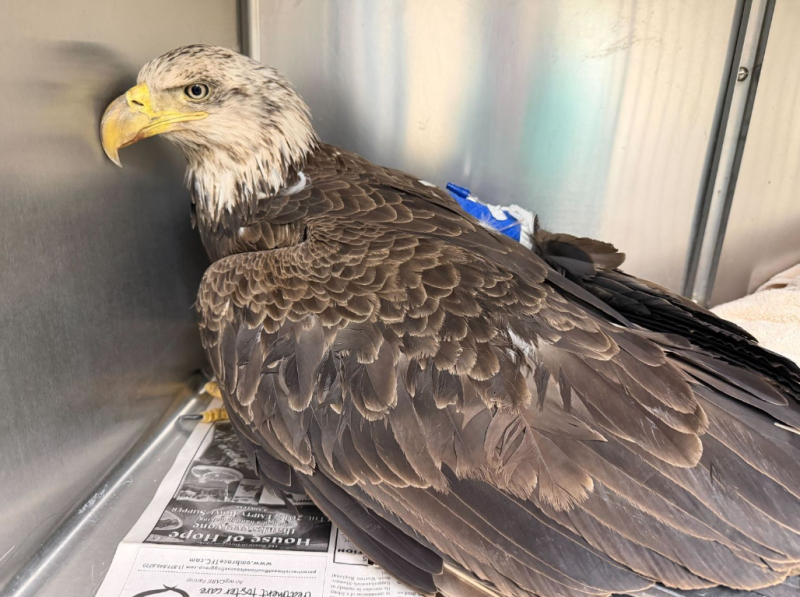
Both eagles presented with severe neurological abnormalities including lethargy and ataxia, meaning they were uncoordinated and unable to move normally.
In wildlife medicine, these signs can point to several possible causes. Lead poisoning is common in scavenging species like eagles and vultures, but although both birds had elevated lead levels, those levels were not high enough to explain the severity of their condition.
Highly Pathogenic Avian Influenza (HPAI) was also considered, though the birds lacked many of the hallmark signs we often see with that disease. Samples were submitted for testing, and results are still pending.

Based on the location where these birds were found, the clinical signs they displayed, and their rapid response to treatment, we strongly suspect these eagles were suffering from pentobarbital toxicity.
Pentobarbital is the drug most commonly used for humane euthanasia in companion animals.
While it is highly effective and compassionate for its intended purpose, the chemical remains present in the body after death. When euthanized animals are improperly disposed of or become accessible to scavengers, the results can be deadly for wildlife.
To treat these eagles, our veterinary team administered intensive intravenous lipid emulsion therapy multiple times daily during their first several days in care.

This treatment helps bind fat-soluble toxins like pentobarbital in the bloodstream so the body can safely eliminate them. Thankfully, both birds responded remarkably well and made a complete neurological recovery.
After several days of intensive care and monitoring, both eagles were successfully released near their original found location.

Cases like this highlight the interconnectedness of wildlife, domestic animals, environmental stewardship, and public policy. Although disposal of euthanized animals in landfills is legal in Virginia under certain conditions, strict protocols must be followed to prevent scavenger access. When those safeguards fail, the impacts can ripple through the ecosystem.
Importantly, we do not believe Loudoun County Animal Services (LCAS) was involved in this poisoning event. In fact, LCAS utilizes cremation for euthanized animals, exceeding state requirements and helping reduce the risk to wildlife.

You can help protect scavengers like eagles and vultures by choosing cremation for pets euthanized with pentobarbital whenever possible. If burial is selected, animals should be buried deeply, ideally at least six feet underground and away from water sources, to reduce the risk of scavenger exposure and environmental contamination.
As apex scavengers, Bald Eagles play an important ecological role by helping remove carrion from the environment. Unfortunately, that same behavior also places them at risk from hidden toxins introduced through human activity.
We are grateful to Loudoun County Animal Services, Kristi’s Caring Hands Wildlife Rehabilitation and Education, and Sycolin Creek Elementary School for helping rescue, transport, and release these incredible birds.
Looking for an easy way to help native wildlife? Become a monthly BRWC donor! For as little as $5/month, you can provide year-round, sustainable support that helps us fulfill our mission.





Leisa Wood (1961 – 2026)

GO VOTE: Because Complaining Alone Isn’t a Good Strategy

The Third Most Important Gift Is Laughter

Skates, Treats and Safety: Warren County Sheriff’s Office Foundation Pack October with Community Events

Celebrate Kids Day Returns Sept. 27 With Family Fun, Activities and a New Train Ride

Survey Finds That More Than Half of Virginia Families With Children Face Food Insecurity

Could Virginia’s New Law Allowing 1% Sales Tax for School Construction Need a Fix?

Now They Want to Rein It In

From Oil Field to Gas Pump: What Really Determines What We Pay?

When Fields Flood: How Farmers Protect Crops and Plan for the Future

Draw Your Circles: A Map of the People Who Matter

A Heartfelt Farewell and Thank You
Data Centers Are Necessary. That Doesn’t Mean Warren County Needs One

Diesel Prices Shoot Upward as Top Farm-State GOP Senator Begs Trump for Export Embargo

From One Barrel of Oil: What Do We Actually Get?

CNN, MS Now, Politico Sue Trump Over White House Ban

Virginia-Made Marine Mattress Nominated for 2026 Manufacturing Cup

Virginia Works Plans October Job and Resource Fairs in Front Royal, Winchester

UVA Health Prince William Medical Center Earns Third Consecutive Magnet Recognition

Virginia Hunger Study Finds 37% of Blue Ridge Households Faced Food Insecurity

WCHS Volleyball Hosts Manassas Park on Sept. 22

ORDER OF PUBLICATION: In the Circuit Court for Warren County, Virginia

The Papers You Would Grab in Ten Minutes

Spanberger’s Carbon Tax Sets New Record, Could Add $1 Billion to Electricity Costs in One Year
