
Local Government
What to expect from Front Royal’s new jaywalking initiative
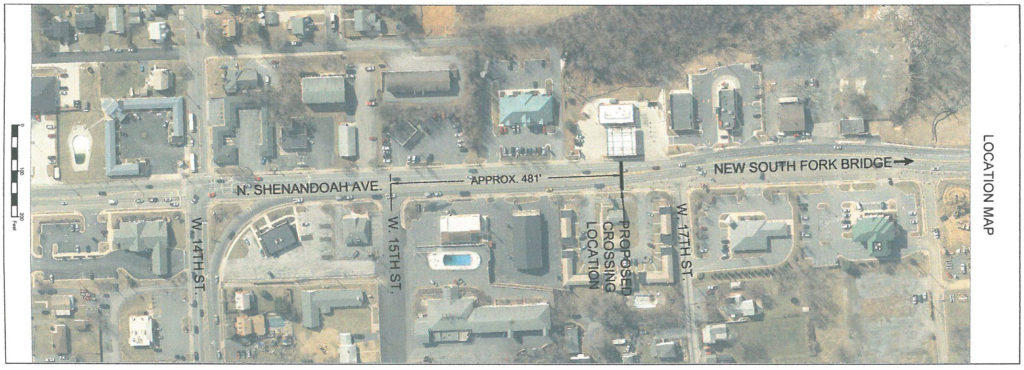
The stretch of N. Shenandoah Avenue between 14th Street and the South Fork Bridge is one of two Front Royal entranceway corridors that have proved fatal to pedestrians in recent years. Courtesy Graphics Town of Front Royal
On Monday evening, August 27, the Front Royal Town Council unanimously passed the second and final required reading of a code change adding jaywalking as an offense by local ordinance.
As explained in work session discussion leading up to the first vote, jaywalking is illegal by state code. However, prosecuting it as a local code violation gives a municipality more in the way of fine revenue – though town officials have stressed that issuing citations to generate local revenue is NOT the goal of the new town ordinance.
Rather, the move as part of a comprehensive pedestrian safety campaign is being pushed as a somewhat more aggressive educational tool for the public. Police Chief Kahle Magalis has stated that educating and deterring the public from dangerous pedestrian decisions like walking out from between parked cars into traffic is the primary goal of the local jaywalking ordinance.

As Royal Examiner noted in earlier coverage of the jaywalking initiative, the town has suffered three pedestrian fatalities within a one-year period within the past two years, as well as several non-fatal vehicle striking pedestrians or bicyclists accidents in the past year.
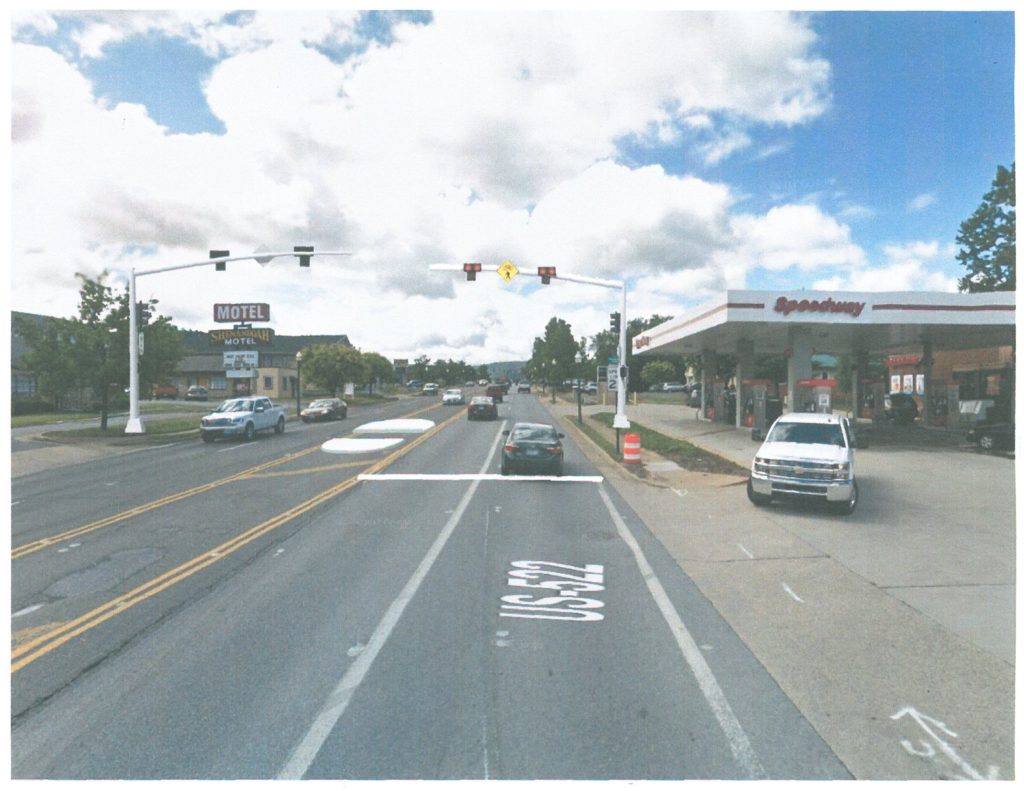
A proposed pedestrian-activated stop light for N. Shenandoah Avenue
The three fatalities happened on high traffic volume entranceways on the town’s north and southeast sides. Two occurred on the eastside entrance from Linden on John Marshall Highway/South Street east and west of Commerce Avenue, respectively; the third on North Shenandoah Avenue between 14th Street and the South Fork Bridge.
The town has repainted existing, and created some new, pedestrian crosswalks and plans additions to pedestrian-activated traffic signals as part of its STOPS (Smart Towns Observe Pedestrian Safety) campaign.

One change added prior to Monday’s second vote enabling the local jaywalking code allows town police to issue jaywalking citations as either Class 4 Misdemeanor criminal offenses as they are classified by state law – punishable by a fine up to $250; or as a less serious traffic citation, which carries a maximum fine of $100.
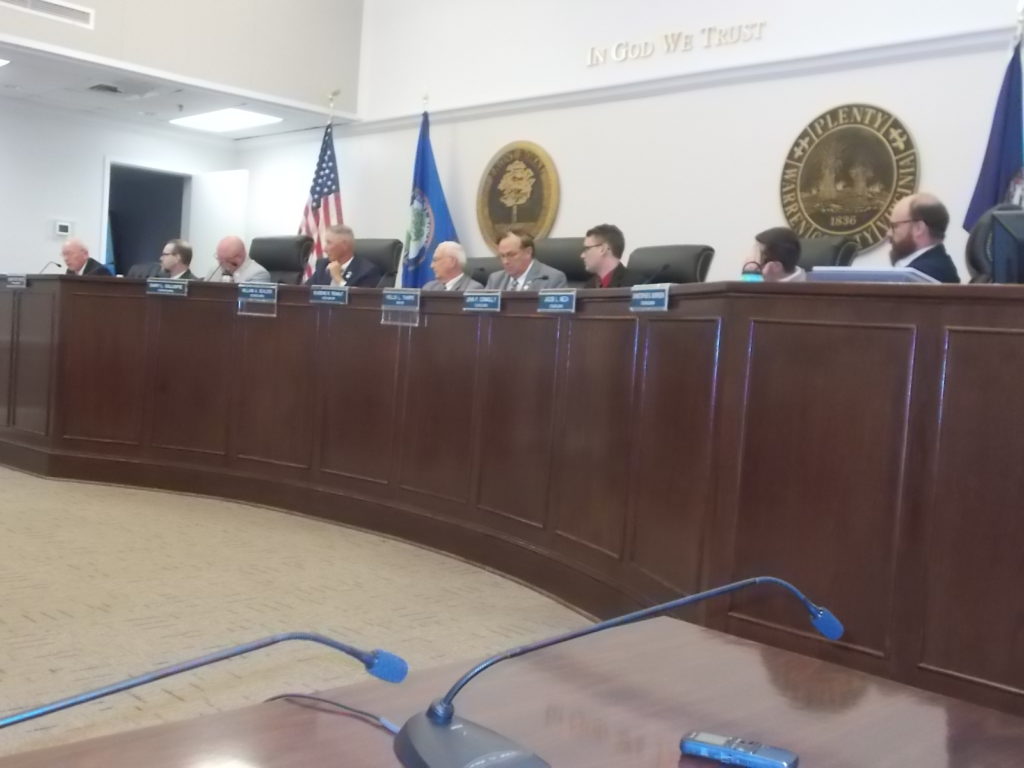
Town Attorney Doug Napier, far left, responds to Councilman Sealock’s concerns about repeat jaywalking offenders. Sealock is seated fourth from left. Photo/Roger Bianchini
Councilman William Sealock, who has been council’s main proponent of the STOPS campaign, expressed concern at the traffic citation option as it might apply to “repeat offenders”. Sealock worried that a harsher penalty should be in line for citizens who fail to heed pedestrian safety advice. Town Attorney Doug Napier explained that the Class 4 misdemeanor criminal citation option with its $250 max fine was that harsher option in the code proposal.
In an earlier Royal Examiner video interview FRPD Chief Magalis promised that common sense would be used in enforcement – and that his officers would not be issuing jaywalking citations in non-threatening neighborhood situations where little or no traffic was present.

Chief Magalis provide an update:





A Path to Fiscal Responsibility and Public Wellness

Moving Data Center Regulations and Permitting Forward a Dominant Topic of Conversation for County’s Elected Officials

Screen Rules That Actually Work

Blue Ridge Wildlife Center Patient of the Week: American Barn Owl

After Taking Off in Charlottesville, Feds Plan National Electric Aircraft Charging Network Rollout

POLICE: 7 Day FRPD Arrest Report 7/20/2026

FDA: Taylor Farms iceberg lettuce sample produced a false positive for cyclospora

Data Centers Want to Build Their Own Gas Turbines. Would That Skirt State Renewable Energy Laws?

Legal Notice: Virginia Alcoholic Beverage Control (ABC) Authority

Removing a Senator
The Dillon Rule Doesn’t Say What Mr. Cuddeback Implies

Test Your Balance Before the Job Tests It for You
Legal Notice: Virginia Alcoholic Beverage Control (ABC) Authority

Late On Rent? New Virginia Law Gives Tenants More Time and Protection From Eviction

Virginia Schools Gain Spending Flexibility Under Federal Program

Three Useful Car Gadgets for a Better Summer Road Trip

When He Retires, Who Runs the Kitchen?

State of the Assistants: The Second Great Voice-Assistant War

Front Royal Family Practice Files $5-Million Civil Claim Against Valley Health and Warren Memorial Hospital

Virginia Violent Crime Fell Nearly 6% in 2025, State Police Report Shows

Virginia State Police Seize More Than $3.3 Million in Drugs During Weekly Operations

30-Acre ITFederal Property at Avtex Scheduled for Auction to Help Resolve EDA ‘Financial Scandal’ Debt to First Bank & Trust

Grand Jury Returns Dozens of Indictments in Warren County

VDOT: Warren County Traffic Alert for July 20 – 24, 2026
